The Digital Divide in Hong Kong Classrooms: Technology Access and Learning Inequality
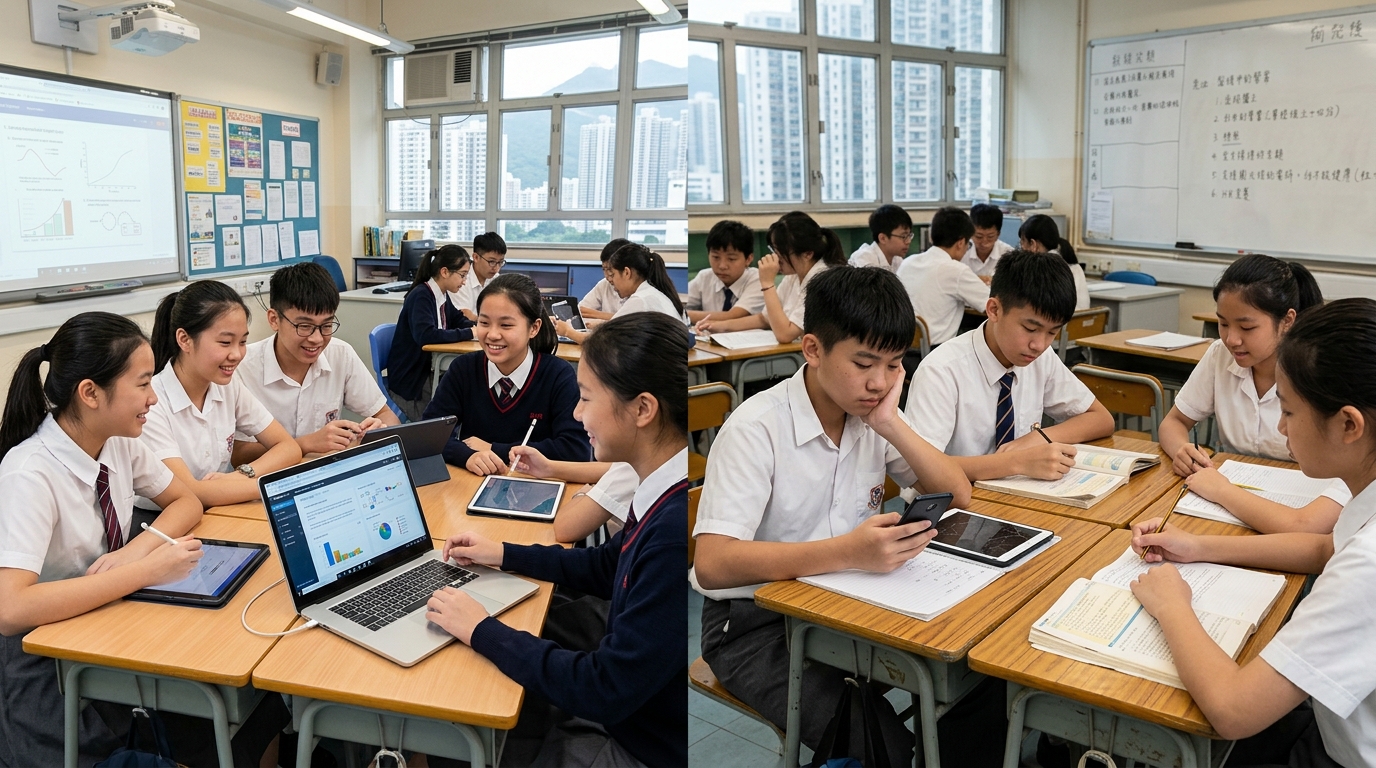
Hong Kong’s reputation as a global tech hub masks a troubling reality. Thousands of students lack reliable internet access at home. Many families share a single smartphone among siblings. During the pandemic, these gaps turned into chasms, with some children unable to attend online classes while their peers logged in from multiple devices.
The [digital divide](https://en.wikipedia.org/wiki/Digital_divide) in Hong Kong creates significant educational inequality, with low-income students facing barriers in device access, internet connectivity, and digital literacy. Recent data shows that 15% of households in subdivided flats lack computers, while 8% have no internet at home. These gaps directly impact academic performance, homework completion, and future career readiness, requiring urgent policy intervention and targeted support programs.
What the data reveals about technology access
Census data paints a stark picture of inequality. In 2021, government surveys found that families earning below the median income were three times more likely to lack home computers compared to higher-income households.
The numbers get worse in specific districts. Sham Shui Po and Kwun Tong show the highest concentration of families without adequate devices. Children in these areas often complete homework on smartphones, squinting at tiny screens to read textbooks or type essays.
Internet speed matters just as much as access. A 2022 study by the University of Hong Kong found that students with slow connections scored lower on digital assignments. They struggled to upload large files, participate in video calls, or access cloud-based learning platforms.
Subdivided flats present unique challenges. These cramped living spaces often house multiple families sharing a single Wi-Fi router. Bandwidth gets stretched thin when everyone tries to connect simultaneously. Students report losing connection during important exams or missing live lessons entirely.
How learning inequality manifests in classrooms
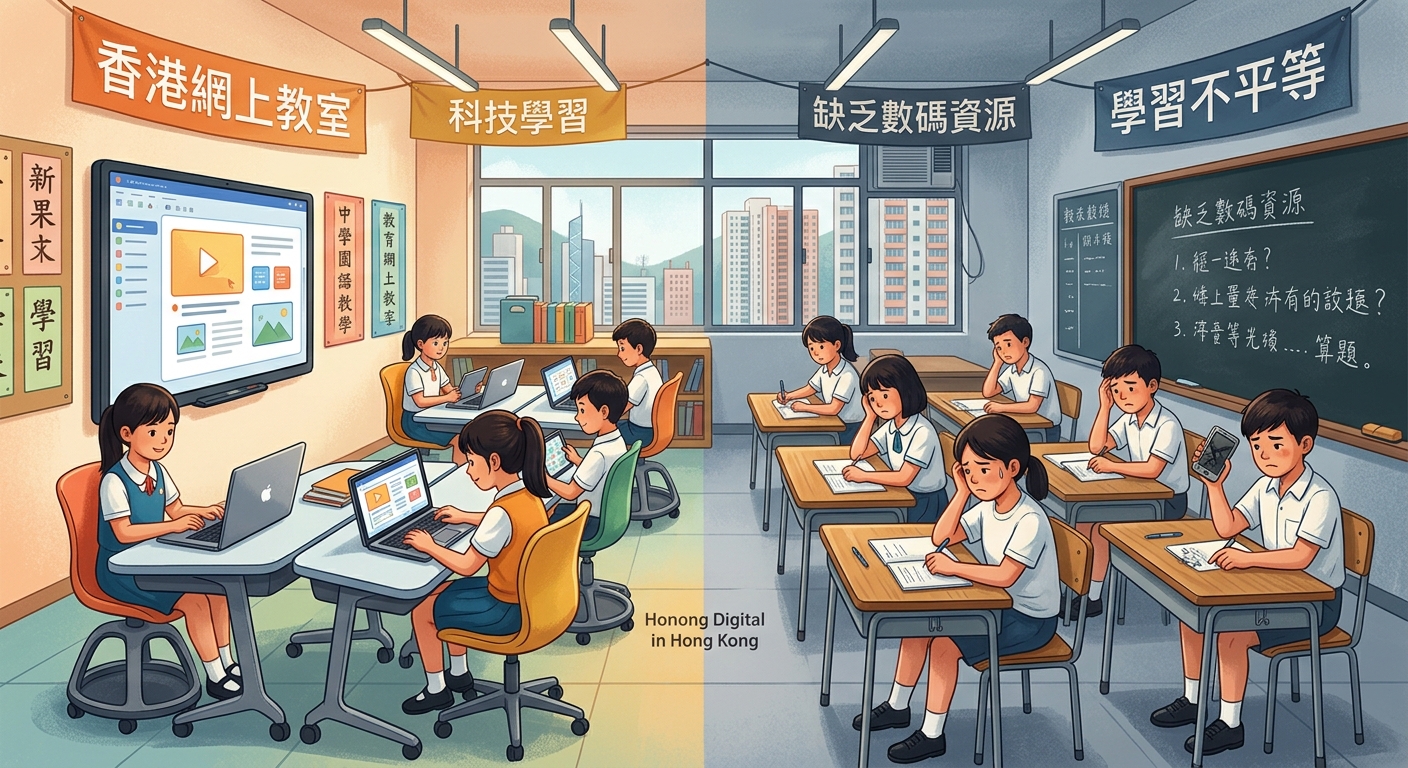
Teachers notice the gap immediately. Students without home technology arrive unprepared for lessons that assume basic digital skills. They fall behind in coding classes, struggle with presentation software, and miss out on educational apps their peers use regularly.
Homework completion rates tell the story. Research from the Hong Kong Institute of Education shows that students without home computers submit 30% fewer assignments on time. They rely on school computer labs, which close by 5 PM, leaving little time for research or project work.
The pandemic amplified every existing problem. When schools shifted online in 2020, thousands of students disappeared from virtual classrooms. Social workers tracked down families who lacked devices entirely. Emergency laptop distribution programs helped, but many arrived weeks into the shutdown.
Assessment methods now favor tech-savvy students. Online quizzes, digital portfolios, and video presentations have become standard. Students without reliable technology face constant disadvantages, even when schools return to in-person learning.
Students from low-income families spend significantly more time on basic technical troubleshooting rather than actual learning. This invisible labor creates a persistent achievement gap that compounds over years.
Breaking down the barriers families face
Cost remains the primary obstacle. A decent laptop costs HK$3,000 to HK$5,000, representing a month’s grocery budget for many families. Cheaper alternatives often break within a year, forcing repeated purchases that strain finances further.
Internet service fees add ongoing pressure. Monthly broadband costs HK$100 to HK$300, which might seem modest but becomes prohibitive when combined with rent, utilities, and food. Some families choose mobile data plans instead, which impose strict limits on usage.
Digital literacy gaps affect parents and children alike. Many older residents never learned to navigate modern interfaces. They cannot help their children with technical problems or understand school communications sent via apps and portals.
Language barriers compound the problem. Operating systems, educational software, and online resources often default to English. Students from non-English speaking households face extra hurdles learning both the technology and the content simultaneously.
Physical space constraints make home learning difficult. Students in subdivided flats lack quiet areas for concentration. Background noise from neighbors, cooking sounds, and sibling activities disrupt online classes and homework sessions.
Measuring the impact on academic outcomes
Standardized test scores reveal consistent patterns. Students from digitally connected homes score 12 to 18 points higher on average across subjects. The gap widens in STEM fields where technology access enables hands-on practice with simulations and coding platforms.
University admission rates show similar disparities. Secondary school students without home technology are less likely to complete applications, research scholarship opportunities, or prepare competitive portfolios. They miss deadlines for early admission programs that require online submissions.
Career readiness suffers long-term consequences. Employers expect proficiency in productivity software, digital communication tools, and online collaboration platforms. Students who lack regular technology exposure enter the workforce at a disadvantage, perpetuating cycles of inequality.
| Technology Access Level | Homework Completion Rate | Average Test Scores | University Admission Rate |
|---|---|---|---|
| Full access (computer + high-speed internet) | 92% | 78/100 | 68% |
| Limited access (shared device or slow internet) | 71% | 65/100 | 42% |
| Minimal access (smartphone only) | 58% | 59/100 | 28% |
| No home access | 43% | 52/100 | 15% |
Government responses and their effectiveness
The Learning Support Grant provides HK$2,500 annually per eligible student. Families can use these funds for educational expenses including technology. However, the amount barely covers a basic tablet, let alone a laptop and internet service for a full year.
Public Wi-Fi expansion reached thousands of locations across Hong Kong. Libraries, community centers, and government buildings now offer free connectivity. Yet students still need devices to access these networks, and studying in public spaces lacks privacy and quiet.
Subsidized device programs distributed over 20,000 laptops during the pandemic. Schools coordinated with NGOs to identify families in need. The initiative helped many students stay connected, but demand far exceeded supply. Waiting lists stretched for months.
Internet subsidy schemes offer discounted broadband to low-income households. Providers partner with government programs to reduce monthly fees by 30 to 50%. Take-up rates remain low due to complicated application processes and limited awareness among eligible families.
What schools and NGOs are doing differently
Some schools established device lending libraries. Students can borrow laptops or tablets for weeks or months at a time. This model works well but requires significant funding for hardware, maintenance, and replacement of damaged equipment.
After-school technology centers provide supervised access. Students complete homework, attend virtual tutoring, and develop digital skills in supportive environments. Staff assistance helps overcome technical problems that would otherwise block progress.
Peer mentoring programs pair tech-savvy students with those who need help. Older students teach younger ones basic skills like file management, email etiquette, and research techniques. These relationships build confidence and community.
Community partnerships bring resources to underserved neighborhoods. NGOs work with corporate donors to establish computer labs in public housing estates. Residents gain free access to technology and training programs.
Several organizations focus specifically on closing technology gaps:
- The Society for Community Organization runs digital inclusion programs in subdivided flats
- Caritas Hong Kong provides refurbished computers to families in need
- The Boys & Girls Clubs Association offers coding classes and technology workshops
- Christian Action operates computer training centers in multiple districts
- The Hong Kong Council of Social Service coordinates technology donation drives
Steps toward meaningful solutions
Addressing the digital divide requires coordinated action across sectors. No single intervention will solve the problem, but combined efforts can create substantial improvement.
- Expand device ownership through sustainable programs that provide not just initial hardware but also repair services and replacement cycles.
- Reduce internet costs through enhanced subsidies that cover full broadband fees for qualifying families rather than partial discounts.
- Build digital literacy through mandatory parent education programs that help families support their children’s technology use.
- Redesign assessment methods to include offline alternatives that measure learning without assuming universal technology access.
- Create neighborhood technology hubs in every district with extended hours, professional support staff, and adequate bandwidth for multiple simultaneous users.
Policy changes must address root causes. Raising minimum wages helps families afford technology. Improving public housing conditions provides space for home learning. Strengthening social safety nets reduces the impossible choices families face between food and internet service.
Schools need resources to support diverse technology access levels. Teachers require training in creating assignments that work across different devices and connection speeds. Curriculum designers should build flexibility into digital learning requirements.
Tracking progress and accountability
Regular data collection helps monitor whether interventions work. Annual surveys should measure device ownership, internet access, and digital literacy across income levels and districts. Transparent reporting keeps pressure on institutions to maintain progress.
Student outcome tracking reveals which programs deliver results. Schools should disaggregate achievement data by technology access levels. This analysis identifies persistent gaps and highlights successful interventions worth scaling.
Community feedback mechanisms give voice to affected families. Regular forums allow parents and students to share experiences, report barriers, and suggest improvements. Policymakers must listen and respond with concrete actions.
Budget allocation reflects true priorities. Government spending on digital inclusion should match the scale of the problem. Current programs reach only a fraction of families in need. Substantial investment increases are necessary and justified.
Building equity into Hong Kong’s digital future
Technology should open doors, not close them. Every student deserves the tools to learn, create, and compete in modern education systems. The digital divide in Hong Kong is not inevitable. It results from policy choices, resource allocation, and social priorities that can change.
Progress requires acknowledging that Hong Kong’s gleaming tech infrastructure does not serve everyone equally. The same city that boasts cutting-edge telecommunications leaves thousands of children struggling with spotty connections and shared smartphones.
Solutions exist and work when properly funded and implemented. Device programs, internet subsidies, community technology centers, and digital literacy training all show positive results. Scaling these initiatives to reach every family in need is the challenge ahead.
The cost of inaction exceeds any budget concerns. Students who fall behind academically face limited opportunities throughout their lives. The social and economic consequences ripple across generations, widening inequality and reducing social mobility.
Start by recognizing that access to technology is no longer optional in education. It forms the foundation for homework, research, collaboration, and assessment. Students without this foundation face unnecessary obstacles that have nothing to do with their abilities or efforts.
Support programs that address both immediate needs and long-term sustainability. Emergency laptop distributions help during crises, but permanent solutions require ongoing funding, maintenance, and upgrades as technology evolves.
Hold institutions accountable for measuring and reducing technology-based inequality. Schools, government agencies, and service providers should report progress publicly and adjust strategies based on results.
The digital divide in Hong Kong will not close on its own. It demands intentional effort, adequate resources, and sustained commitment. Students waiting for change cannot afford delays while adults debate details. Their education continues whether or not they have the tools to fully participate.


Post Comment