
How Hong Kong’s Aging Population Will Reshape Social Services by 2030
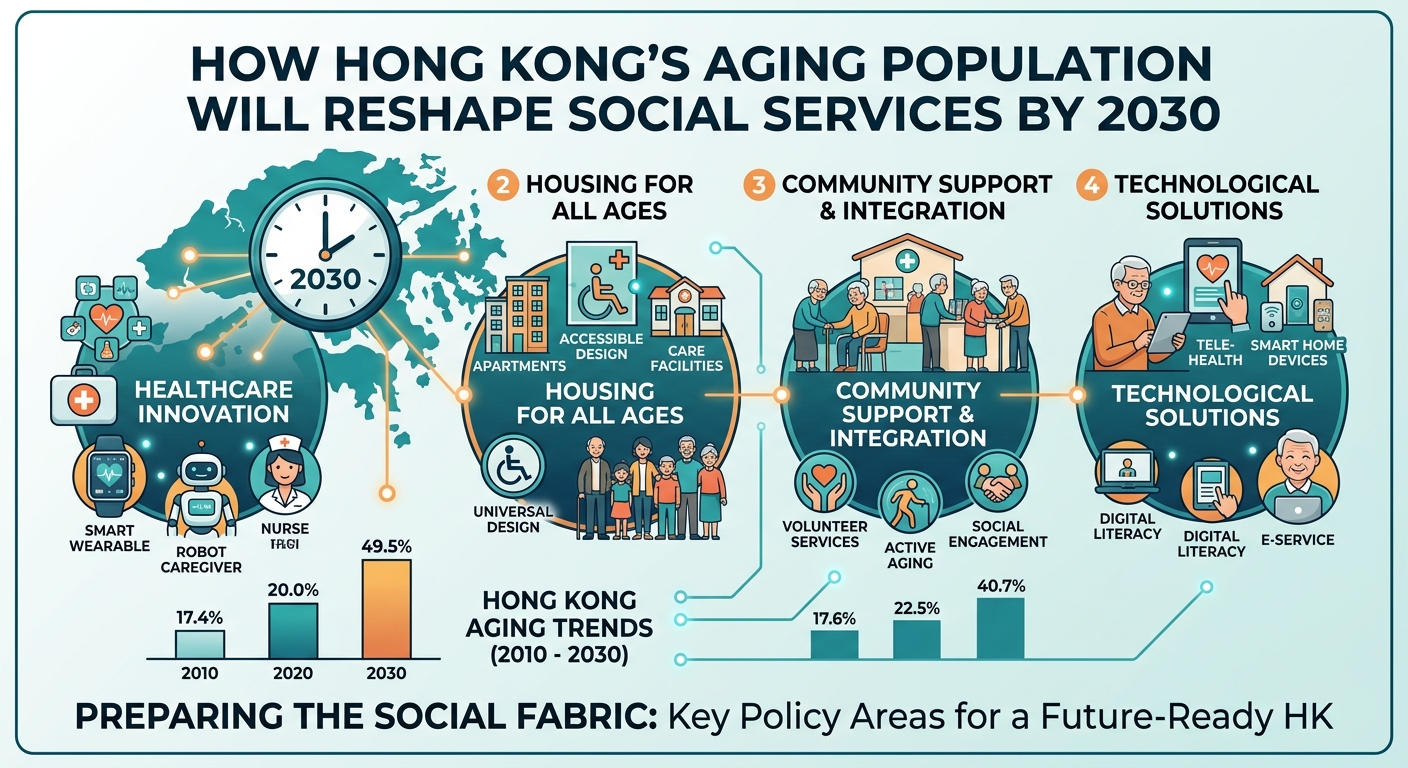
One in three Hong Kong residents will be over 65 by 2030. That’s just six years away. The city faces a demographic transformation unlike anything in its history, and the social service infrastructure needs to catch up fast.
Hong Kong’s rapidly aging population will strain elderly care facilities, healthcare systems, and community services by 2030. Current projections show 2.5 million residents over 65, requiring doubled residential care spaces, expanded home care programs, and integrated health services. Policy makers must act now to train caregivers, fund infrastructure, and redesign social support systems for sustainable aging.
The numbers tell a stark story
Hong Kong’s fertility rate sits at 0.8 children per woman, among the lowest globally. Life expectancy reaches 85 years, one of the highest. These two factors create a perfect storm.
The dependency ratio will hit alarming levels. For every 100 working-age adults, there will be 50 elderly dependents. Compare that to 23 dependents in 2020. The math doesn’t work without major intervention.
Census data shows the 65-plus population growing from 1.3 million in 2020 to 2.5 million by 2030. That’s nearly double in one decade. The 85-plus group, requiring the most intensive care, will triple.
Residential care capacity falls short
Current elderly care homes serve about 78,000 residents. Wait times average three years for subsidized places. Some elderly residents wait five years or more.
By 2030, demand will exceed 140,000 places. That means building 62,000 new spaces in six years. Construction timelines, land availability, and funding gaps make this target nearly impossible without urgent reform.
Private care homes charge HK$15,000 to HK$30,000 monthly. Most elderly residents rely on pensions of HK$4,000 to HK$8,000. The affordability gap pushes families into crisis.
| Care Type | Current Capacity | 2030 Need | Funding Gap |
|---|---|---|---|
| Subsidized residential | 28,000 | 52,000 | HK$12B |
| Private residential | 50,000 | 88,000 | Market-driven |
| Day care centers | 8,200 | 18,000 | HK$3.2B |
| Home care slots | 9,500 | 28,000 | HK$2.8B |
Healthcare systems face breaking points
Public hospitals already operate at 95% capacity. Emergency departments see wait times of eight hours during peak periods. Adding hundreds of thousands of elderly patients will collapse the system without expansion.
Chronic disease management becomes critical. Diabetes, hypertension, and dementia rates climb with age. These conditions require continuous monitoring, medication management, and specialist visits.
The Hospital Authority projects needing 40% more geriatric specialists by 2030. Current training programs graduate only 30 geriatricians annually. The pipeline won’t meet demand.
Community health centers offer a partial solution. These facilities provide preventive care, chronic disease monitoring, and health education closer to home. Expanding from 18 to 50 centers would reduce hospital burden significantly.
Home and community care programs need scaling
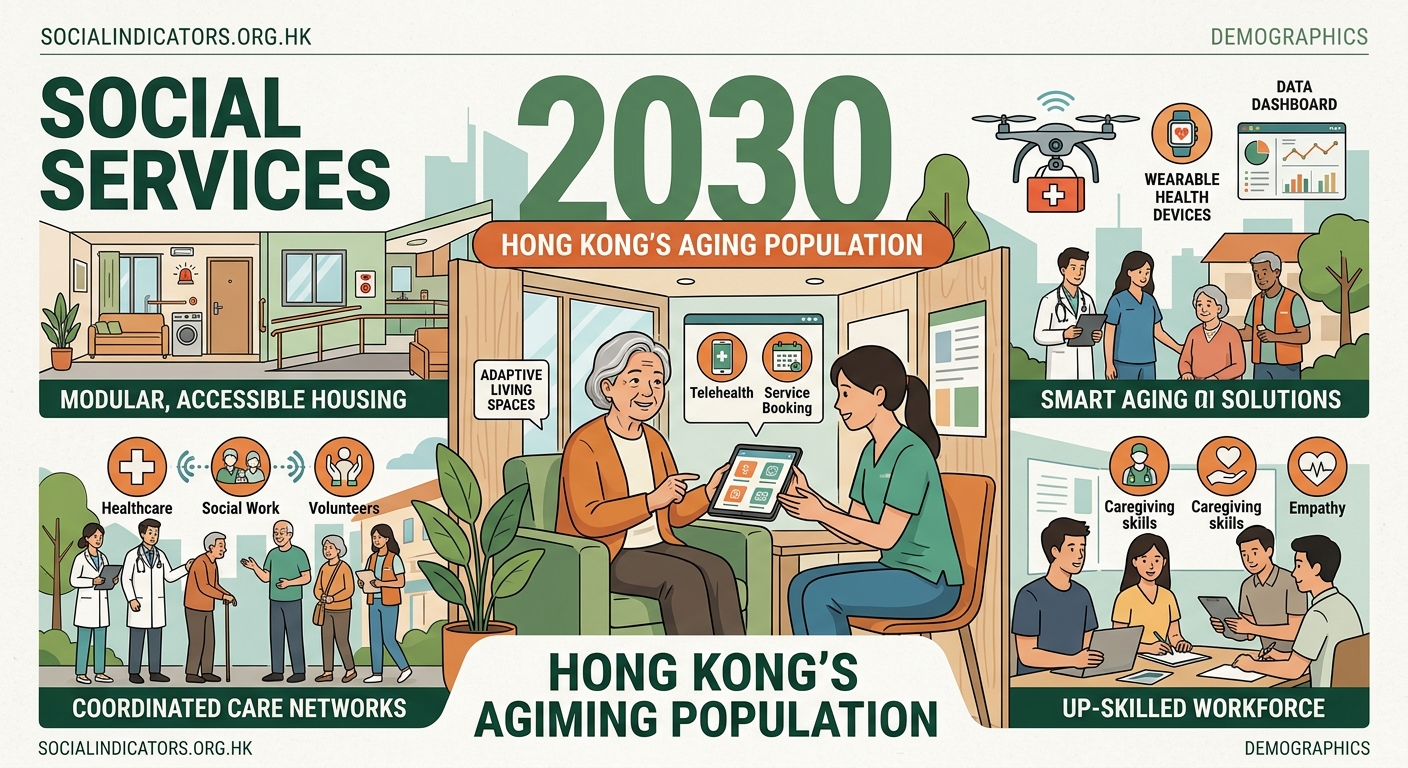
Most elderly residents prefer aging at home. Cultural values emphasize family care. But smaller family sizes and dual-income households limit caregiving capacity.
Enhanced Home and Community Care Services currently support 9,500 people. Waiting lists exceed 7,000. By 2030, at least 28,000 slots will be needed to keep pace with demand.
These programs provide:
- Personal care assistance with bathing, dressing, and mobility
- Meal preparation and nutritional support
- Medication management and health monitoring
- Social activities and mental health support
- Respite care for family caregivers
Funding remains insufficient. The government allocates HK$1.2 billion annually. Tripling this investment would still leave gaps.
“We cannot build our way out of this challenge with residential care alone. Home-based services must become the backbone of elderly support, supplemented by technology and community networks. The current funding model assumes institutional care as default. We need to flip that assumption.”
Caregiver shortage creates bottlenecks
Hong Kong needs 40,000 additional care workers by 2030. Current training programs produce 3,000 graduates yearly. Immigration policies restrict foreign domestic helpers from formal care roles.
Care work pays poorly. Starting salaries average HK$14,000 monthly for demanding physical and emotional labor. Turnover rates exceed 30% annually in some facilities.
Professional development pathways remain limited. Few workers see long-term career prospects. Without better compensation, training, and recognition, recruitment will fail.
Technology offers partial solutions
Remote monitoring devices track vital signs, fall detection, and medication adherence. These tools extend independent living and reduce emergency incidents.
Telemedicine connects elderly patients with doctors for routine consultations. This reduces travel burden and clinic crowding. Adoption rates remain low due to digital literacy gaps and reimbursement issues.
Smart home modifications, including voice-activated systems and automated lighting, improve safety and convenience. Subsidy programs covering installation costs could accelerate uptake.
Robotics for lifting, transportation, and companionship show promise in pilot programs. Cost barriers limit widespread deployment. Government procurement could drive prices down.
Financial sustainability requires reform
Current social welfare spending on elderly services totals HK$18 billion annually. Projections show this doubling by 2030 under existing policies. Revenue sources won’t keep pace without tax reform or reallocation.
Three funding approaches warrant consideration:
- Mandatory long-term care insurance requiring working adults to contribute 1-2% of income into a dedicated fund
- Means-tested co-payments for middle-income families to preserve subsidies for those in genuine need
- Public-private partnerships leveraging private sector efficiency with government oversight and partial funding
Each approach faces political resistance. Delaying decisions makes the eventual adjustment more painful.
Community integration prevents isolation
Social isolation accelerates cognitive decline and physical deterioration. Elderly residents living alone face higher hospitalization rates and mortality.
Neighborhood support networks connect volunteers with elderly neighbors for regular check-ins, shopping assistance, and companionship. These programs cost little but require coordination and volunteer recruitment.
Intergenerational programs pair schools with care facilities. Students visit weekly for activities, conversation, and learning. Benefits flow both ways: elderly residents gain social connection while students develop empathy and life skills.
Age-friendly urban design matters. Adequate seating in public spaces, barrier-free access, and slower pedestrian crossing signals enable elderly residents to remain active community members.
Policy coordination across departments
Elderly care intersects housing, healthcare, social welfare, and urban planning. Fragmented governance creates inefficiencies and gaps.
A dedicated Aging Society Commission with cross-departmental authority could align policies, allocate resources strategically, and monitor progress against demographic projections.
District-level coordination teams would tailor services to local needs. Kowloon City’s elderly population profile differs from Sai Kung’s. One-size-fits-all approaches waste resources.
What needs to happen now
The 2030 timeline gives little room for delay. Implementation timelines for major infrastructure projects span five to seven years. Starting in 2024 means projects come online just as demand peaks.
Priority actions include:
- Fast-track approval for 15 new elderly care facilities in development pipeline
- Triple home care program funding in 2024-2025 budget
- Launch caregiver career ladder with 20% salary increases and clear advancement paths
- Mandate telemedicine reimbursement parity with in-person visits
- Establish district elderly service hubs in all 18 districts by 2027
- Create tax incentives for multigenerational housing arrangements
Public engagement matters. Elderly residents, families, care workers, and service providers hold practical knowledge that policy makers need. Consultation processes should be accessible, conducted in multiple languages and formats.
Preparing for what comes next
Hong Kong’s aging population represents both challenge and opportunity. The city can become a model for high-density urban aging or a cautionary tale of unmet needs.
Success requires honest assessment of current shortfalls, adequate resource allocation, and willingness to try new approaches. Traditional models won’t scale. Innovation in service delivery, technology integration, and community engagement offers paths forward.
The demographic shift is certain. The social service response remains a choice. Policy makers, professionals, and citizens all play roles in shaping how Hong Kong ages. Starting now means better outcomes for current elderly residents and everyone who will join them in coming decades. The clock is already ticking.



Post Comment