The Fertility Crisis: Why Hong Kong Has One of the World’s Lowest Birth Rates
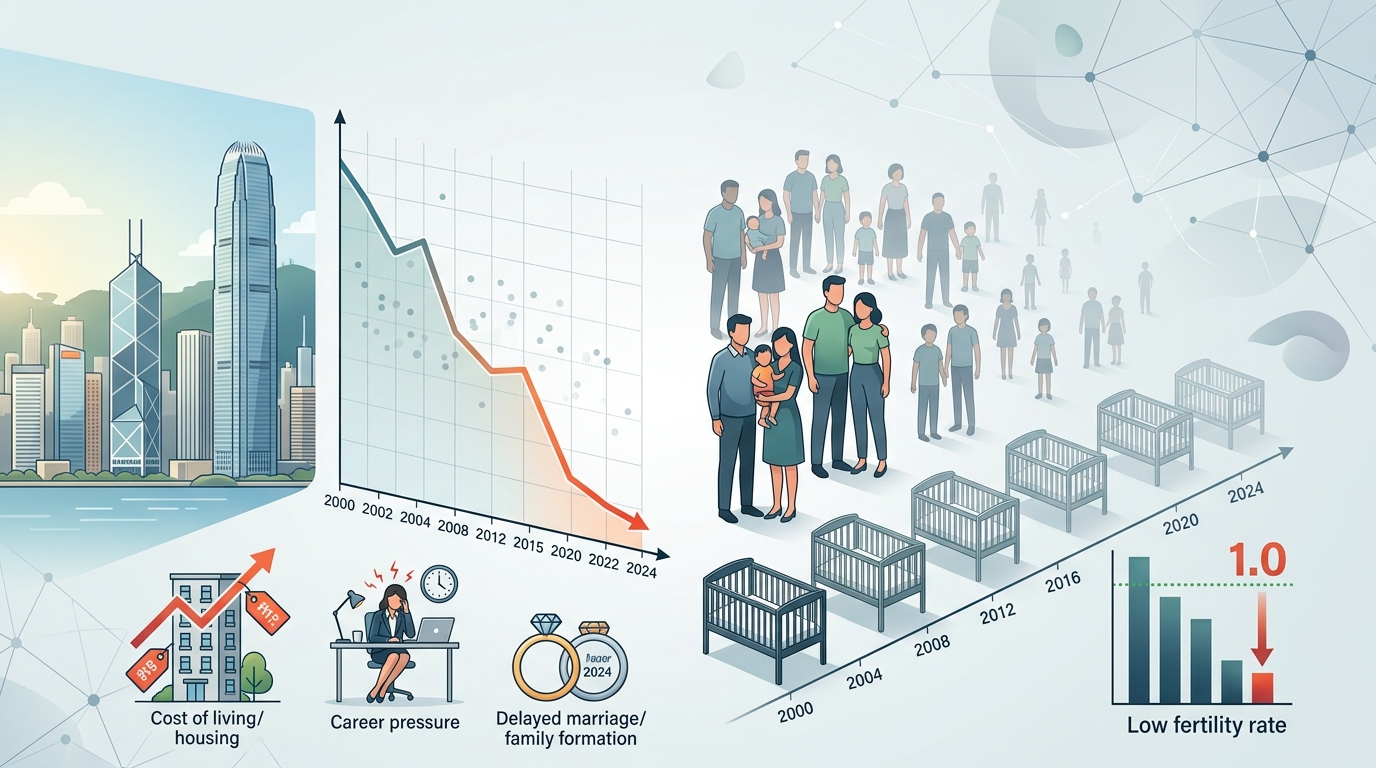
Hong Kong’s birth rate has fallen to one of the lowest in the world. In 2023, the city recorded just 6.4 births per 1,000 people, a figure that signals a profound demographic shift. This isn’t just a statistical curiosity. It’s a crisis that touches housing policy, economic planning, healthcare, and the social fabric of one of Asia’s most dynamic cities.
Hong Kong’s birth rate has dropped dramatically over the past three decades, reaching 6.4 births per 1,000 people in 2023. The decline stems from high housing costs, long working hours, limited childcare support, and changing social attitudes. This trend threatens the city’s economic vitality, social services, and long-term sustainability, requiring urgent policy intervention to address structural barriers facing young families.
The numbers tell a stark story
The fertility rate in Hong Kong stood at 0.7 children per woman in 2023. To put this in perspective, a rate of 2.1 is needed to maintain a stable population without immigration. Hong Kong’s figure is less than half of the replacement level, and among the lowest globally.
The city recorded approximately 32,500 births in 2023, down from over 88,000 in 1991. That’s a decline of more than 60% in just over three decades. The total fertility rate has been below replacement level since 1984, but the drop has accelerated in recent years.
Birth registrations have fallen every year since 2017. The 2023 figure represents the lowest number of births since records began in 1961. Meanwhile, the median age of first-time mothers has climbed to 32.2 years, up from 26.8 in 1991.
These aren’t just abstract statistics. They represent thousands of families who decided not to have children, or to have fewer children than they might have wanted under different circumstances.
What drives the decline
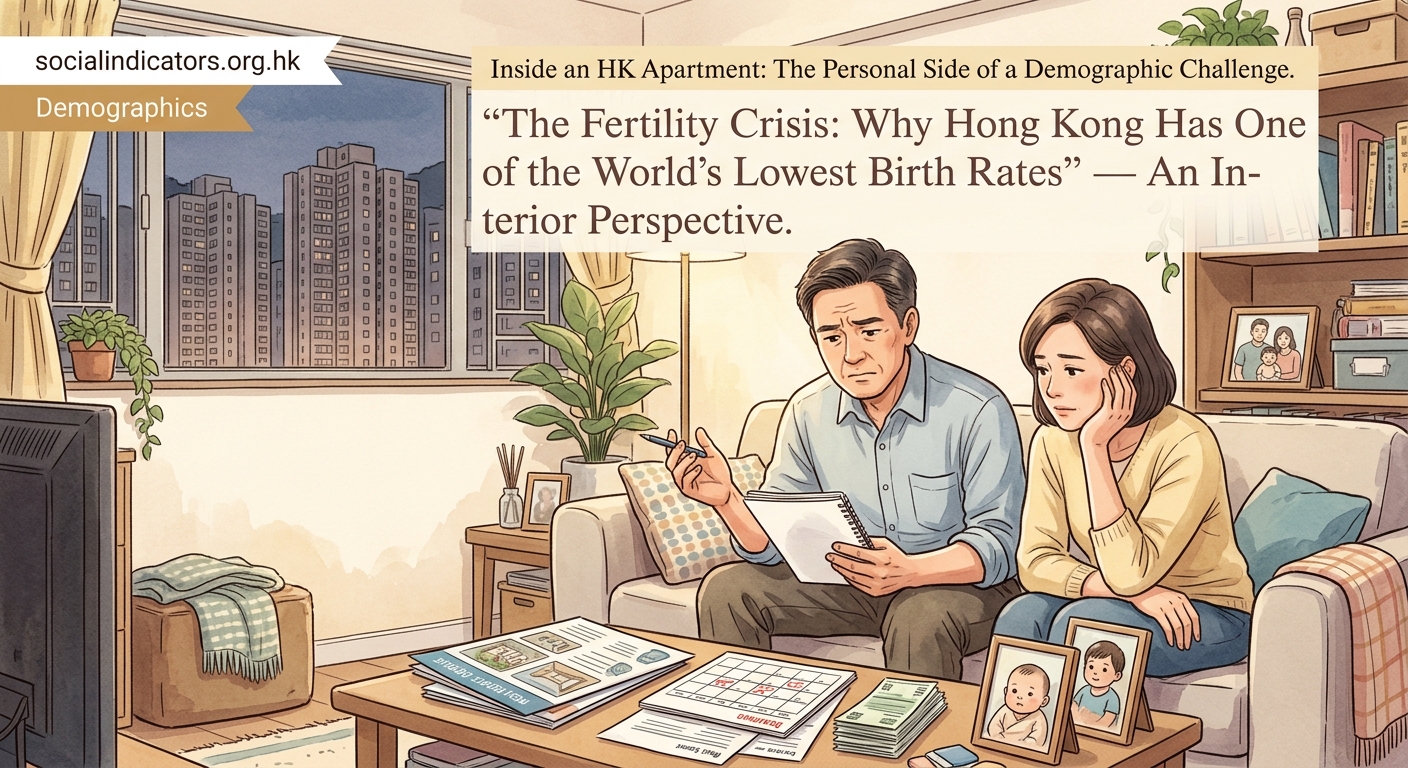
Multiple factors combine to suppress fertility in Hong Kong. No single cause explains the entire picture, but several stand out as particularly influential.
Housing costs create impossible choices
Property prices in Hong Kong rank among the highest in the world. The median home price sits at roughly 19 times the median annual household income. Young couples face a brutal calculation: save for a home or start a family, but rarely both.
A typical two-bedroom apartment in a modest neighborhood costs well over HK$6 million. Monthly rents for family-sized units easily exceed HK$20,000. Many young adults live with their parents into their 30s, not by choice but by economic necessity.
Starting a family in a 300-square-foot studio apartment isn’t just uncomfortable. It’s often impractical. Parents need space for cribs, toys, and the accumulated gear that comes with children. When that space doesn’t exist, many couples delay or forgo parenthood entirely.
Work culture leaves little room for family life
Hong Kong’s work culture is notoriously demanding. The average employee works 49 hours per week, among the longest in developed economies. Many professionals routinely work 60 or 70 hours.
Maternity leave stands at just 14 weeks, and paternity leave at only 5 days for most workers. Compare this to Nordic countries where parental leave can extend beyond a year. The message to young families is clear: work comes first.
Career interruptions carry heavy penalties, particularly for women. Taking time off to raise children often means falling behind in promotions, losing professional networks, and facing discrimination when returning to work. The opportunity cost of parenthood is steep.
Childcare support remains inadequate
Quality childcare is expensive and scarce. Full-time infant care can cost HK$8,000 to HK$12,000 per month, consuming a substantial portion of middle-class incomes. Waiting lists for subsidized childcare centers stretch for months or years.
Many families rely on grandparents for childcare, but this traditional arrangement is becoming less viable. Older generations are working longer, and some have retired to mainland China where living costs are lower. Without affordable, accessible childcare, both parents working full-time becomes nearly impossible.
Public kindergartens offer some relief, but they don’t accept children until age three. The first three years, when childcare is most expensive and demanding, receive minimal public support.
Social attitudes have shifted
Traditional expectations around marriage and family have weakened. Younger generations increasingly prioritize personal fulfillment, career development, and lifestyle choices over conventional family structures.
Marriage rates have declined alongside birth rates. In 2023, the crude marriage rate fell to 4.2 per 1,000 people, down from 7.3 in 1991. People are marrying later or not at all. Single-person households now represent over 40% of all households in Hong Kong.
Women’s educational attainment has risen dramatically. Over 60% of university graduates are now female. Higher education correlates with delayed childbearing and smaller family sizes across cultures. Women with advanced degrees often face a stark choice between career advancement and motherhood.
How Hong Kong compares globally
The following table shows how Hong Kong’s fertility rate compares to other developed economies:
| Location | Total Fertility Rate (2023) | Births per 1,000 People |
|---|---|---|
| Hong Kong | 0.7 | 6.4 |
| South Korea | 0.7 | 5.5 |
| Singapore | 1.0 | 8.7 |
| Taiwan | 0.9 | 7.1 |
| Japan | 1.2 | 7.0 |
| United States | 1.6 | 11.0 |
| United Kingdom | 1.5 | 10.4 |
| France | 1.8 | 10.8 |
Hong Kong shares its low fertility challenge with other East Asian economies, but the problem is particularly acute. South Korea is the only comparable economy with similarly low figures. Even Japan, often cited as a demographic cautionary tale, maintains a fertility rate nearly twice as high as Hong Kong’s.
European countries with strong family support policies, like France and the Nordic nations, maintain higher birth rates despite similar levels of economic development. This suggests that policy choices matter.
The ripple effects across society
Low birth rates create cascading consequences that affect every aspect of society.
Economic implications
A shrinking workforce means slower economic growth. Fewer workers support a growing population of retirees, straining pension systems and public finances. The dependency ratio (the number of dependents per working-age person) is projected to increase dramatically over the coming decades.
Labor shortages in key sectors are already emerging. Healthcare, education, and service industries struggle to find workers. This pushes up wages in some sectors while leaving gaps in others.
Consumer markets contract as the population ages. Industries built around children and families, from toy manufacturers to family restaurants, face declining demand. Real estate markets may eventually face downward pressure as housing demand shifts.
Social service pressures
Schools are closing due to insufficient enrollment. Between 2016 and 2023, over 80 primary schools shut down. This represents not just empty classrooms but the loss of neighborhood institutions and community anchors.
Healthcare systems designed for a younger population must adapt to serve an aging society. Chronic disease management, long-term care, and geriatric services require different infrastructure and staffing than pediatric and maternity care.
The social safety net faces mounting pressure. Fewer workers paying into the system must support more retirees drawing benefits. Without reform, the system becomes unsustainable.
Cultural and community impacts
Neighborhoods lose vitality when fewer children live in them. Playgrounds sit empty. Schools close. The energy and renewal that children bring to communities fades.
Family structures change. The traditional model of children caring for aging parents breaks down when there are no children, or when single children bear the entire burden of eldercare alone.
Cultural transmission becomes more difficult. Languages, traditions, and customs pass most naturally from parents to children. When that chain weakens, cultural continuity suffers.
What policy interventions could help
Other countries have implemented various measures to support families and boost birth rates. Some approaches show promise:
-
Expand parental leave significantly. Extending paid leave to six months or a year, with job protection, removes one major barrier to parenthood. Sweden and Norway offer models worth studying.
-
Subsidize childcare comprehensively. Making quality childcare affordable and accessible from infancy onward enables both parents to work without impossible financial strain. Quebec’s subsidized daycare system increased both fertility rates and female labor force participation.
-
Address housing costs directly. Building more public housing, offering housing subsidies for families with children, or providing priority allocation for young families could reduce the housing barrier. Singapore’s Housing Development Board offers one approach.
-
Reform work culture through regulation. Mandating reasonable working hours, protecting against discrimination for parental leave, and normalizing flexible work arrangements would help. This requires both legal changes and cultural shifts.
-
Provide direct financial support. Child allowances, tax credits, and education subsidies reduce the direct costs of raising children. Many European countries offer substantial monthly payments per child.
The fertility crisis cannot be solved by a single policy. It requires a comprehensive approach that addresses housing, work culture, childcare, and social attitudes simultaneously. Countries that have successfully raised birth rates have done so through sustained, multi-faceted interventions over decades.
Common misconceptions about the birth rate crisis
Several misunderstandings cloud public discussion of this issue:
- Misconception: Immigration can solve the problem
-
Reality: While immigration can offset population decline, it doesn’t address the underlying structural issues that prevent residents from having children. Sustainable solutions require making the city more family-friendly for everyone.
-
Misconception: People just don’t want children anymore
-
Reality: Surveys consistently show that desired family size exceeds actual family size. Most people want one or two children but feel unable to have them due to economic and social constraints.
-
Misconception: This is primarily a women’s issue
- Reality: While women bear unique burdens around childbearing, the fertility crisis affects everyone. Men face the same housing costs, work pressures, and economic uncertainties. Solutions must address systemic issues, not just women’s choices.
The path forward requires urgency
Hong Kong stands at a demographic crossroads. The current trajectory leads to a smaller, older, less dynamic society. Reversing this trend requires acknowledging the problem’s severity and implementing bold policy responses.
The window for action is narrowing. Demographic changes unfold slowly but inexorably. Policy interventions take years to show results. Waiting another decade to act seriously will make the challenge exponentially harder.
Other societies have faced similar crises and responded with varying degrees of success. France reversed fertility decline through comprehensive family support. Singapore has struggled despite significant policy efforts. The difference often lies in how thoroughly policies address the root causes versus treating symptoms.
Hong Kong has advantages: strong institutions, fiscal resources, and a highly educated population. What’s needed is political will to prioritize family support over other policy goals, and sustained commitment over multiple election cycles.
Understanding the stakes for Hong Kong’s future
The birth rate crisis isn’t an abstract demographic problem. It’s about whether Hong Kong can sustain itself as a vibrant, dynamic city or whether it slowly ages into irrelevance. It’s about whether young people can build the lives they want here or must choose between career and family.
Every year of inaction makes the problem harder to solve. The children not born today are the workers, taxpayers, and citizens not present 20 years from now. The families not formed today are the communities and neighborhoods not built tomorrow.
Change is possible, but it requires honest recognition of what drives the crisis and willingness to implement meaningful solutions. Half measures and symbolic gestures won’t suffice. Hong Kong needs comprehensive reform that makes raising children economically feasible, professionally sustainable, and socially supported. The data shows where we are. The question is whether we’ll choose a different path forward.



Post Comment