Why Traditional Economic Indicators Fail to Capture Hong Kong’s Social Reality
Hong Kong consistently ranks among the world’s wealthiest cities. GDP per capita climbs year after year. Unemployment hovers at historic lows. Stock markets surge. Yet thousands of families squeeze into subdivided flats smaller than parking spaces. Elderly residents collect cardboard for survival. Working professionals spend half their income on rent alone.
Something doesn’t add up.
Traditional economic indicators like GDP and unemployment rates fail to capture Hong Kong’s social reality because they ignore income inequality, housing affordability, poverty depth, and [quality of life](https://www.who.int/health-topics/quality-of-life) factors. While headline numbers suggest prosperity, residents face severe cost of living pressures, inadequate social services, and widening wealth gaps that standard metrics systematically overlook.
The numbers that tell half the story
Standard economic indicators focus on aggregate performance. They measure total output, average income, and employment percentages. These metrics work well for comparing national economies or tracking growth trends over decades.
But they miss the human experience entirely.
Consider GDP per capita. This figure divides total economic output by population. Hong Kong’s GDP per capita exceeds $49,000 USD. That places the city among global leaders, ahead of many European nations.
Yet this average conceals massive disparities. A billionaire and nine minimum wage workers produce an average income that suggests everyone lives comfortably. The reality? Nine people struggle while one thrives.
Unemployment rates present similar problems. Hong Kong’s unemployment typically sits below 3.5%, suggesting nearly everyone who wants work can find it. This metric counts anyone working even one hour per week as employed. It says nothing about job quality, wage levels, or whether that employment provides a living income.
A person working three part-time jobs without benefits, earning below poverty wages, and never seeing their children counts identically to a salaried professional with healthcare and retirement savings.
What traditional metrics systematically ignore
Economic indicators emerged decades ago when governments needed simple ways to track industrial production and employment. They served their purpose in that era. Manufacturing output and formal employment captured most economic activity.
Modern economies are different. Service sectors dominate. Gig work proliferates. Housing costs consume unprecedented portions of household budgets. Healthcare, education, and eldercare represent major quality of life factors that GDP treats as mere transactions.
Here are critical dimensions that standard metrics overlook:
- Income distribution and wealth concentration
- Housing affordability relative to median wages
- Depth of poverty among the poorest residents
- Access to healthcare and education quality
- Environmental quality and public space availability
- Work-life balance and commute times
- Social mobility opportunities across generations
- Mental health and community cohesion
Traditional indicators treat a dollar spent on luxury handbags identically to a dollar spent on cancer treatment. Both increase GDP. Neither metric reveals whether ordinary families can afford necessities or whether wealth concentrates among a tiny elite.
The housing crisis that GDP can’t see
Housing provides the clearest example of how economic indicators mislead. Hong Kong property prices rank among the world’s highest. For economists focused on GDP, this represents economic activity. Construction, sales transactions, and property services all boost headline numbers.
For residents, it represents a crisis.
The median home costs more than 20 times the median annual household income. Young professionals with stable jobs cannot afford even modest apartments. Families wait years for public housing. Thousands live in cage homes, rooftop shacks, and subdivided units with shared bathrooms.
| Traditional Metric | What It Shows | What It Misses |
|---|---|---|
| GDP growth | Property transactions add to economic output | Families spending 50% of income on rent |
| Construction activity | Building sector employment and investment | Affordable housing supply remains inadequate |
| Property values | Asset appreciation for owners | Homeownership becomes impossible for young workers |
| Rental market size | Economic activity in housing services | Substandard living conditions and overcrowding |
High property values inflate GDP while crushing quality of life. The economic indicator rises. Social welfare declines. Standard metrics cannot capture this contradiction.
Income inequality hides behind averages
Hong Kong’s Gini coefficient, which measures income inequality, ranks among the highest in developed economies. Yet this statistic rarely appears in mainstream economic reports. GDP and unemployment dominate headlines.
The wealthiest 10% of households earn 44 times more than the poorest 10%. This gap has widened consistently for two decades. Meanwhile, real wages for median workers have stagnated when adjusted for living costs.
“Economic growth that concentrates entirely among the wealthy while leaving median households behind represents policy failure, not success. Yet our standard indicators reward this outcome with positive scores.”
Poverty statistics reveal the disconnect more sharply. Official poverty rates before government intervention exceed 20%. One in five residents lives below the poverty line despite record GDP growth and low unemployment.
After government transfers and subsidies, poverty rates drop to roughly 14%. That still means 1.05 million people live in poverty in one of the world’s wealthiest cities. Traditional economic indicators never highlight this reality.
The working poor phenomenon
Employment statistics suggest nearly everyone works. They don’t reveal that many workers remain poor despite full-time employment.
Low-wage workers face particular challenges:
- Minimum wage increases fail to keep pace with inflation and housing costs
- Part-time and casual employment offers no benefits or job security
- Service sector jobs provide limited advancement opportunities
- Long working hours leave no time for skills development or family
A security guard working 60 hours weekly might earn enough for basic food and a bed in a subdivided flat. They’re employed. They’re productive. They’re poor.
Standard metrics count them as an economic success story. Their lived experience tells a different story entirely.
Social services and quality of life gaps
Economic indicators measure market transactions. They largely ignore public goods and social services that determine quality of life.
Hong Kong’s healthcare system faces severe strain. Public hospitals operate beyond capacity. Wait times for specialist appointments stretch months or years. Elderly patients sleep on gurneys in hallways. Yet healthcare spending as a percentage of GDP appears reasonable by international standards.
The metric misses the experience. It counts spending but not outcomes or accessibility.
Education presents similar contradictions. Hong Kong students score well on international assessments. But intense academic pressure, expensive private tutoring, and limited university places create enormous stress for families. Parents spend fortunes on supplementary classes. Children study until midnight daily.
Test scores rise. Student wellbeing declines. Economic indicators capture neither dimension accurately.
Environmental costs and urban density
GDP treats environmental degradation as invisible until cleanup costs appear. Air pollution from traffic and industry imposes health costs and reduces quality of life. These impacts never subtract from GDP.
Hong Kong’s extreme density creates additional pressures. Limited public space, noise pollution, and urban heat islands affect daily life profoundly. Yet density appears economically efficient in standard metrics. More economic activity per square kilometer means higher productivity.
The human cost of living in 400 square feet with no outdoor space doesn’t register in economic statistics.
Why measurement matters for policy
Governments manage what they measure. When GDP and unemployment dominate policy discussions, officials optimize for those metrics. They pursue growth and job creation while ignoring distribution, affordability, and quality of life.
This creates predictable outcomes. Policies that boost GDP receive priority even when benefits flow entirely to wealthy residents. Housing policies favor property owners and developers because construction activity increases GDP. Labor policies focus on employment numbers rather than wage quality or working conditions.
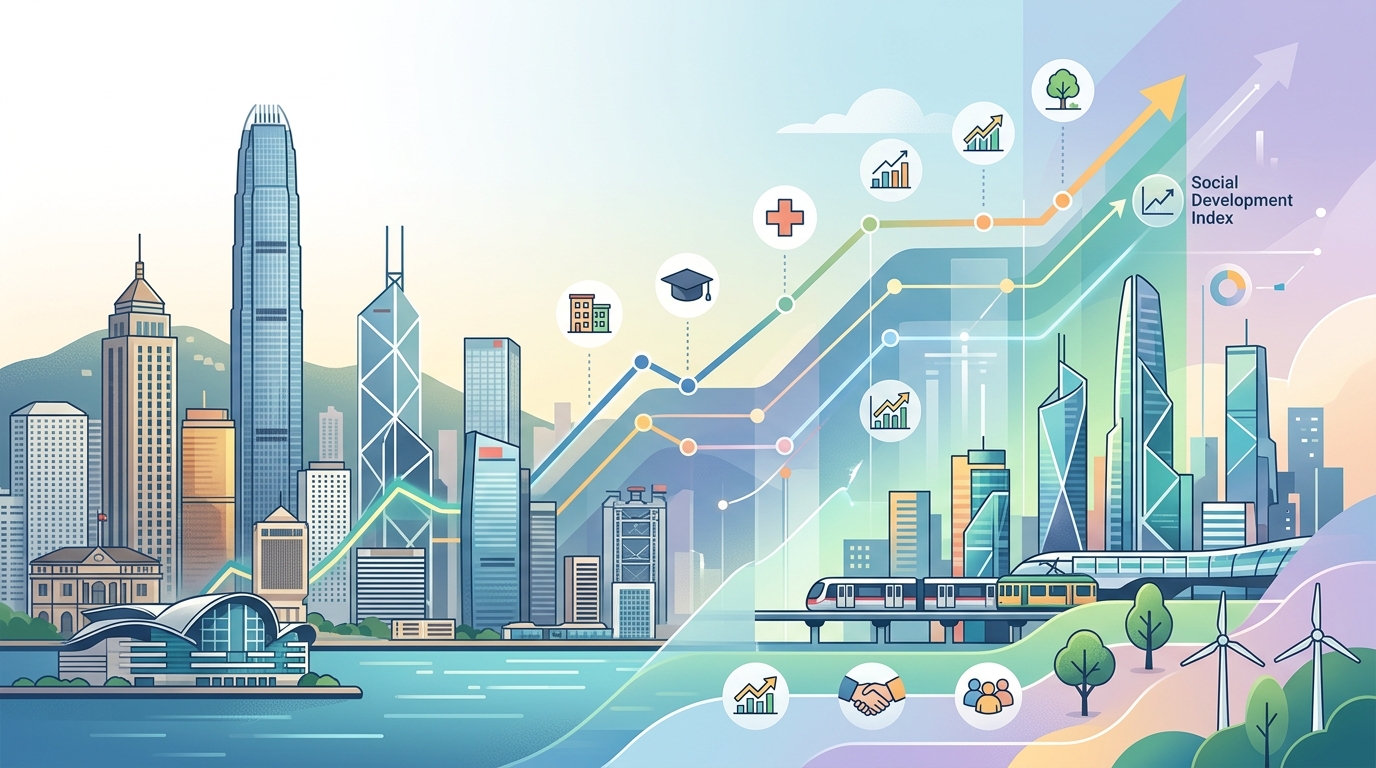
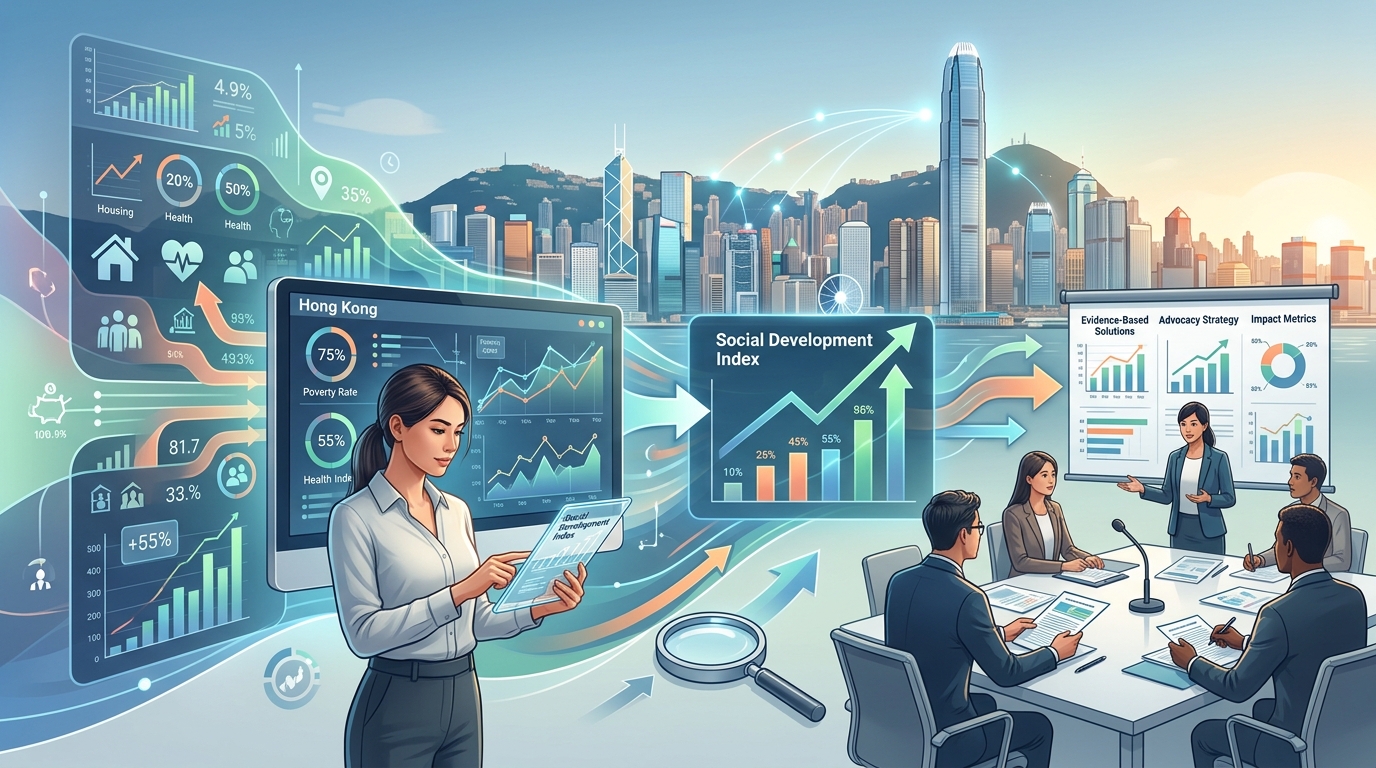
Alternative measurement frameworks exist. The Social Development Index tracks multiple dimensions of wellbeing beyond economic output. It includes:
- Income distribution and poverty rates
- Housing affordability and living conditions
- Healthcare access and outcomes
- Education quality and stress levels
- Environmental quality and public space
- Work-life balance indicators
- Social mobility metrics
These comprehensive measures reveal trends that traditional indicators miss. They show whether prosperity reaches ordinary families or concentrates among elites. They highlight policy failures that GDP growth conceals.
Building better measurement systems
Changing measurement frameworks requires political will and technical capacity. Governments must commit to tracking and reporting comprehensive social indicators alongside economic metrics.
Several steps can improve measurement:
- Publish income distribution data prominently in all economic reports
- Track housing affordability relative to median wages as a core indicator
- Measure poverty depth, not just poverty rates, to understand severity
- Report quality of life surveys alongside GDP growth
- Calculate genuine progress indicators that account for environmental and social costs
- Disaggregate data by income level, age, and district to reveal disparities
Better measurement alone won’t solve problems. But it makes problems visible. It shifts policy conversations. It holds officials accountable for outcomes that matter to residents rather than just aggregate statistics.
What this means for understanding prosperity
Economic prosperity means little if it doesn’t improve lives. A city can grow wealthy while residents grow poorer. Aggregate statistics can rise while median experiences decline.
Hong Kong demonstrates this contradiction vividly. World-class GDP coexists with poverty, housing crisis, and strained social services. Traditional economic indicators not only fail to capture this reality but actively obscure it.
Understanding true social conditions requires looking beyond headline numbers. It demands examining distribution, affordability, access, and quality of life. It means asking who benefits from growth and whether prosperity reaches ordinary families.
For policy analysts and researchers, this means treating GDP and unemployment as incomplete data points rather than comprehensive measures. Social indicators provide essential context. Income distribution, housing costs, poverty depth, and quality of life metrics reveal whether economic activity translates into genuine wellbeing.
Seeing past the statistics
Numbers shape perception. When media reports focus exclusively on GDP growth and stock market gains, the public assumes prosperity is widespread. When unemployment stays low, people believe the economy works for everyone.
Hong Kong’s experience proves otherwise. Record GDP coexists with record inequality. Low unemployment coexists with widespread working poverty. Strong economic indicators coexist with declining quality of life for many residents.
The disconnect isn’t unique to Hong Kong. Cities and nations worldwide face similar patterns. Growth concentrates. Costs rise faster than wages. Traditional metrics miss the story.
Recognizing these limitations represents the first step toward better policy. When governments track what matters to residents rather than just what’s easy to measure, they can design interventions that improve actual lives rather than just statistical abstracts.
The goal isn’t abandoning economic indicators. GDP and employment data provide valuable information about aggregate trends. But they need context. They need companion metrics that reveal distribution, affordability, and quality of life.
Only then can we understand whether prosperity is real or just a statistical illusion. Only then can policy respond to genuine needs rather than misleading averages. The numbers tell part of the story. We need to hear the rest.

Post Comment