
Does Social Welfare Spending Reduce Poverty? Analyzing Two Decades of Evidence
The relationship between government spending and poverty outcomes has sparked debate for decades. Politicians promise programs. Economists crunch numbers. Communities wait for results. But what does the evidence actually tell us about whether social welfare spending reduces poverty?
Social welfare spending does reduce poverty, but effectiveness varies dramatically based on program design, targeting mechanisms, and economic context. Two decades of evidence show that direct cash transfers, coupled with employment support and [healthcare access](https://www.who.int/), produce the strongest poverty reduction outcomes. Countries spending 15 to 20 percent of [GDP](https://en.wikipedia.org/wiki/Gross_domestic_product) on social programs typically see poverty rates drop by 30 to 50 percent compared to pre-transfer levels.
What the data reveals about welfare spending effectiveness
Twenty years of comparative data paints a clear picture. Nations with robust social welfare systems consistently show lower poverty rates than those with minimal safety nets.
The numbers tell a compelling story. Countries investing heavily in social protection see measurable results. Nordic nations spend roughly 25 to 30 percent of their GDP on social welfare programs and maintain poverty rates below 10 percent. Meanwhile, countries spending less than 10 percent of GDP often struggle with poverty rates exceeding 20 percent.
But raw spending alone doesn’t guarantee success. The structure matters as much as the size.
Hong Kong provides an interesting case study. Despite being one of the wealthiest cities globally, poverty rates remained stubbornly high for years. Social welfare spending hovered around 3 to 4 percent of GDP through the early 2000s. Poverty rates during this period exceeded 20 percent, particularly among elderly populations and families with children.
When spending increased and programs became better targeted, outcomes shifted. The introduction of the Low Income Working Family Allowance in 2016 demonstrated how well designed interventions could move the needle. Poverty rates among working families dropped by approximately 3 percentage points within two years.
Three mechanisms that make welfare spending work
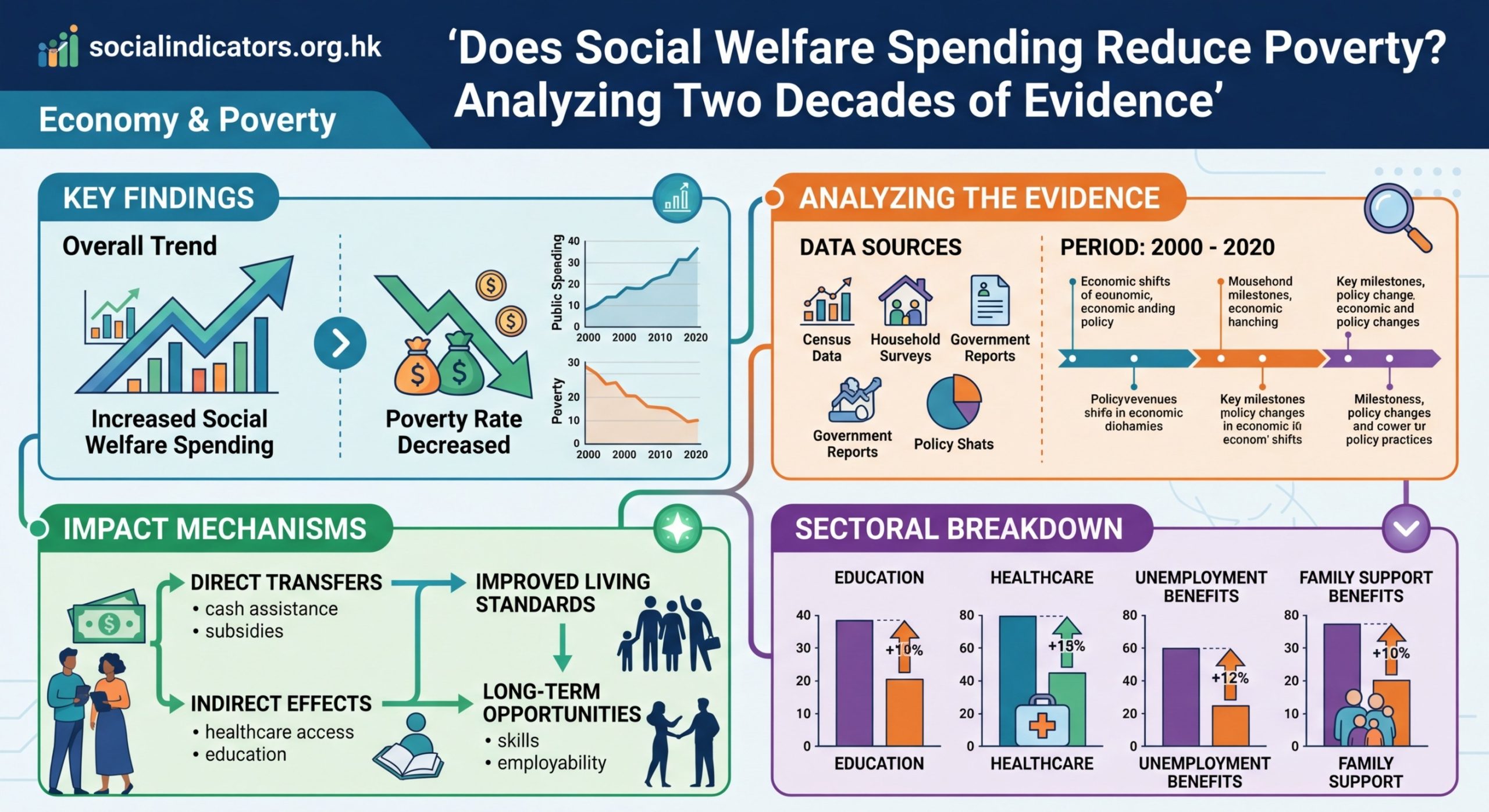
Understanding how social welfare reduces poverty requires looking beyond dollar amounts. Three core mechanisms drive effectiveness:
-
Direct income supplementation fills the gap between earnings and basic needs. Cash transfers, food assistance, and housing subsidies immediately lift households above poverty thresholds.
-
Human capital investment through education subsidies, healthcare access, and skills training breaks intergenerational poverty cycles. Children from supported families show better educational outcomes and higher lifetime earnings.
-
Economic stabilization during downturns prevents temporary setbacks from becoming permanent poverty traps. Unemployment insurance and emergency assistance maintain consumption levels when jobs disappear.
Each mechanism operates differently but contributes to overall poverty reduction. The most successful systems integrate all three rather than relying on a single approach.
Program design features that determine success
Not all welfare spending produces equal results. Design features separate effective programs from wasteful ones.
Targeting accuracy determines whether resources reach those who need them most. Universal programs ensure coverage but may waste resources on higher income households. Means tested programs concentrate benefits but often miss eligible recipients or create administrative barriers.
Benefit adequacy matters tremendously. Payments must be sufficient to actually reduce material hardship. Programs offering token amounts show minimal poverty impact. Research suggests benefits need to reach at least 40 to 50 percent of median income to meaningfully reduce poverty.
Behavioral requirements can either enhance or undermine effectiveness. Work requirements may encourage employment but also exclude those unable to work. Educational requirements for child benefits improve long term outcomes but may reduce short term take up rates.
| Program Type | Poverty Reduction Impact | Administrative Cost | Coverage Rate |
|---|---|---|---|
| Universal basic income | Moderate to high | Low | 95 to 100% |
| Means tested cash transfers | High | Moderate to high | 60 to 80% |
| In kind benefits | Low to moderate | High | 50 to 70% |
| Conditional cash transfers | High | Moderate | 65 to 85% |
| Tax credits | Moderate | Low | 40 to 60% |
The table illustrates trade offs inherent in different approaches. No single design dominates across all criteria.
Common mistakes that reduce welfare effectiveness
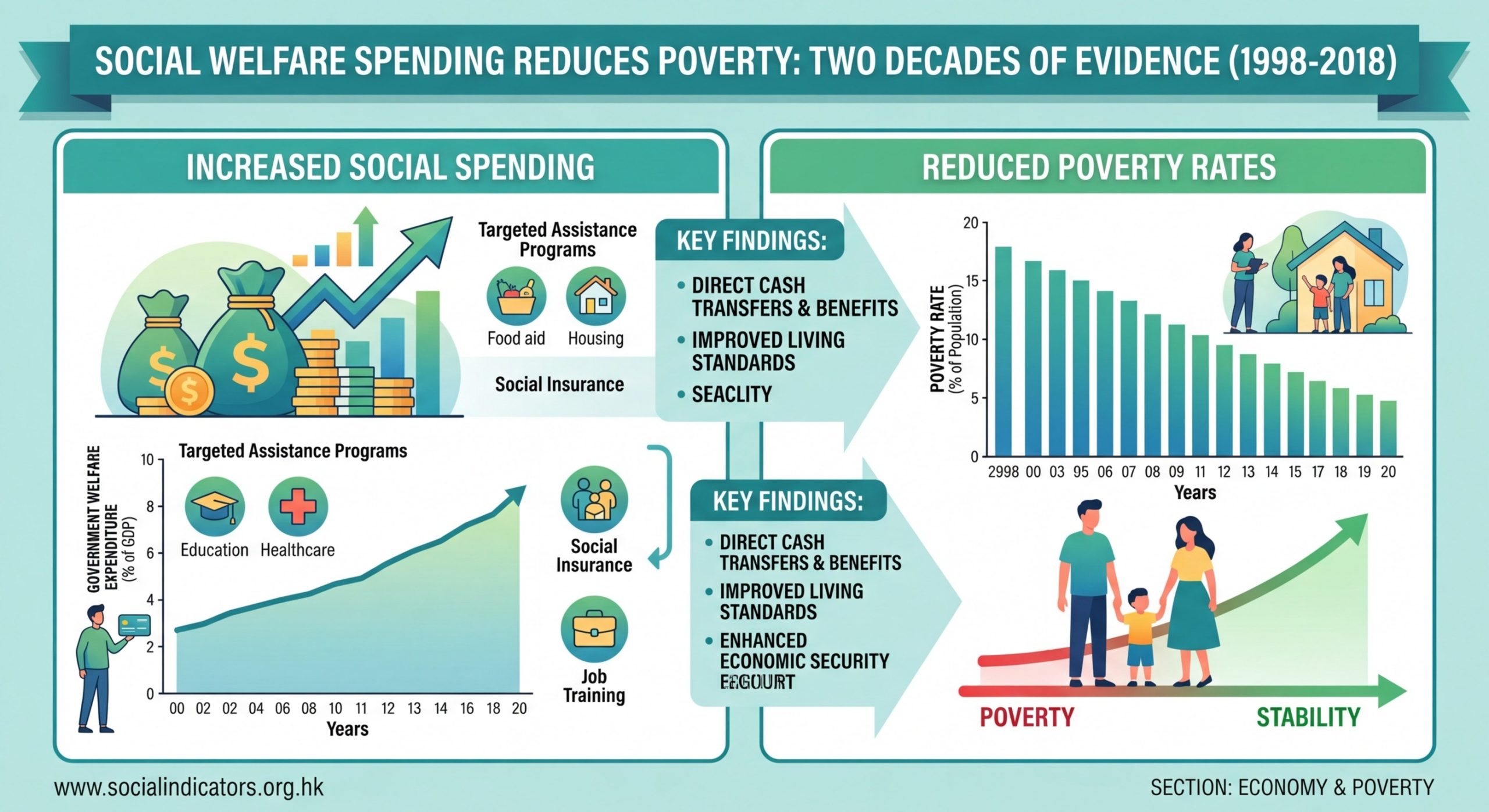
Even well intentioned programs can fail when implementation goes wrong. Several patterns repeatedly undermine poverty reduction efforts.
Administrative complexity creates barriers that exclude eligible recipients. Application processes requiring extensive documentation, multiple office visits, or complex eligibility calculations reduce participation. Studies show that each additional form or verification step reduces take up rates by 5 to 15 percent.
Benefit cliffs punish recipients for earning more. When a small income increase triggers complete benefit loss, families face effective marginal tax rates exceeding 100 percent. This traps people in poverty rather than supporting transitions to self sufficiency.
Fragmented delivery forces families to navigate multiple agencies and programs. A single parent might need to apply separately for food assistance, housing support, childcare subsidies, and healthcare. Each program has different eligibility rules, application processes, and renewal schedules. This complexity exhausts recipients and wastes administrative resources.
The most effective anti poverty programs share three characteristics: they provide adequate benefits, reach intended recipients efficiently, and integrate smoothly with employment. Programs missing any of these elements show dramatically reduced poverty impact regardless of spending levels.
Political volatility undermines long term effectiveness. Programs that change dramatically with each election cycle fail to build the sustained support needed for poverty reduction. Families can’t plan when benefits might disappear. Service providers can’t invest in quality when funding fluctuates wildly.
Why context shapes welfare spending outcomes
The same program design produces different results in different settings. Economic conditions, labor markets, and social structures all influence effectiveness.
Economic growth rates interact with welfare spending. During expansions, modest programs can successfully supplement earnings and reduce poverty. During recessions, the same spending level may prove inadequate as more people need support and unemployment rises.
Labor market structure determines how welfare interacts with employment. In economies with abundant formal sector jobs, programs can focus on temporary support and skills training. In economies dominated by informal work, programs need different designs to reach workers without stable employers.
Demographic composition affects program needs and costs. Aging populations require different mixes of support than young populations. Urban poverty differs from rural poverty. One size fits all approaches inevitably fail.
Hong Kong’s experience illustrates these contextual factors. High housing costs mean that income thresholds adequate elsewhere leave families struggling. An aging population requires expanded elderly support. High inequality means poverty persists despite overall prosperity.
Measuring what matters beyond poverty rates
Headline poverty rates provide useful snapshots but miss important dimensions. Comprehensive evaluation requires multiple metrics.
Poverty depth measures how far below the poverty line people fall. A program might not reduce the poverty rate but could substantially improve conditions for those remaining poor. This matters for wellbeing even if statistics don’t show it.
Poverty duration distinguishes temporary hardship from persistent deprivation. Programs that help families exit poverty within months produce better outcomes than those where poverty stretches across years.
Child outcomes offer the clearest window into long term program effectiveness. Children in families receiving adequate support show:
- Better educational attainment
- Improved health outcomes
- Higher adult earnings
- Lower involvement with criminal justice systems
- Reduced intergenerational poverty transmission
These outcomes justify welfare spending even when immediate poverty rate changes appear modest.
Evidence from different welfare state models
Countries have developed varied approaches to social welfare. Comparing models reveals what works under different conditions.
Nordic universalism provides generous benefits to all citizens regardless of income. High tax rates fund comprehensive services. This approach produces the lowest poverty rates globally but requires substantial public spending and strong social consensus.
Anglo-American selectivity targets benefits narrowly to the poorest households. Lower tax rates and spending levels appeal to voters skeptical of government. Poverty reduction proves more modest, and administrative costs run higher relative to benefits delivered.
Continental insurance models tie benefits to employment and contributions. Workers receive generous support during unemployment or illness. Those outside formal employment receive less. This approach works well for core workers but leaves gaps for others.
East Asian developmental states historically emphasized economic growth over redistribution. Social welfare spending remained low. Recent decades have seen gradual expansion as populations age and inequality rises. Effectiveness varies with implementation quality.
No model clearly dominates. Each reflects different values, political economies, and historical paths. But all successful models share adequate funding, efficient administration, and political sustainability.
The role of complementary policies
Social welfare spending works best alongside other poverty reduction strategies. Isolated programs produce limited results.
Minimum wage policies reduce the need for income supplementation. When wages cover basic needs, fewer families require assistance. But minimum wages set too high can reduce employment, particularly for less skilled workers.
Affordable housing programs multiply the effectiveness of cash transfers. Housing costs consume 30 to 50 percent of low income household budgets in many cities. Without affordable housing, income support flows directly to landlords rather than improving family wellbeing.
Healthcare access prevents medical costs from pushing families into poverty. Even generous income support fails if a single illness wipes out savings and creates debt. Universal healthcare or comprehensive insurance removes this threat.
Quality education provides the foundation for economic mobility. Welfare spending stabilizes families so children can focus on learning. But if schools are inadequate, short term support won’t translate into long term opportunity.
Building political support for effective programs
Technical design means little without political sustainability. Programs need public support to survive and thrive.
Visible results build constituencies. When voters see poverty declining and communities strengthening, they support continued investment. Programs that hide their impact struggle politically.
Broad beneficiary bases create stronger coalitions than narrow targeting. Universal child allowances enjoy wider support than means tested assistance. Middle class families receiving benefits become advocates rather than critics.
Administrative efficiency matters for public perception. Stories of waste and fraud undermine support faster than evidence of effectiveness builds it. Clean, efficient delivery protects programs politically.
Economic framing influences acceptance. Programs described as investments in human capital or economic stabilizers gain more support than those framed as charity. The same spending receives different reactions depending on how it’s presented.
What two decades of evidence teaches us
The accumulated research provides clear lessons for policymakers and advocates.
Social welfare spending does reduce poverty when programs are well designed, adequately funded, and efficiently administered. The question isn’t whether spending works but how to make it work better.
Effective programs share common features. They provide sufficient benefits to meet basic needs. They reach intended recipients without excessive barriers. They integrate with employment rather than replacing it. They adapt to local contexts rather than imposing one size fits all solutions.
Poor implementation can waste resources and undermine public support. Complex applications, benefit cliffs, fragmented delivery, and political volatility all reduce effectiveness. Avoiding these mistakes matters as much as increasing spending.
Context shapes outcomes. The same program design produces different results in different economic, demographic, and institutional settings. Successful approaches require local adaptation rather than blind copying of foreign models.
Complementary policies multiply impact. Welfare spending works best alongside minimum wages, affordable housing, healthcare access, and quality education. Isolated programs produce limited results.
Making the evidence work for communities
The data clearly shows that social welfare spending can substantially reduce poverty. But evidence alone doesn’t create change.
Communities need advocates who understand what works and can push for effective programs. Policymakers need political cover to invest adequately and resist pressure for poorly designed alternatives. Administrators need resources and flexibility to implement efficiently.
The question isn’t whether we can afford to reduce poverty through social welfare spending. Two decades of evidence show we can. The real question is whether we’ll choose to do so. The tools exist. The knowledge exists. What remains is the political will to apply both effectively.
Your voice matters in this conversation. Whether you’re researching policy options, analyzing program effectiveness, or advocating for change, you now have the evidence to make informed arguments. Use it to push for programs that actually work, designed with care and funded adequately. Communities everywhere deserve nothing less.




Post Comment