How Mental Health Services in Hong Kong Have Evolved Over Two Decades
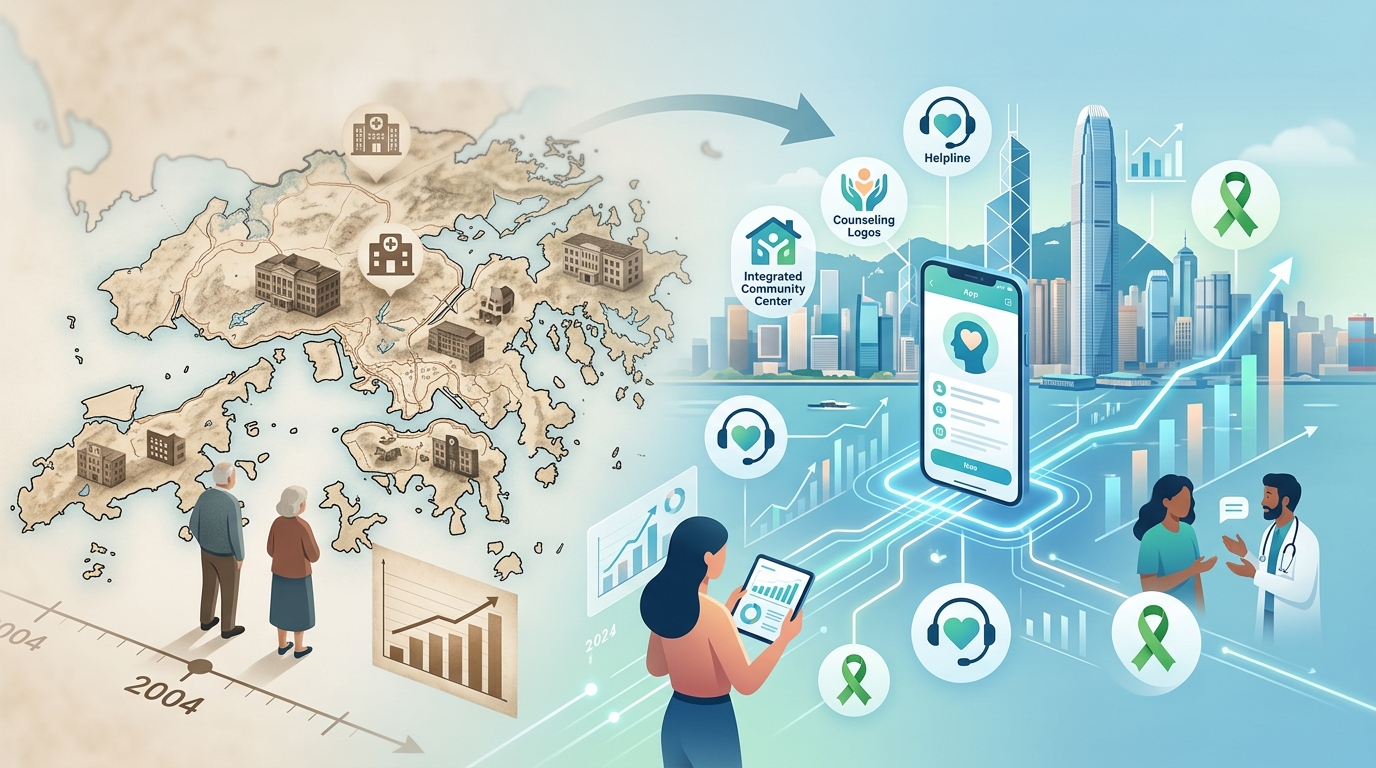
Hong Kong’s mental health landscape has undergone a dramatic transformation since the turn of the millennium. What began as a predominantly hospital-centered system has evolved into a multifaceted network of community services, early intervention programs, and integrated care models that reflect both global best practices and local cultural realities.
Mental health services in Hong Kong have shifted from institutional psychiatric care to community-based models since 2000. Major reforms include the 2010 Mental Health Policy Review, establishment of Community Psychiatric Services, integration of primary care screening, and expansion of early intervention programs. Despite progress, workforce shortages and stigma remain significant barriers to accessible care for Hong Kong’s 7.5 million residents.
The institutional era and early reforms
The history of mental health services in Hong Kong began with a heavily institutional approach. Castle Peak Hospital, opened in 1961, served as the primary psychiatric facility for decades. Patients with severe mental illness often faced long-term hospitalization with limited community support upon discharge.
By the late 1990s, international movements toward deinstitutionalization began influencing local policy. The Hospital Authority started piloting community psychiatric teams in select districts. These early efforts laid groundwork for broader systemic changes that would follow in the 2000s.
The 1997 handover to China coincided with growing recognition that mental health needed dedicated policy attention. Hospital beds remained the default solution for acute cases, but pressure mounted to develop alternatives that could serve patients in their home environments.
Policy milestones that reshaped care delivery
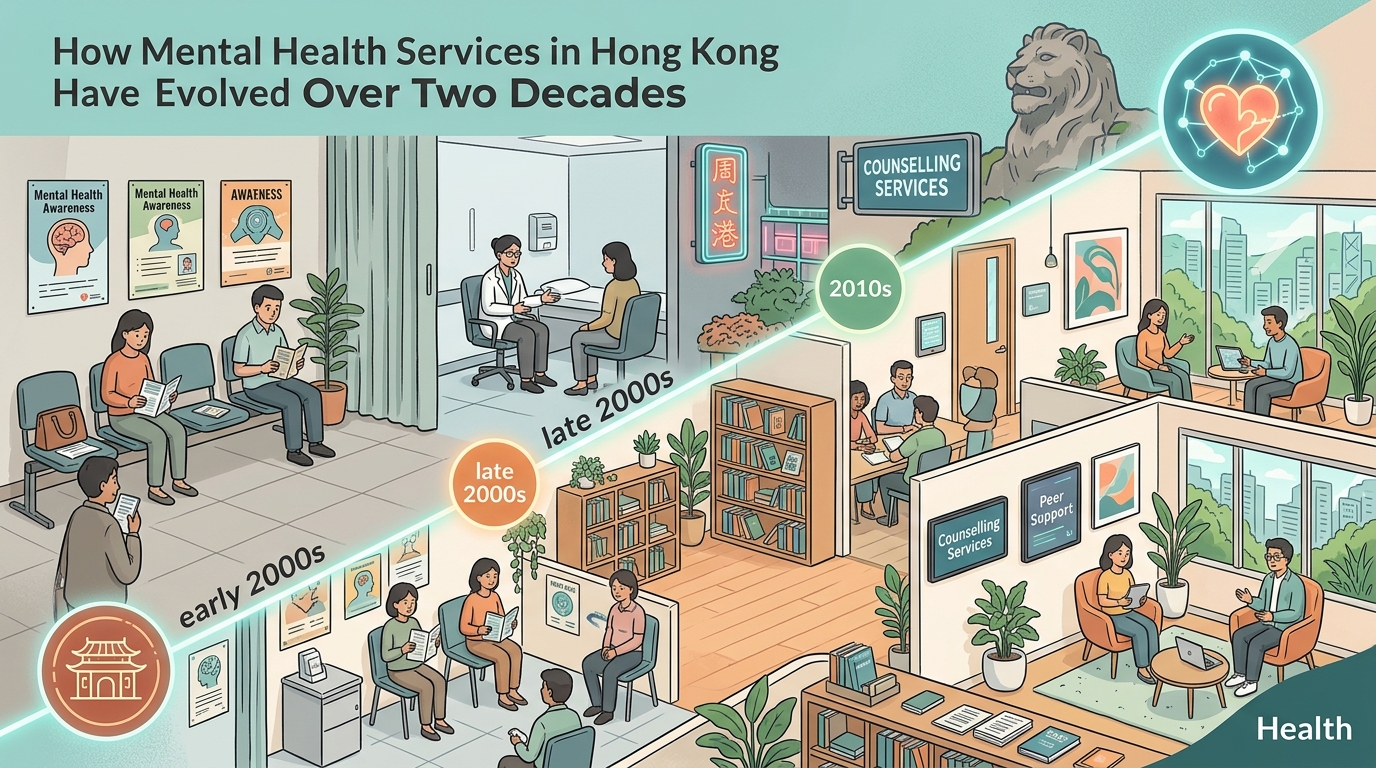
Several landmark policy initiatives fundamentally altered how Hong Kong approached psychiatric care between 2000 and 2020.
The 2010 Mental Health Policy Review
This comprehensive assessment identified critical gaps in service provision. The review committee found that community support remained fragmented and that primary care physicians lacked training to identify mental health conditions early.
Recommendations included establishing integrated community centers, training general practitioners in mental health screening, and creating pathways for patients to access care without hospital admission. Implementation began in phases starting 2011.
Community Psychiatric Service expansion
The Hospital Authority expanded Community Psychiatric Services (CPS) to all 18 districts by 2014. These teams brought psychiatrists, psychiatric nurses, occupational therapists, and clinical psychologists directly into neighborhoods.
CPS teams conducted home visits, ran psychoeducation groups, and coordinated with social welfare agencies. This model reduced reliance on emergency departments and provided continuity of care that hospital-based services struggled to deliver.
Integration with primary care
Starting in 2010, the Department of Health launched training programs for private general practitioners. The goal was to build capacity for managing common mental disorders like depression and anxiety at the primary care level.
By 2016, over 400 private doctors had completed mental health training modules. Patients could now receive initial assessment and treatment from their family doctor, with referral pathways to specialist services for complex cases.
Service types and their evolution
Mental health services in Hong Kong now span multiple sectors and service models. Understanding how each developed provides insight into the system’s current strengths and limitations.
| Service Type | Pre-2000 Model | Current Model | Key Changes |
|---|---|---|---|
| Inpatient Care | Long-term institutional stays | Acute stabilization with early discharge planning | Average length of stay decreased from 90+ days to 21 days |
| Outpatient Clinics | Hospital-based only | Hospital plus satellite community clinics | Wait times reduced from 16 weeks to 8 weeks for stable cases |
| Crisis Response | Emergency department only | Mobile crisis teams plus hotlines | 24/7 crisis intervention available in all districts |
| Rehabilitation | Hospital-based occupational therapy | Community rehabilitation centers and supported employment | Over 60 community centers operating by 2020 |
The shift from hospital-centric to community-based care required substantial investment in infrastructure and workforce development. Each service type evolved at different rates depending on funding priorities and available personnel.
Workforce development and capacity challenges
Building a skilled mental health workforce proved one of the most persistent challenges throughout this period. Hong Kong faced shortages across all professional categories.
Psychiatrist numbers grew from approximately 200 in 2000 to 450 by 2020. This represented significant progress but still fell short of WHO recommendations of one psychiatrist per 10,000 population. With a population of 7.5 million, Hong Kong would need 750 psychiatrists to meet this benchmark.
Psychiatric nursing positions expanded more rapidly. The Hospital Authority recruited nurses from overseas and created specialized training tracks for local graduates. By 2018, psychiatric nursing posts had doubled compared to 2000 levels.
Clinical psychology remained a bottleneck. Limited training places at local universities meant that many positions went unfilled. Wait times for psychological therapy services often exceeded six months in public clinics.
“We’ve made remarkable progress in expanding community services, but the shortage of trained professionals means many patients still wait too long for their first appointment. The gap between policy ambition and service capacity remains our greatest challenge.” — Hospital Authority Mental Health Service Review, 2019
Early intervention programs for specific populations
Recognizing that early treatment improves long-term outcomes, Hong Kong invested heavily in programs targeting specific age groups and conditions.
Youth mental health initiatives
The EASY program (Early Assessment Service for Young People with Psychosis) launched in 2001 as one of Asia’s first early psychosis intervention services. The program offered specialized care for individuals aged 15 to 25 experiencing first-episode psychosis.
Research showed that EASY participants had better functional outcomes and lower relapse rates compared to those receiving standard care. By 2010, the program expanded to all districts.
School-based mental health support
The Education Bureau partnered with the Hospital Authority to place educational psychologists and school social workers in secondary schools. Starting in 2008, schools received funding to hire dedicated mental health staff.
These professionals conducted screening, provided counseling, and facilitated referrals to clinical services. The model recognized that many young people first show signs of mental health difficulties in educational settings.
Elderly mental health services
As Hong Kong’s population aged, demand grew for services addressing late-life depression, dementia, and other geriatric mental health conditions. Psychogeriatric teams formed within Community Psychiatric Services starting in 2012.
These teams worked closely with residential care homes, training staff to recognize mental health symptoms and providing consultation for complex cases. The integration of mental health support into elder care settings represented a significant advancement.
Data-driven improvements and monitoring
One notable feature of mental health services Hong Kong history is the emphasis on data collection and outcome monitoring. The Hospital Authority maintained detailed statistics on service utilization, wait times, and clinical outcomes.
Annual reports tracked key performance indicators:
- Number of new psychiatric cases registered
- Average wait time from referral to first appointment
- Readmission rates within 28 days of discharge
- Community service contact rates
- Workforce numbers by professional category
This data informed resource allocation decisions and helped identify service gaps. For example, when data showed high readmission rates in certain districts, the Hospital Authority deployed additional community support workers to those areas.
Public reporting increased transparency and allowed researchers to study system performance over time. Multiple academic papers analyzed trends in service utilization and patient outcomes using this administrative data.
Persistent barriers and ongoing challenges
Despite substantial progress, several barriers continued limiting access to mental health care throughout this period.
Stigma and help-seeking behavior
Cultural attitudes toward mental illness remained a significant obstacle. Many individuals delayed seeking help due to concerns about social judgment or discrimination. Family members often discouraged relatives from accessing psychiatric services.
Public education campaigns attempted to reduce stigma but achieved mixed results. Surveys conducted in 2018 showed that while knowledge about mental illness had improved, willingness to disclose one’s own mental health struggles remained low.
Resource allocation and funding constraints
Mental health services received approximately 6% of total public health expenditure throughout the 2000s and 2010s. Advocates argued this was insufficient given the burden of mental illness, which accounted for an estimated 14% of Hong Kong’s total disease burden.
Budget constraints limited expansion of some services. Psychological therapy services remained particularly underfunded, with long wait lists persisting despite demonstrated effectiveness.
Geographic disparities
While Community Psychiatric Services operated in all 18 districts, service intensity varied considerably. Districts with newer infrastructure and higher population density often had better access to specialized programs.
Rural areas and outlying islands faced particular challenges. Residents sometimes needed to travel over an hour to reach specialist services, creating barriers for those with mobility limitations or work commitments.
Comparing Hong Kong’s trajectory to regional neighbors
Mental health services Hong Kong history reflects broader trends across East Asia while maintaining distinctive local characteristics.
Singapore implemented similar community psychiatric services during the same period. Both cities faced comparable challenges with stigma and workforce shortages. Singapore’s smaller population allowed faster rollout of some initiatives, but Hong Kong’s larger scale enabled more specialized programs.
Taiwan underwent parallel reforms, with its National Health Insurance system covering mental health services from 1995. Taiwan achieved better psychiatrist-to-population ratios but faced similar difficulties expanding psychological therapy services.
Mainland China’s mental health system evolved differently due to its size and administrative structure. Urban centers like Shanghai and Beijing developed services comparable to Hong Kong, but rural areas lagged significantly. Hong Kong’s experience informed some mainland policy initiatives.
Recent developments and future directions
The period from 2018 to 2020 brought new challenges and opportunities. Social unrest in 2019 increased demand for mental health services, particularly among young people. The Hospital Authority reported a 30% increase in youth seeking mental health support between 2018 and 2020.
The COVID-19 pandemic accelerated adoption of telepsychiatry. Services that previously required in-person visits shifted to video consultations. This transition expanded access for some populations while creating barriers for others lacking technology or privacy at home.
Policy discussions increasingly focused on:
- Expanding school-based mental health services to primary schools
- Creating dedicated mental health crisis centers separate from general emergency departments
- Increasing funding for psychological therapy services
- Developing peer support programs led by individuals with lived experience
- Strengthening integration between mental health and social services
How two decades of change shaped current practice
The transformation of mental health services in Hong Kong over two decades represents substantial progress from the institutional model that dominated the 20th century. Community-based care, early intervention programs, and integrated service models now form the foundation of psychiatric care delivery.
Healthcare researchers and policy analysts studying this evolution can identify several lessons. Sustained political commitment proved essential for systemic change. Data-driven decision making enabled targeted improvements. Workforce development remained a persistent challenge requiring long-term investment.
The journey continues. Current services reach more people earlier in their illness course than ever before. Yet gaps remain in accessibility, particularly for psychological therapies and services addressing cultural and linguistic diversity. The next phase of development will likely focus on personalization, technology integration, and further reducing barriers to care.
Understanding this history helps contextualize current debates about resource allocation, service models, and policy priorities. It reminds us that meaningful health system transformation requires decades of sustained effort, not single policy interventions. For professionals working in or studying psychiatric care systems, Hong Kong’s experience offers valuable insights into both the possibilities and limitations of reform in densely populated Asian contexts.




Post Comment