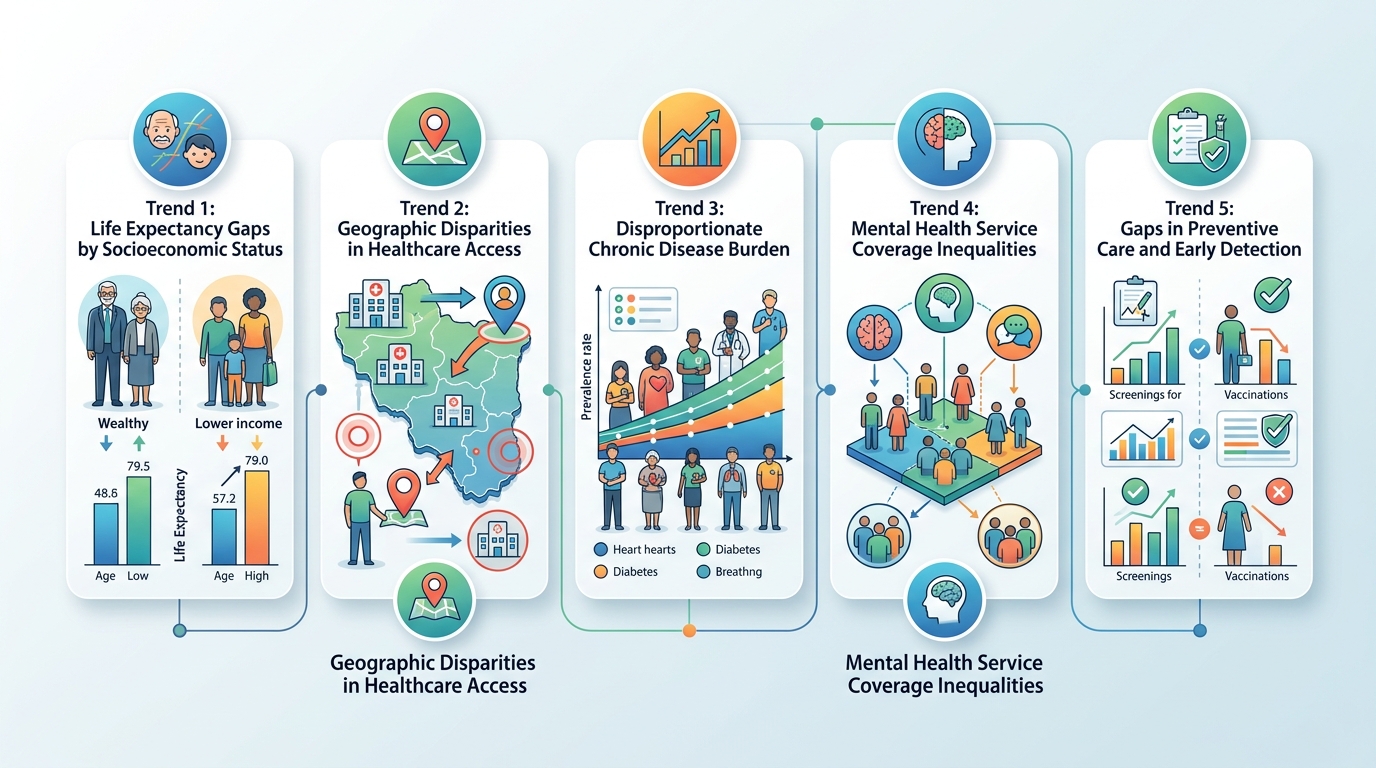
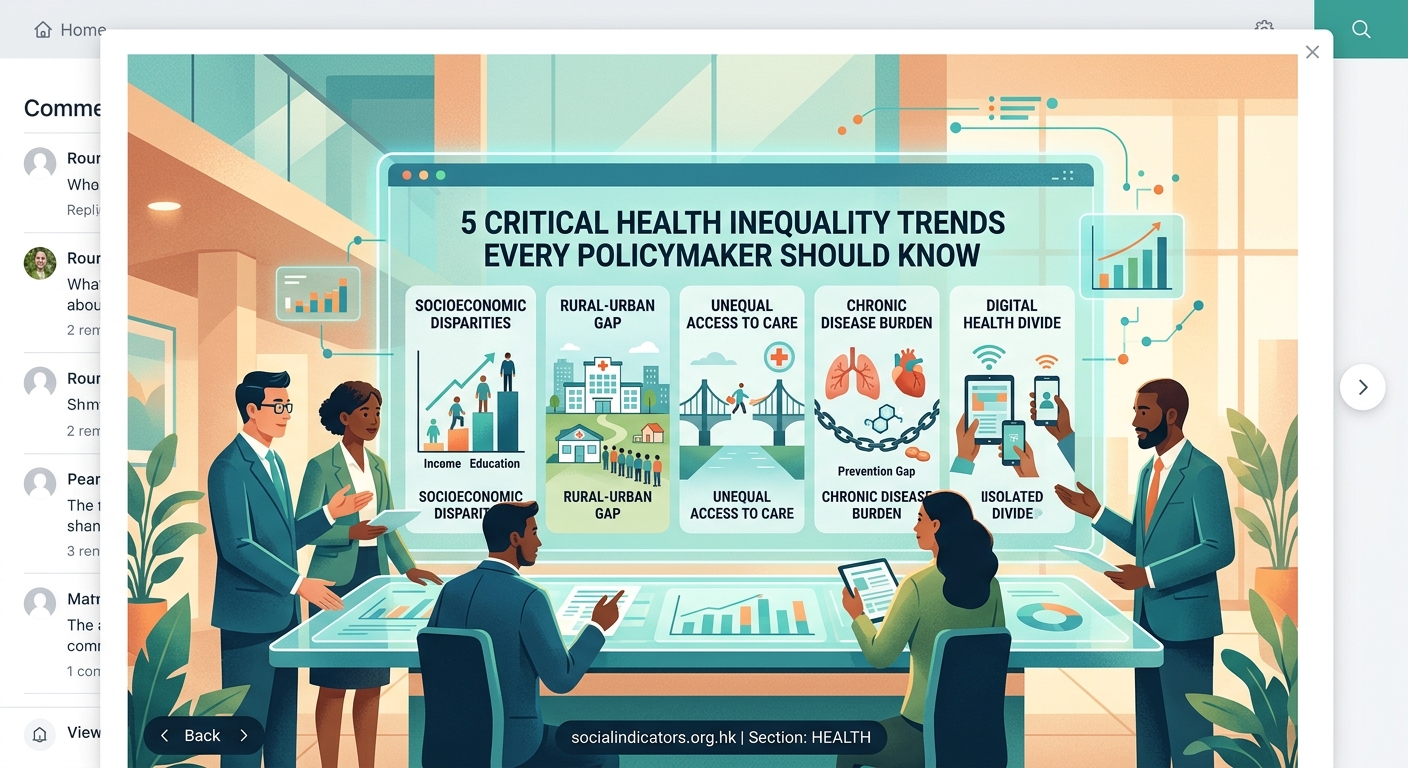
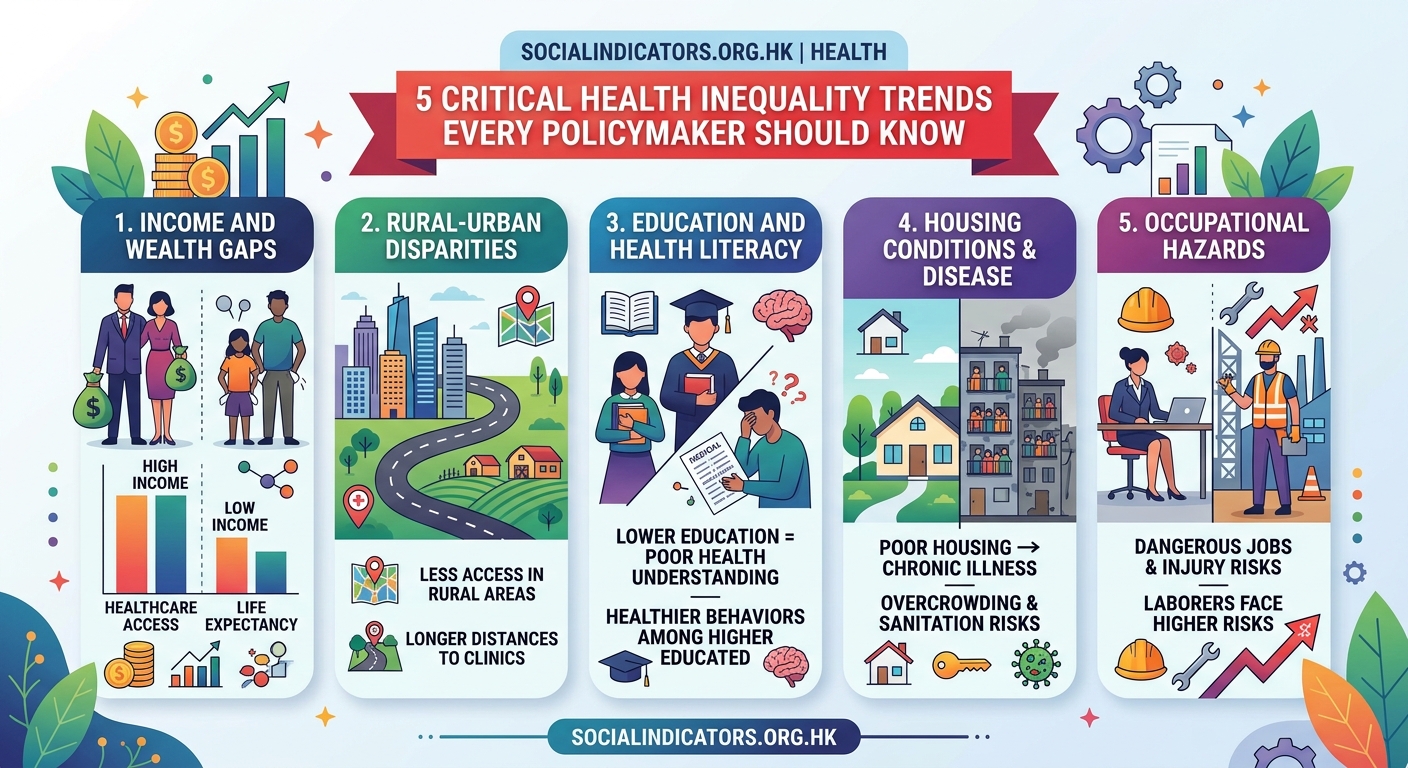
5 Critical Health Inequality Trends Every Policymaker Should Know
Health disparities continue to widen across Hong Kong, creating urgent challenges for public health systems and vulnerable populations. Understanding these patterns isn’t just an academic exercise. It’s the foundation for building policies that actually work.
Health inequality trends reveal growing disparities in access, outcomes, and resources across socioeconomic groups in Hong Kong. Five critical patterns demand immediate policy attention: income-based health access gaps, geographic service distribution, aging population care, mental health service shortages, and chronic disease management inequities. Evidence-based interventions can address these disparities through targeted resource allocation and system reforms.
Income drives health access more than ever
The correlation between household income and health outcomes has strengthened over the past five years. Families in the lowest income quartile face hospitalization rates 2.3 times higher than those in the highest quartile.
This gap extends beyond emergency care. Preventive health services remain out of reach for many low-income residents. Dental care, vision screening, and early cancer detection programs show the steepest income gradients.
Data from the Social Development Index reveals that 43% of households earning below the median income postponed necessary medical care in the past year due to cost concerns. That number was 31% just three years ago.
The working poor face particular challenges. Many earn just enough to disqualify from public assistance but not enough to afford private healthcare premiums. They fall into a coverage gap that leaves them vulnerable during health crises.
Geographic disparities create two-tier systems
Healthcare quality varies dramatically by district. Residents in outlying areas wait an average of 18 weeks for specialist consultations, compared to 9 weeks in central districts.
The distribution of primary care facilities tells a stark story:
| District Type | Clinics per 10,000 Residents | Average Wait Time | After-Hours Services |
|---|---|---|---|
| Central Urban | 4.2 | 45 minutes | Available |
| Suburban | 2.1 | 90 minutes | Limited |
| Rural/Outlying | 0.8 | 180+ minutes | Rare |
Transportation costs compound these access barriers. A family in a remote area might spend HK$200 on round-trip transport to reach adequate care. For households on tight budgets, this becomes a significant deterrent to seeking treatment.
Telemedicine could bridge some gaps, but adoption remains uneven. Only 23% of public clinics in outlying districts offer video consultation services, compared to 67% in urban centers.
Aging populations strain existing resources
Hong Kong’s demographic shift creates unprecedented pressure on health systems. The proportion of residents over 65 has reached 21%, and this group accounts for 64% of all hospital bed days.
Elder care needs extend far beyond acute medical treatment. Chronic condition management, mobility support, and cognitive health services all face capacity constraints.
“We’re treating aging as a medical problem when it’s really a social infrastructure challenge. Health inequality among older adults stems from inadequate community support systems, not just clinical resources.” — Dr. Margaret Leung, Geriatric Care Specialist
Caregiver burden represents an often-overlooked dimension of health inequality. Families caring for elderly relatives report:
- 68% experience financial strain from care costs
- 54% reduce work hours or leave employment
- 71% report declining personal health
- 43% delay their own medical care
These impacts fall disproportionately on women and lower-income families who lack resources to hire professional care support.
Mental health services lag behind demand
Mental health represents perhaps the fastest-growing area of health inequality. Waiting times for public psychiatric services now average 64 weeks for non-urgent cases.
The shortage hits young adults particularly hard. University students and early-career professionals face mounting stress but encounter significant barriers to care:
- Limited counseling services at educational institutions
- High costs of private therapy (HK$800-1,500 per session)
- Stigma concerns that deter help-seeking
- Long public system wait times that delay intervention
Suicide rates among 15-24 year-olds increased 18% over the past three years, yet youth mental health funding grew only 4% during the same period.
Workplace mental health support varies dramatically by industry and company size. Employees at large corporations typically access employee assistance programs, while those in small businesses or informal sectors have few options.
Chronic disease management reveals systemic gaps
Diabetes, hypertension, and cardiovascular conditions affect different populations unequally. Disease prevalence correlates strongly with income and education levels.
Lower-income patients with chronic conditions face multiple disadvantages:
- Less access to nutrition counseling and healthy food options
- Limited ability to afford medications during financial pressure
- Fewer opportunities for regular monitoring and preventive care
- Higher likelihood of complications requiring hospitalization
Medication adherence rates illustrate the problem clearly. Among diabetes patients, those in the lowest income quartile show 58% adherence to prescribed treatments, compared to 84% in the highest quartile.
The gap isn’t about knowledge or motivation. Cost pressures force impossible choices. A patient might skip doses to make medications last longer or prioritize rent over prescriptions.
Disease management programs show promise but reach only a fraction of those who need them. Current capacity serves approximately 30% of eligible patients, leaving many to manage complex conditions without adequate support.
Policy responses that match the evidence
Addressing health inequality requires moving beyond incremental adjustments. Five evidence-based strategies can drive meaningful change:
Expand primary care capacity in underserved areas. Mobile clinics, satellite facilities, and financial incentives for practitioners willing to work in outlying districts can reduce geographic disparities.
Create sliding-scale payment systems. Income-adjusted fees for preventive and chronic care services would reduce financial barriers while maintaining system sustainability.
Invest in community health workers. Trained paraprofessionals can provide education, care coordination, and basic services in neighborhoods with limited formal healthcare infrastructure.
Integrate mental health into primary care. Co-locating mental health services with general medical care reduces stigma and improves access, particularly for populations hesitant to seek specialized psychiatric care.
Strengthen caregiver support programs. Respite care, training, and financial assistance for family caregivers would reduce health impacts on both caregivers and care recipients.
Measuring progress beyond aggregate statistics
Traditional health metrics often mask inequality. Average life expectancy might improve while gaps between groups widen. Effective monitoring requires disaggregated data.
Essential measurement approaches include:
- Stratifying all health indicators by income quintile, district, age, and gender
- Tracking service utilization rates alongside availability metrics
- Monitoring financial barriers through patient experience surveys
- Measuring health outcomes for specific vulnerable populations
- Assessing caregiver health and economic impacts
Regular reporting on these disaggregated measures keeps inequality visible and holds systems accountable for progress across all population segments.
Building systems that serve everyone
Health inequality isn’t inevitable. It results from policy choices, resource allocation decisions, and system designs that advantage some groups over others.
The trends outlined here represent both challenges and opportunities. Each disparity identified points toward specific interventions with strong evidence of effectiveness.
Policymakers hold the power to reshape these patterns. Strategic investments in primary care, targeted support for vulnerable populations, and commitment to equitable access can bend the curve on health inequality.
The data is clear. The solutions are known. What remains is the political will to prioritize equity alongside efficiency, and to measure success not by average outcomes but by progress for those currently left behind.
Start by examining your own jurisdiction’s data through an equity lens. Identify the gaps. Allocate resources accordingly. Then measure whether interventions actually reach those who need them most. Health systems that work for everyone require intentional design and sustained commitment to closing gaps rather than accepting them as inevitable.




Post Comment