
Are Hong Kong Students Experiencing More Academic Stress? A Longitudinal Study
Hong Kong’s students consistently rank among the highest performers in international assessments, but this achievement comes at a cost. Recent longitudinal studies show troubling trends in stress levels, mental health outcomes, and wellbeing indicators that demand attention from researchers and policymakers alike.
Academic stress Hong Kong students experience has intensified over the past decade, with longitudinal data showing increased anxiety, sleep deprivation, and mental health concerns. Research indicates systemic factors including examination pressure, tutoring culture, and parental expectations drive these trends. Evidence-based interventions require understanding both quantitative metrics and qualitative student experiences to inform effective policy responses.
Understanding the scope of student stress in Hong Kong
The numbers tell a stark story. Survey data from multiple cohorts reveals that academic pressure affects students across all education levels, from primary school through university.
Students in Hong Kong spend more hours on homework and private tutoring than peers in most developed economies. The 2019 Programme for International Student Assessment found Hong Kong students averaged 4.2 hours of homework weekly, but local studies suggest the actual figure reaches much higher when accounting for test preparation and supplementary classes.
Mental health indicators have deteriorated alongside these academic demands. Hospital admission rates for youth mental health concerns increased by 76% between 2009 and 2019. Self-reported stress levels among secondary students climbed from 64% in 2012 to 78% in 2020, according to data from the Student Health Service.
Sleep deprivation compounds these challenges. Research shows that only 23% of Hong Kong secondary students get the recommended eight hours of sleep on school nights. The majority report sleeping six hours or less, creating a cascade of health and cognitive impacts.
Longitudinal patterns reveal systemic issues
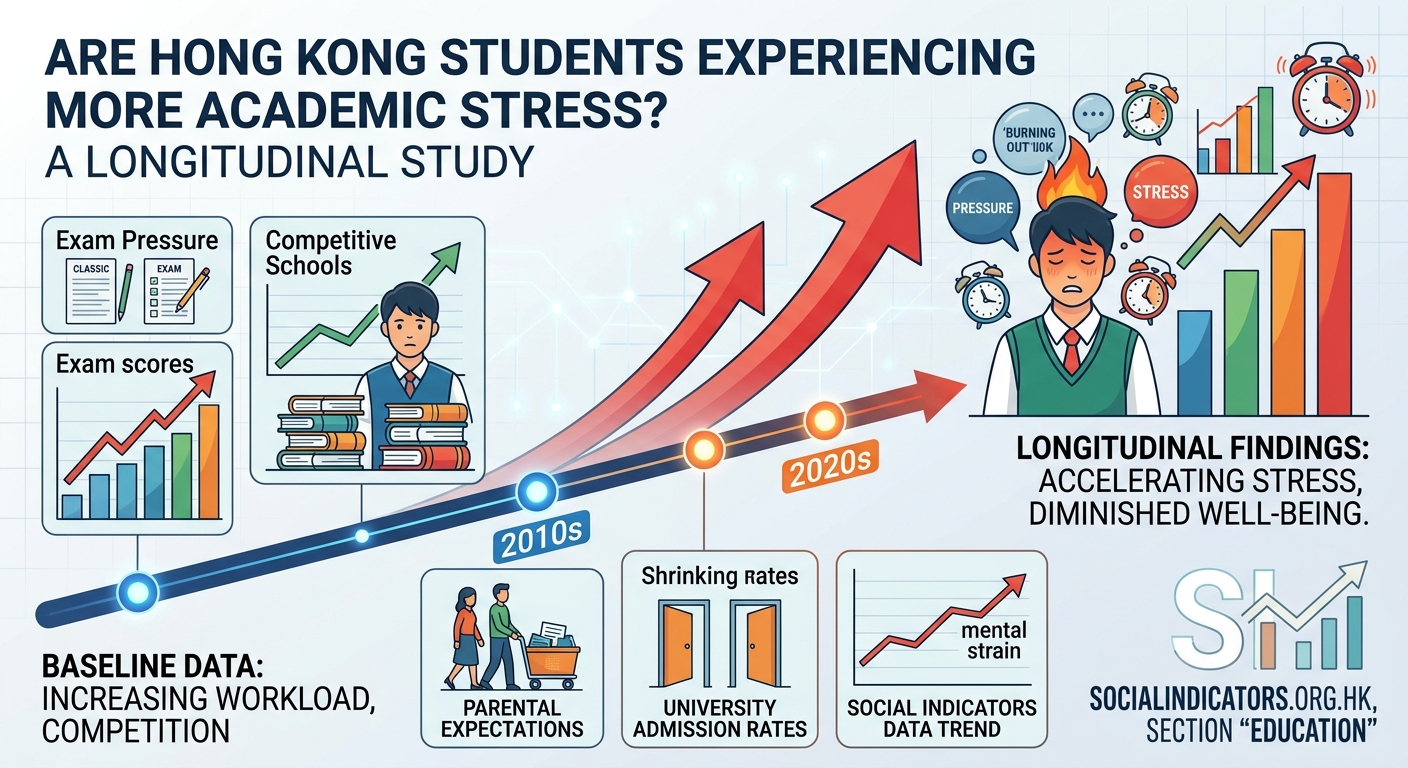
Tracking the same student cohorts over multiple years provides crucial insights that cross-sectional snapshots cannot capture. These studies document how stress accumulates and intensifies as students progress through the education system.
Primary school students already show elevated stress markers. By age 9, approximately 41% report feeling worried about academic performance most days. This percentage climbs steadily through each grade level.
The transition to secondary school marks a critical inflection point. Stress levels spike during Secondary 1 as students adjust to increased workload and competitive environments. Another surge occurs during Secondary 4 and 5 when students prepare for the Hong Kong Diploma of Secondary Education examination.
University students face different but equally significant pressures. Job market anxieties, internship competition, and graduate school preparation create sustained stress that extends beyond traditional academic concerns.
Gender differences in stress manifestation
Female students consistently report higher stress levels than male peers across all age groups. The gap widens during adolescence, with secondary school girls showing stress rates 15 to 20 percentage points higher than boys.
However, boys demonstrate higher rates of behavioral problems and academic disengagement as stress responses. These gender patterns suggest that aggregate statistics may undercount male student distress when surveys rely primarily on self-reported emotional symptoms.
Socioeconomic factors shape stress experiences
Family income level correlates with both stress sources and available support resources. Students from lower-income families report additional stress from part-time work obligations and concerns about educational costs.
Paradoxically, students from higher-income families often face intense parental expectations and pressure to maintain elite academic trajectories. The stress profile differs, but the intensity remains high across socioeconomic groups.
Key stressors identified through empirical research
Understanding what drives academic stress requires examining multiple intersecting factors. Research has identified several primary stressors that appear consistently across studies.
Examination system pressure: The high-stakes nature of public examinations creates sustained anxiety. Students describe feeling that single test performances determine their entire futures. This perception, whether accurate or not, generates enormous psychological burden.
Excessive homework load: Time diary studies show students spending 3 to 5 hours daily on homework during peak periods. This leaves minimal time for rest, physical activity, or social connection.
Tutoring culture normalization: Approximately 85% of Hong Kong students attend private tutoring at some point. This extends the school day significantly and creates additional performance pressures.
Parental expectations: Qualitative interviews reveal that perceived parental disappointment ranks among students’ top fears. Many describe feeling they must achieve specific academic outcomes to maintain family relationships.
Peer comparison: Competitive classroom environments encourage constant social comparison. Students report knowing classmates’ test scores and rankings, which intensifies pressure.
Future uncertainty: Economic changes and housing costs create anxiety about whether academic success will translate into stable adult lives.
Measuring academic stress through validated instruments
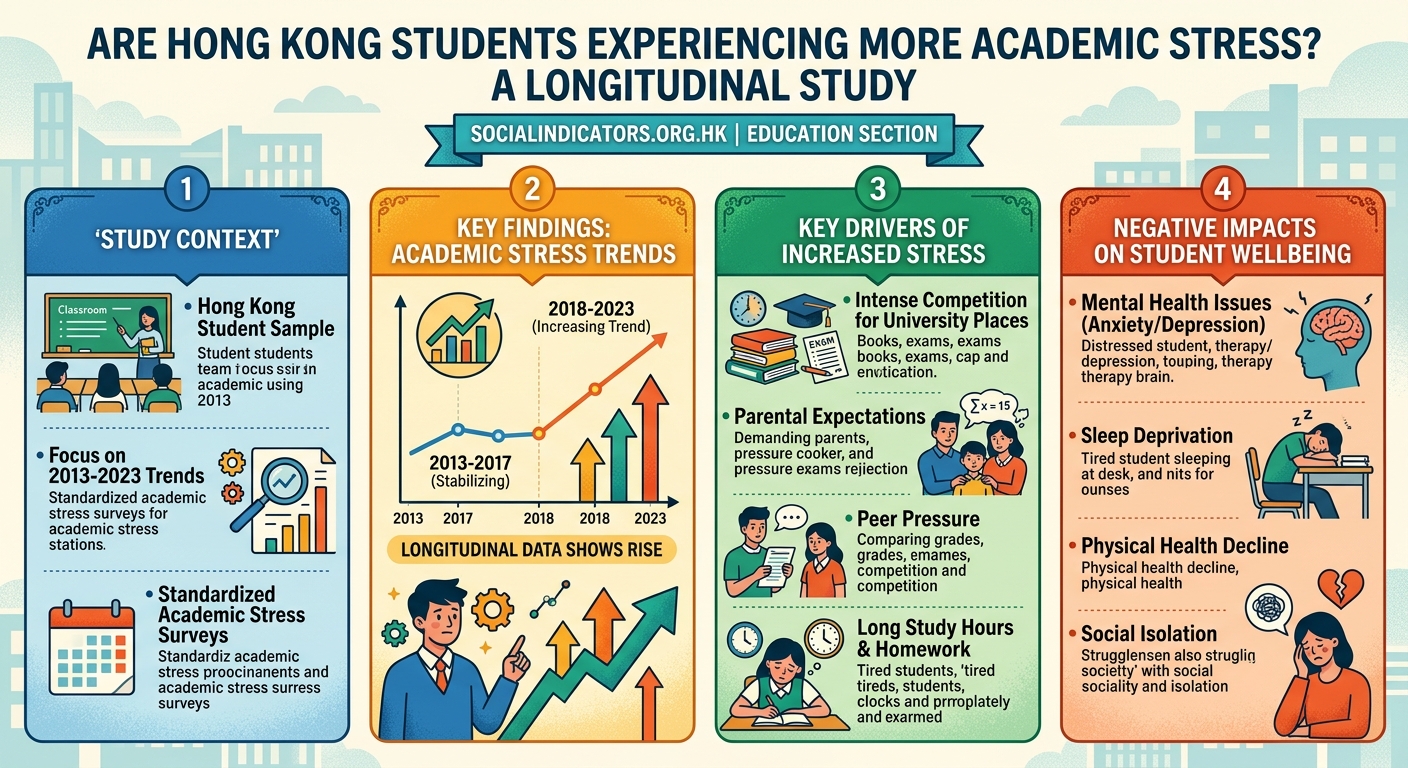
Researchers employ multiple assessment tools to quantify student stress levels and track changes over time. Understanding these methodologies helps interpret published findings.
| Measurement Tool | What It Assesses | Typical Application |
|---|---|---|
| Perceived Stress Scale | General stress appraisal | Baseline screening across populations |
| Depression Anxiety Stress Scales | Mental health symptoms | Clinical risk identification |
| Academic Expectations Stress Inventory | Education-specific pressures | School environment studies |
| Sleep quality questionnaires | Rest and recovery patterns | Health outcome research |
| Cortisol sampling | Biological stress markers | Validation of self-report data |
Combining self-report measures with biological indicators provides more complete pictures. Some studies collect saliva samples to measure cortisol levels, which correlate with chronic stress exposure.
Time-sampling methods capture daily fluctuations. Students complete brief surveys at random intervals, documenting their current stress levels and activities. This approach reduces recall bias inherent in retrospective questionnaires.
Focus groups and interviews add depth to quantitative data. Students describe their experiences in their own words, revealing nuances that structured surveys miss.
Health and performance consequences documented in research
Academic stress produces measurable impacts on both physical health and educational outcomes. These consequences create feedback loops that can intensify the original stressors.
Physical health effects include:
- Headaches and stomach problems reported by 54% of stressed students
- Weakened immune function leading to increased illness frequency
- Disrupted eating patterns and nutrition concerns
- Cardiovascular changes including elevated blood pressure
- Musculoskeletal pain from prolonged studying positions
Mental health outcomes show even more pronounced patterns. Anxiety disorders affect approximately 16% of Hong Kong adolescents, with academic concerns cited as primary triggers. Depression rates have climbed steadily, particularly among older adolescents.
Behavioral changes often accompany high stress. Students report increased irritability, social withdrawal, and conflict with family members. Some turn to maladaptive coping strategies including excessive gaming or substance use.
Academic performance itself suffers under extreme stress. While moderate pressure may enhance motivation, chronic high stress impairs memory consolidation, executive function, and creative thinking. Students describe feeling unable to concentrate despite spending long hours studying.
“The relationship between stress and performance follows an inverted U-curve. Optimal learning occurs at moderate arousal levels. When stress becomes chronic and overwhelming, cognitive function deteriorates even as study time increases. We see students working harder but learning less effectively.”
Comparing Hong Kong data with international contexts
Placing Hong Kong student stress within global perspective clarifies which aspects reflect universal adolescent experiences versus locally specific factors.
International assessments consistently show Hong Kong students achieving top academic results while reporting below-average life satisfaction. This pattern differs markedly from Nordic countries, where students report high wellbeing alongside strong academic performance.
East Asian education systems generally show elevated student stress compared to Western counterparts, but Hong Kong rates exceed even regional peers. Comparative studies find Hong Kong students report higher stress than counterparts in Singapore, South Korea, or mainland Chinese cities.
Several factors distinguish Hong Kong’s situation:
- Limited university places relative to qualified applicants create intense competition
- High cost of living increases pressure to secure lucrative careers
- Tutoring industry scale exceeds most comparable jurisdictions
- Physical space constraints limit opportunities for stress-relieving activities
- Cultural emphasis on academic achievement as primary success marker
These contextual factors suggest that interventions effective in other settings may require adaptation for Hong Kong’s specific circumstances.
Intervention approaches and their evidence base
Research has evaluated various strategies for reducing academic stress among Hong Kong students. Success rates vary considerably depending on implementation quality and systemic support.
School-based programs show modest positive effects when properly resourced. Mindfulness interventions reduced stress scores by an average of 12% across multiple studies. However, benefits diminished when programs were delivered superficially or without teacher training.
Homework policy changes produce mixed results. Schools that implemented “no homework” days saw temporary stress reduction, but effects faded as students used the time for additional tutoring or test preparation.
Parent education programs address a crucial stress source. Workshops helping parents set realistic expectations and provide emotional support showed sustained benefits in follow-up assessments.
Systemic reforms generate the strongest evidence for lasting change. When examination systems reduce stakes or broaden assessment methods, student stress decreases measurably. However, such reforms face significant implementation barriers.
Policy implications from longitudinal findings
The accumulated research evidence points toward several policy directions that warrant serious consideration.
Assessment reform represents the most impactful potential intervention. Reducing the weight of single high-stakes examinations and incorporating diverse evaluation methods could substantially decrease stress without compromising academic standards.
Regulating the tutoring industry addresses a major stress amplifier. Potential measures include limiting operating hours, requiring teacher qualifications, or providing free supplementary instruction through public schools.
Mental health service expansion must match documented need. Current school counseling ratios of 1:4000 students fall far below recommended levels. Increasing accessible support services could prevent stress from escalating into clinical disorders.
Curriculum adjustments might reduce content overload. International comparisons show that Hong Kong students cover more material in less time than peers in high-performing systems, suggesting room for strategic reduction.
Teacher training in stress recognition equips frontline educators to identify struggling students early. Professional development focused on mental health awareness shows promise in pilot programs.
Methodological considerations for future research
Current evidence base has limitations that future studies should address. Understanding these gaps helps researchers design more informative investigations.
Most existing studies rely on convenience samples from specific schools rather than representative population sampling. This creates uncertainty about whether findings generalize across Hong Kong’s diverse educational landscape.
Longitudinal studies typically span only a few years, missing longer-term developmental trajectories. Following cohorts from primary school through university graduation would provide richer insights into how stress evolves and compounds.
Causal mechanisms remain incompletely understood. While correlations between stressors and outcomes are well-documented, experimental designs testing specific interventions are relatively rare.
Cultural factors deserve deeper examination. Research should investigate how traditional values interact with modern pressures, and whether stress experiences differ across ethnic and linguistic subgroups within Hong Kong.
Biological and neurological impacts need more attention. Neuroimaging studies could reveal how chronic academic stress affects brain development during critical adolescent periods.
Research priorities moving forward
Several questions merit focused investigation to advance both scientific understanding and practical solutions.
What protective factors help some students maintain wellbeing despite high academic demands? Identifying resilience mechanisms could inform prevention programs.
How do stress patterns differ across educational tracks? Students in vocational versus academic streams may face distinct pressures requiring tailored approaches.
What role does technology play in amplifying or mitigating stress? Online learning platforms, social media, and digital communication create new dynamics that research has barely begun examining.
Can positive psychology interventions adapted for Hong Kong contexts reduce stress while maintaining academic engagement? Preliminary studies show promise but require rigorous evaluation.
How do recent social and political changes affect student stress levels? The evolving context may create new stressors or alter existing patterns.
Turning research into meaningful change
Evidence documenting academic stress Hong Kong students experience has accumulated substantially over the past decade. The challenge now shifts from establishing that problems exist to implementing solutions that produce lasting improvements.
Researchers can support this transition by communicating findings accessibly to educators, parents, and policymakers. Technical reports serve important functions, but translating insights into practical recommendations amplifies impact.
Collaboration across disciplines strengthens intervention design. Psychologists, educators, public health specialists, and economists each bring valuable perspectives to addressing systemic issues.
Student voices deserve central roles in solution development. Young people understand their experiences in ways adult researchers cannot fully capture. Participatory research methods that position students as partners rather than subjects yield richer insights.
The data clearly shows that current trajectories are unsustainable. Academic achievement matters, but not at the cost of an entire generation’s mental health and wellbeing. Research provides the foundation for evidence-based changes that can preserve educational excellence while creating healthier learning environments for Hong Kong’s students.


Post Comment