How Subdivided Flats Are Reshaping Hong Kong’s Urban Landscape
Over 220,000 people in Hong Kong call subdivided flats home. These cramped living spaces, carved from existing apartments, represent one of the most pressing social challenges facing the city today.
Hong Kong subdivided flats are self-contained units created by partitioning existing residential properties. These micro-apartments average 140 square feet per household and house approximately 10% of Hong Kong’s poorest residents. The phenomenon reflects severe housing affordability issues, with median rents consuming over 40% of tenant incomes. Government intervention through minimum standards legislation aims to improve conditions while addressing the broader housing supply crisis.
What subdivided flats actually are
A subdivided flat starts as a regular apartment. Landlords then partition the space into multiple smaller units, each with separate access.
The term covers several types of housing. Some have basic kitchens and bathrooms. Others share facilities with neighboring units. The quality varies dramatically.
Most subdivided flats cluster in older buildings across Kowloon and Hong Kong Island. Sham Shui Po, Yau Tsim Mong, and Kwun Tong districts contain the highest concentrations.
These units differ from public housing or transitional housing programs. They exist in the private rental market, operating under minimal regulation until recent legislative changes.
The average household occupies just 140 square feet. That’s smaller than a standard parking space. Some families of four live in spaces under 100 square feet.
The numbers behind the crisis
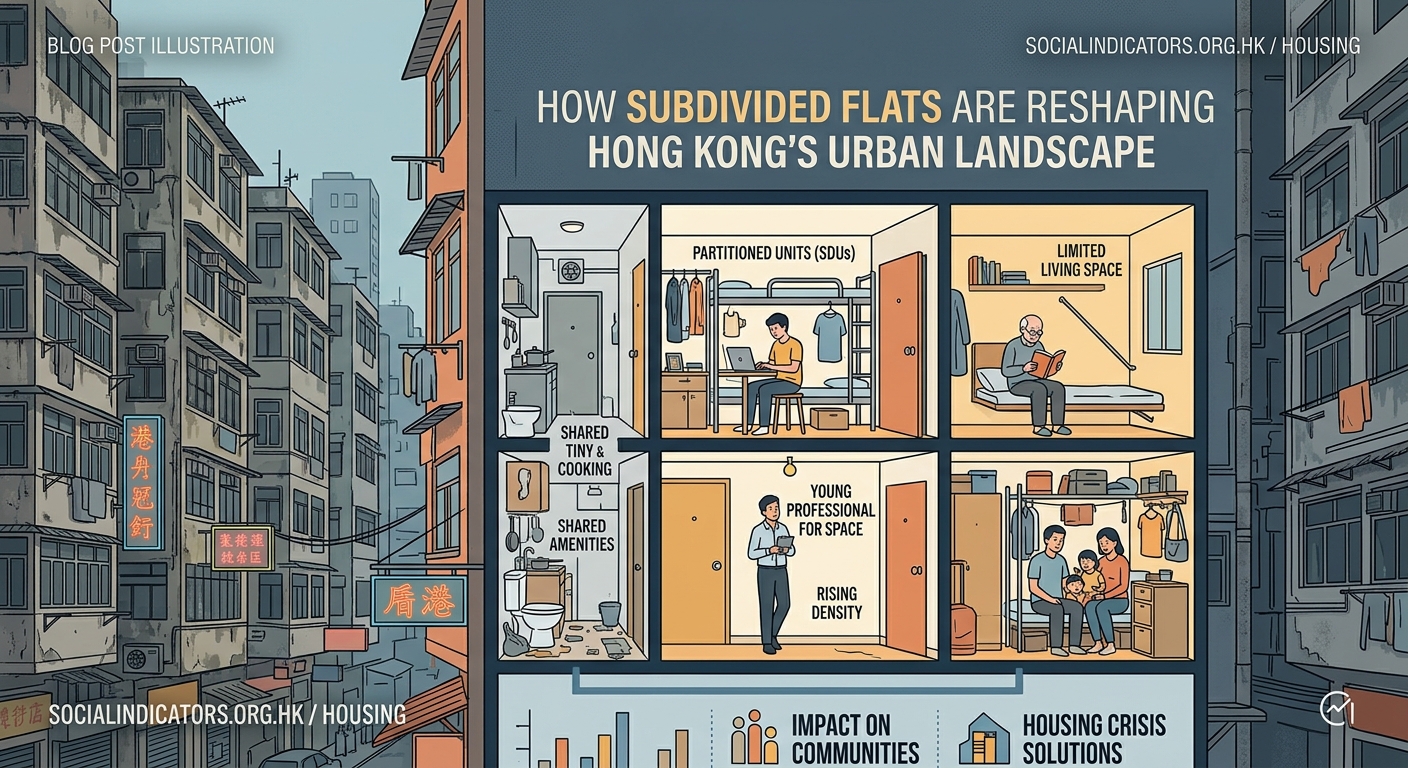
Current data shows approximately 108,000 subdivided units across Hong Kong. About 226,000 people live in these conditions.
The median monthly rent sits at HK$4,800. This represents 41.1% of median household income for these tenants. Financial experts typically recommend spending no more than 30% of income on housing.
| Living Condition | Subdivided Flat Average | Hong Kong Overall Average |
|---|---|---|
| Floor area per person | 48 sq ft | 161 sq ft |
| Monthly rent as % of income | 41.1% | 28.3% |
| Persons per household | 2.1 | 2.8 |
| Units with private toilet | 96.4% | 99.8% |
The poverty rate among subdivided flat residents reaches 44.7%. This compares to 19.9% for Hong Kong’s general population.
Children make up a significant portion of residents. Approximately 33,400 children under 18 live in subdivided units. Growing up in such constrained spaces affects their development, education, and wellbeing.
Why this housing form exists
Hong Kong’s property prices rank among the world’s highest. The median home price exceeds 20 times the median annual household income.
Public housing waiting times stretch beyond six years for many applicants. Over 145,000 households sit on the waiting list. People need somewhere to live while they wait.
Subdivided flats fill this gap. They offer immediate housing at lower entry costs than standard apartments. No hefty deposits or long-term commitments required in many cases.
Landlords profit from this arrangement. A single 500-square-foot apartment might generate HK$8,000 monthly as one unit. Divided into three subdivided flats, it could bring in HK$15,000 or more.
The math works for property owners. The human cost falls on tenants.
Limited land supply constrains new housing development. Hong Kong’s mountainous terrain leaves little flat land for construction. Political debates over land use further slow progress.
Living conditions inside subdivided units
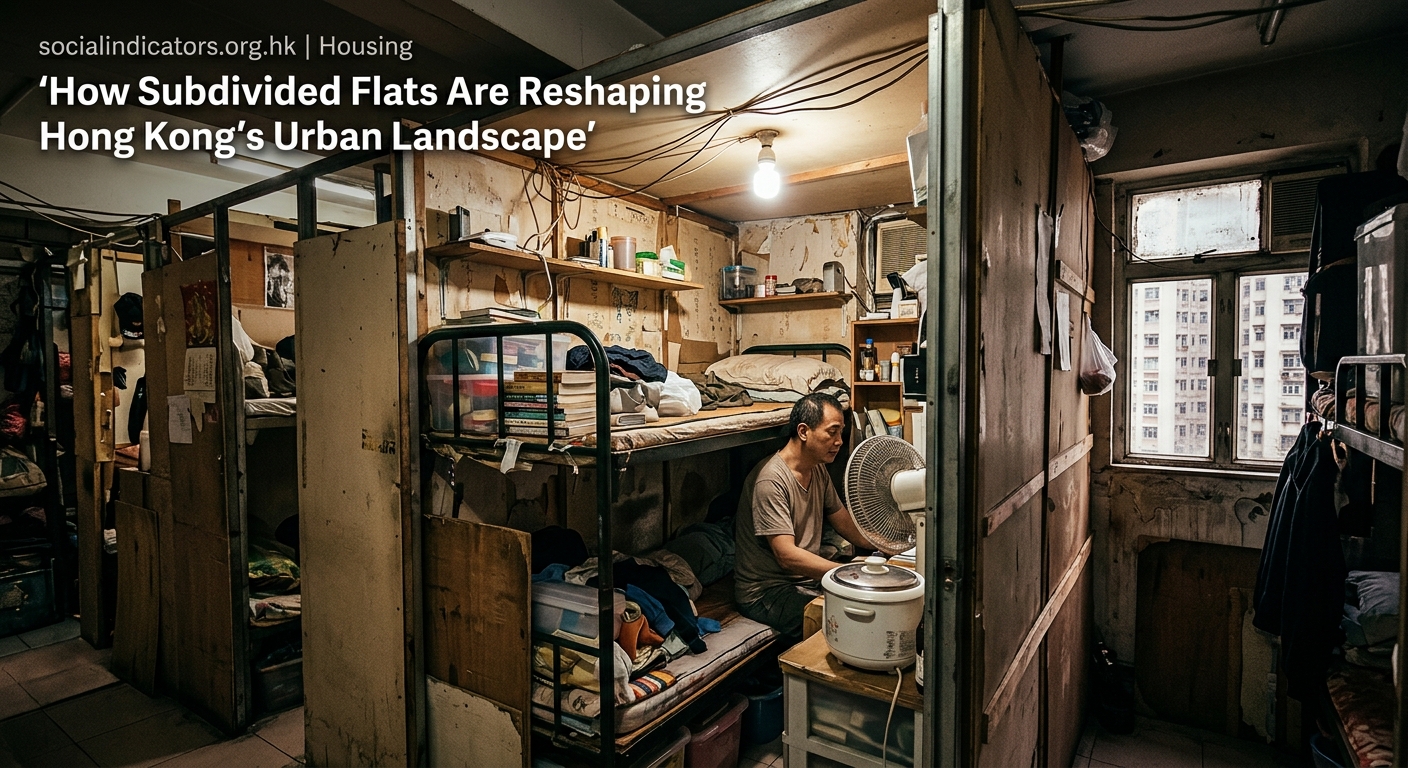
Space represents the most obvious challenge. Families arrange their entire lives within areas smaller than many hotel rooms.
A typical layout includes:
- Sleeping area with bunk beds or loft bed
- Small cooking zone with portable stove
- Bathroom with shower over toilet
- Minimal storage, often vertical shelving
- Shared corridor access with other units
Ventilation poses serious problems. Many units lack windows. Interior partitions create spaces with no natural airflow. Summer temperatures inside can exceed outdoor readings by several degrees.
Fire safety concerns persist. Narrow corridors, blocked exits, and overloaded electrical systems create hazards. Several fatal fires in subdivided buildings have prompted safety reviews.
“Living in 80 square feet with my two children means we can never escape each other. There’s no private space for homework, no quiet corner for rest. Every aspect of family life happens in view of everyone else.” – Subdivided flat resident, Sham Shui Po
Water damage and mold affect many units. Aging buildings with poor maintenance develop leaks. Limited ventilation prevents moisture from escaping.
Noise transmission between units disrupts sleep and concentration. Thin partition walls offer little sound insulation. Residents hear neighbors’ conversations, television, and daily activities.
Health and social impacts
Research links subdivided flat living to multiple health issues. Respiratory problems increase due to poor air quality and mold exposure. Mental health challenges rise with overcrowding and stress.
Children in these environments face developmental disadvantages. Limited space restricts physical activity. Lack of study areas hampers academic performance. Social stigma affects self-esteem.
The Hong Kong Council of Social Service reports higher rates of family conflict in subdivided households. Constant proximity with no personal space strains relationships.
Sleep deprivation affects many residents. Noise, heat, and uncomfortable sleeping arrangements reduce sleep quality. This impacts work performance and overall health.
Social isolation occurs despite physical proximity to neighbors. Many residents work long hours to afford rent, leaving little time for community engagement. Shame about living conditions prevents some from inviting friends or family to visit.
Government response and regulation
The Landlord and Tenant (Consolidation) (Amendment) Ordinance 2021 introduced minimum standards for newly tenanted subdivided units. These requirements took effect in January 2022.
The legislation mandates:
- Minimum 8 square meters (86 square feet) per unit
- Window providing natural light and ventilation
- Independent water and electricity meters
- Proper sanitation facilities
- Compliance with building and fire safety codes
Enforcement remains challenging. Many existing tenancies predate the legislation. Landlords and tenants may avoid reporting violations to prevent lease termination.
The government accelerated public housing construction targets. The goal includes 330,000 new units over the next decade. Whether supply can meet demand remains uncertain.
Transitional housing projects provide temporary relief. These programs offer better conditions than subdivided flats while applicants wait for permanent public housing. Capacity serves only a fraction of those in need.
Rent control proposals generate ongoing debate. Advocates argue caps would protect vulnerable tenants. Critics warn restrictions might reduce available supply as landlords exit the market.
The economic reality for tenants
Most subdivided flat residents work full-time. They’re not unemployed or unwilling to work. Their wages simply don’t stretch to cover standard housing costs.
Common occupations include:
- Retail and food service workers
- Security guards
- Cleaners and janitors
- Delivery drivers
- Elderly on fixed pensions
Many hold multiple jobs. A security guard might work overnight shifts then drive a taxi during the day. Parents juggle work schedules to avoid childcare costs.
Savings become nearly impossible. After rent, utilities, food, and transportation, little remains. Unexpected expenses like medical bills or school fees create financial crises.
The poverty trap tightens. Without savings, families cannot afford deposits on better housing. They remain stuck in subdivided units, paying high rents relative to space and quality.
Some residents qualify for public housing but choose subdivided flats for location. Living near work saves transportation time and costs. Proximity to family support networks matters for childcare and elderly care.
Comparing Hong Kong to other cities
Subdivided flats resemble housing challenges in other expensive cities, but Hong Kong’s situation stands out in scale and severity.
Tokyo has micro-apartments, but these are purpose-built with efficient design. They include proper ventilation, soundproofing, and safety features. Rents remain more affordable relative to local incomes.
San Francisco faces housing crises with illegal room divisions. However, the proportion of residents in such conditions remains lower than Hong Kong. Enforcement of housing codes is stronger.
Singapore’s public housing program houses over 80% of residents in quality apartments. This prevents the emergence of widespread substandard housing like subdivided flats.
Hong Kong’s unique combination of extreme property prices, limited public housing supply, and weak rental market regulation created conditions for subdivided flats to proliferate.
What the future might hold
Optimistic projections suggest increased public housing supply will reduce demand for subdivided flats over the next decade. This assumes construction targets are met and economic conditions remain stable.
Pessimistic scenarios see the problem persisting or worsening. Property prices may continue rising faster than incomes. Public housing construction might face delays. More families could find themselves in subdivided units.
Demographic shifts will influence outcomes. An aging population may free up some housing as elderly residents downsize or pass away. However, smaller household sizes increase overall unit demand.
Economic changes matter tremendously. Recessions push more families into financial difficulty, increasing demand for affordable housing. Economic growth might improve incomes but also drive property speculation.
Policy choices will determine whether conditions improve. Stronger tenant protections, expanded public housing, and innovative housing models could provide alternatives. Continued reliance on private market solutions may perpetuate the status quo.
Making sense of a complex problem
Subdivided flats aren’t just a housing issue. They represent the intersection of land policy, economic inequality, demographic change, and social welfare priorities.
No single solution will resolve the situation. Progress requires coordinated action across multiple policy areas. Increased housing supply must combine with tenant protections and income support.
Understanding the data helps frame effective responses. When we see that 44.7% of subdivided flat residents live in poverty, we recognize this as an economic issue. When we learn that 33,400 children grow up in these conditions, we understand the urgency.
These statistics represent real families making difficult choices with limited options. A mother choosing between a subdivided flat near her children’s school or a cheaper unit requiring a two-hour commute. An elderly couple splitting their pension between rent and medicine.
The numbers tell us where we are. Policy decisions will determine where we go from here.
Beyond statistics to solutions
Hong Kong subdivided flats will remain part of the city’s housing landscape for years to come. The question isn’t whether they’ll disappear tomorrow, but how we can improve conditions while working toward better alternatives.
For policy researchers and urban planners, the data provides clear direction. Housing supply must increase. Affordability mechanisms need strengthening. Tenant protections require enforcement.
For journalists and advocates, these stories need continued attention. Public awareness drives political will. Keeping subdivided flat conditions visible prevents the issue from fading into accepted normalcy.
For residents themselves, community support and resource navigation can help. Knowing your rights under new regulations matters. Connecting with social services and housing assistance programs provides pathways forward.
The challenge is substantial, but not insurmountable. Cities have addressed housing crises before through sustained commitment and comprehensive approaches. Hong Kong has the resources and expertise to do the same. What’s needed now is the collective will to prioritize housing dignity for all residents, not just those who can afford market-rate apartments.

Post Comment