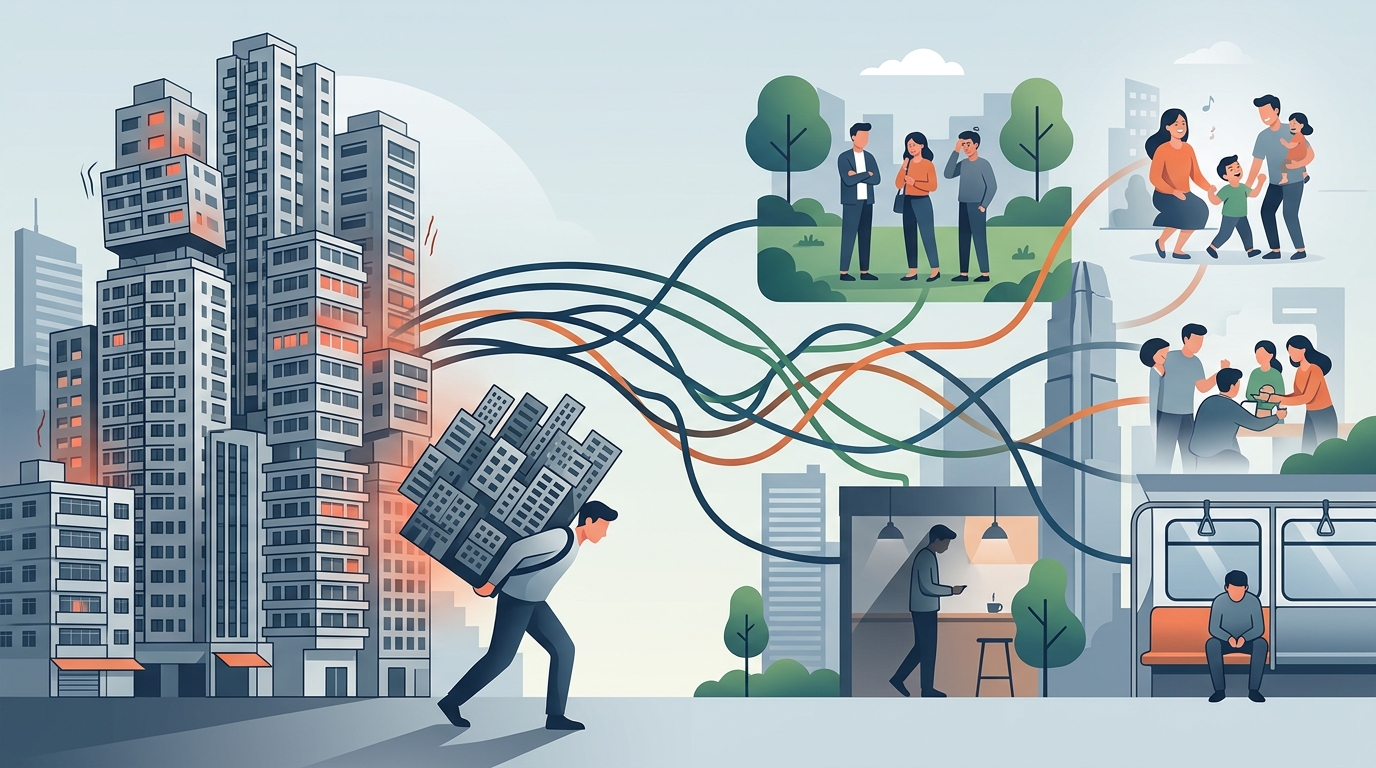
The Hidden Correlation Between Housing Stress and Social Wellbeing Outcomes
Families across Hong Kong face a stark reality: rising rents and property prices consume larger portions of household income each year, leaving less for healthcare, education, and daily necessities. This financial squeeze does more than strain budgets. It reshapes social relationships, mental health outcomes, and community participation in measurable ways.
Housing stress occurs when households spend excessive income on accommodation, limiting resources for other needs. This financial pressure correlates with elevated anxiety, reduced social engagement, compromised physical health, and weakened family bonds. Understanding these connections helps policymakers design interventions that address both affordability and broader social outcomes through evidence-based approaches.
Defining housing stress through measurable thresholds
Housing stress traditionally refers to households spending more than 30 percent of gross income on accommodation costs. This threshold emerged from research showing that higher proportions leave insufficient funds for food, transport, healthcare, and other essentials.
The measure applies to both renters and homeowners. Renters face monthly payments that fluctuate with market conditions. Homeowners juggle mortgage installments, management fees, and maintenance costs. Both groups experience financial strain when housing consumes disproportionate income shares.
Severe housing stress occurs above 50 percent of income. Households in this category often make difficult trade-offs between paying rent and meeting basic needs. The Social Development Index tracks these patterns across districts, revealing geographic concentrations of affordability challenges.
Different household types experience varying vulnerability levels. Single-parent families, elderly individuals on fixed incomes, and young workers in entry-level positions face heightened risk. Each group navigates distinct challenges within the broader affordability landscape.
Mental health outcomes linked to accommodation costs
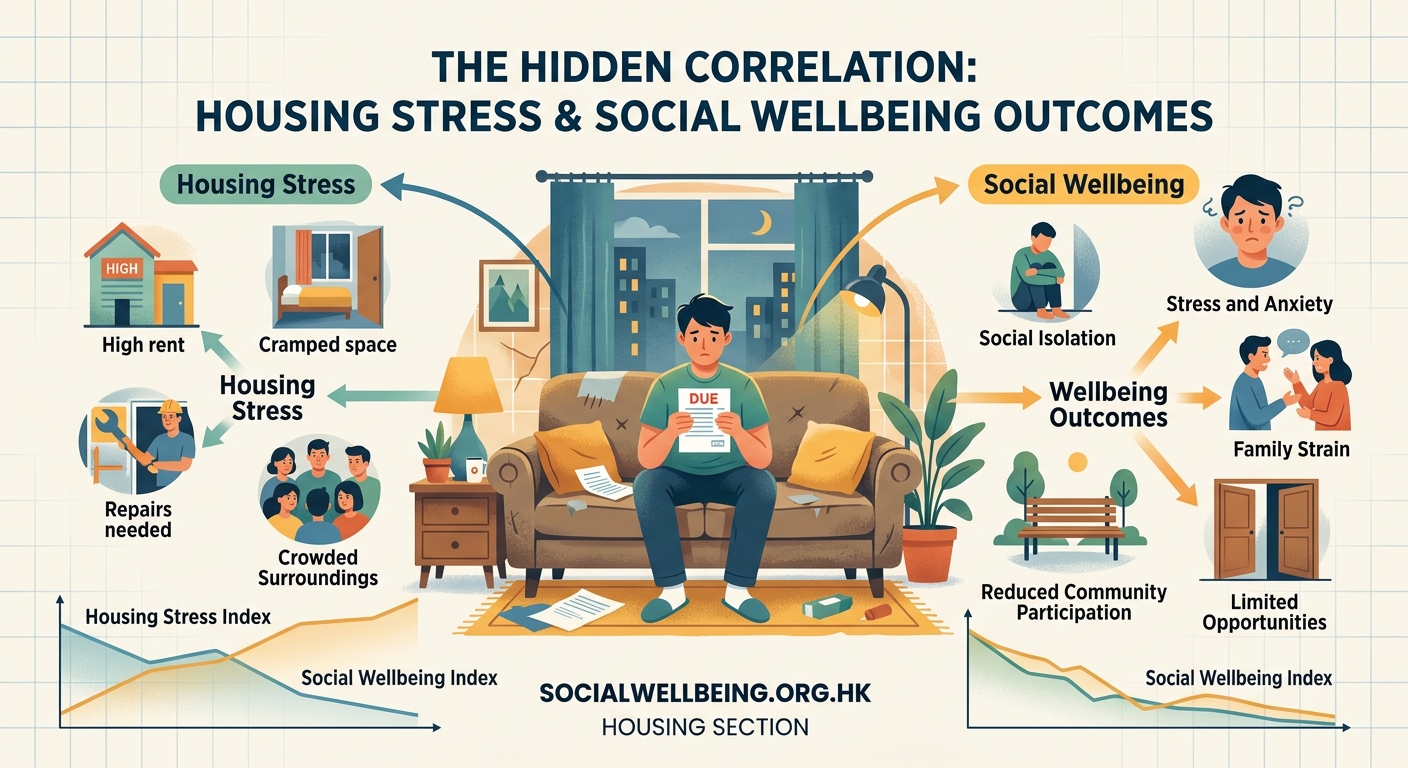
Research consistently shows elevated anxiety and depression rates among households experiencing housing affordability problems. The constant worry about making next month’s payment creates chronic stress that affects psychological wellbeing.
Financial strain from housing costs triggers specific mental health pathways:
- Persistent worry about eviction or foreclosure
- Reduced capacity to manage unexpected expenses
- Shame or embarrassment about living conditions
- Sleep disruption from financial anxiety
- Social withdrawal due to limited discretionary spending
A 2019 study of Hong Kong households found that those spending over 40 percent of income on housing reported anxiety symptoms at twice the rate of those below the 30 percent threshold. The correlation remained significant after controlling for income level, suggesting that the proportion matters independently.
Children in housing-stressed families show distinct developmental impacts. Parents report higher behavioral problem rates and lower academic performance. The mechanism involves multiple factors: less money for educational resources, reduced parental attention due to work demands, and instability from frequent moves.
Older adults face particular vulnerability. Fixed pension incomes combined with rising costs create situations where individuals choose between medication and rent. This impossible choice produces measurable health consequences beyond the immediate financial decision.
Physical health pathways from housing burden
Housing affordability stress manifests in physical health through several documented mechanisms. The connection operates both directly through resource constraints and indirectly through stress-related pathways.
Households facing severe cost burden often:
- Postpone medical appointments and preventive care
- Skip prescribed medications to reduce expenses
- Purchase lower-quality food with reduced nutritional value
- Live in substandard conditions with environmental health risks
- Experience chronic stress that weakens immune function
A longitudinal study tracking families over five years found that each 10 percent increase in housing cost burden correlated with a 7 percent reduction in healthcare spending. This trade-off produced measurable increases in untreated chronic conditions and emergency department visits.
Overcrowding represents another physical health pathway. When families double up to share costs, infectious disease transmission increases. Respiratory infections, tuberculosis, and other communicable conditions spread more readily in crowded conditions.
Poor housing quality often accompanies affordability stress. Landlords may defer maintenance on lower-cost units, creating exposure to mold, inadequate ventilation, and pest infestations. These conditions trigger asthma, allergies, and other respiratory problems.
Social connections and community participation
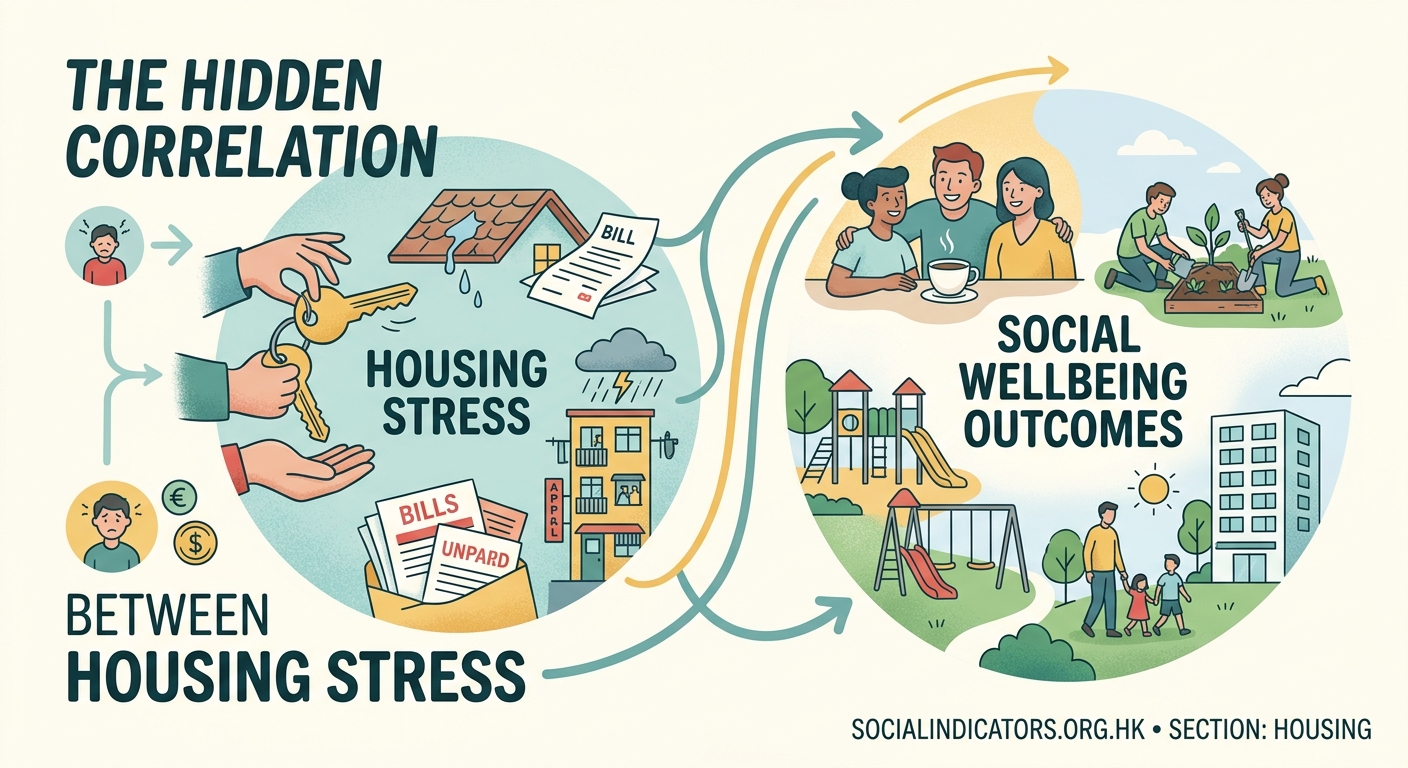
Housing stress fundamentally alters how people engage with their communities. Financial pressure reduces both the time and resources available for social activities, weakening the networks that support wellbeing.
The social isolation pathway operates through multiple channels. Families cut discretionary spending first, eliminating restaurant meals, entertainment, and recreational activities. These reductions limit opportunities for informal social interaction that builds community bonds.
Longer work hours compound the problem. Individuals take second jobs or extended shifts to cover housing costs, leaving less time for volunteering, attending community events, or maintaining friendships. The time poverty created by financial stress proves as damaging as the monetary constraints.
When housing costs consume half your income, you don’t just lose money. You lose the capacity to participate in the social fabric that makes neighborhoods function. People become isolated, and communities fragment.
Trust and reciprocity decline in neighborhoods with high housing stress concentrations. Residents focused on survival have fewer resources to share with neighbors. The mutual support networks that characterize healthy communities weaken under sustained financial pressure.
Children’s social development suffers when families cannot afford extracurricular activities. Sports teams, music lessons, and other structured programs build skills and friendships. Cost barriers exclude children from housing-stressed families, limiting social capital accumulation.
Family stability and relationship quality
Financial stress from housing costs creates documented strain on family relationships. Couples argue more frequently about money when accommodation consumes excessive income shares. These conflicts predict relationship dissolution and divorce.
The stress transmission occurs through predictable patterns:
- Increased irritability from chronic financial worry
- Blame and resentment over spending decisions
- Reduced quality time due to extended work hours
- Shame about inability to provide adequate housing
- Disagreement over financial priorities and trade-offs
Research tracking married couples found that housing cost burden above 40 percent doubled the likelihood of separation within five years compared to couples below 30 percent. The relationship held across income levels, suggesting that the proportion matters more than absolute amounts.
Parenting quality declines under housing stress. Parents report less patience, reduced emotional availability, and harsher discipline practices. The mechanism involves both direct stress effects and indirect impacts through reduced time and energy for engaged parenting.
Intergenerational relationships face strain when adult children cannot afford independent housing. Multigenerational households can provide mutual support, but forced cohabitation due to affordability constraints creates tension. Cultural expectations about independence conflict with economic reality.
Educational outcomes and future opportunity
Housing affordability stress shapes educational trajectories through multiple pathways. The effects begin in early childhood and compound across developmental stages, creating lasting impacts on human capital formation.
| Pathway | Mechanism | Measured Impact |
|---|---|---|
| Residential instability | Frequent moves disrupt schooling | 20% increase in grade repetition |
| Reduced resources | Less money for books, tutoring | 15% lower test scores |
| Parental stress | Decreased homework support | 25% more behavioral problems |
| Overcrowding | No quiet study space | 18% reduced homework completion |
| Neighborhood quality | Lower-resourced schools | 12% lower graduation rates |
Frequent residential moves represent a particularly damaging pathway. Children who change schools multiple times due to housing instability show consistently lower academic achievement. Each move disrupts peer relationships, requires curriculum adjustment, and creates gaps in learning continuity.
The homework gap affects students in crowded or unstable housing situations. Lack of quiet study space, internet access, and parental support time creates disadvantages that accumulate across school years. These gaps widen achievement disparities between housing-secure and housing-stressed families.
Neighborhood effects operate through school quality and peer influences. Families priced out of higher-opportunity areas access schools with fewer resources, less experienced teachers, and lower average achievement levels. Residential sorting by affordability creates educational stratification.
Employment and economic participation patterns
Housing stress influences labor market behavior in ways that can perpetuate economic vulnerability. The relationship operates bidirectionally: employment instability increases housing stress, while housing stress constrains employment choices.
Workers facing high housing costs often accept jobs based primarily on wage levels rather than career development potential. The immediate need to cover rent or mortgage payments overrides longer-term considerations about skill building or advancement opportunities.
Geographic mismatch emerges as a significant barrier. Affordable housing concentrates in areas distant from employment centers, creating long commutes that consume time and money. Workers spend hours traveling, reducing time available for additional training, job search, or family responsibilities.
Job lock affects homeowners with mortgages. The need to maintain steady income to cover housing payments reduces willingness to take career risks, start businesses, or relocate for better opportunities. This rigidity limits economic mobility and innovation.
Health impacts from housing stress create employment consequences. Untreated chronic conditions lead to missed work days, reduced productivity, and job loss. The cycle reinforces vulnerability as employment instability further strains housing affordability.
Policy implications from the evidence base
The documented connections between housing affordability and social outcomes point toward specific policy interventions. Effective approaches address both immediate affordability relief and longer-term structural factors.
Rent assistance programs provide direct relief but require careful design. Means-tested subsidies help households below income thresholds, but eligibility cliffs create disincentives for earnings growth. Gradual phase-outs maintain work incentives while providing support.
Inclusionary zoning requirements mandate affordable unit percentages in new developments. This approach promotes economic integration and reduces geographic concentration of housing stress. Implementation details matter: set-aside percentages, affordability duration, and income targeting determine effectiveness.
Public housing expansion addresses supply constraints directly. Long waiting lists in Hong Kong reflect demand that exceeds available units. Increased construction, particularly near employment centers and transit, reduces cost burden for lower-income households.
Tenant protections limit displacement and promote stability. Security of tenure reduces forced moves that disrupt education, employment, and social networks. Rent stabilization measures prevent sudden increases that push households into severe cost burden.
Measuring outcomes through the Social Development Index
The Social Development Index provides a framework for tracking how housing affordability connects to broader wellbeing measures. This approach moves beyond simple cost metrics to capture multidimensional impacts.
The index incorporates indicators across domains:
- Economic security and income adequacy
- Health status and healthcare access
- Educational attainment and school quality
- Social cohesion and community participation
- Environmental quality and housing conditions
District-level analysis reveals geographic patterns in how housing stress correlates with other social indicators. Areas with high cost burden concentrations show consistently lower scores across health, education, and social connection measures.
Longitudinal tracking allows assessment of how changes in housing affordability predict shifts in other wellbeing dimensions. Time-lagged analyses show that housing cost increases precede declines in health outcomes and social participation, supporting causal interpretations.
The measurement framework guides policy evaluation. Interventions can be assessed not only on affordability metrics but on broader social outcomes. This comprehensive approach captures the full value of housing stability investments.
Building resilience at household and community levels
While structural policy changes address root causes, intermediate strategies can reduce vulnerability for households currently experiencing housing stress. These approaches build capacity to weather financial shocks and maintain wellbeing despite affordability challenges.
Financial counseling services help households optimize budgets, access benefits, and negotiate with landlords. Professional guidance often identifies resources or strategies that reduce effective housing burden without requiring income increases or cost reductions.
Community support networks provide practical assistance and social connection. Mutual aid groups, time banks, and neighborhood associations create reciprocity systems that supplement formal services. These networks prove particularly valuable during temporary crises.
Employer-based assistance programs offer another intervention point. Housing allowances, relocation support, and financial wellness programs reduce employee stress while improving retention. Forward-thinking employers recognize that housing security supports workforce stability.
Educational programs targeting youth in housing-stressed families can interrupt intergenerational transmission of vulnerability. Mentoring, tutoring, and enrichment activities compensate for resource gaps at home. Early intervention produces lasting returns through improved educational and employment outcomes.
How data informs better decisions
Evidence-based approaches to housing stress require robust data collection and analysis. Administrative records, surveys, and linked datasets each contribute pieces of the complete picture connecting affordability to social outcomes.
Household expenditure surveys capture detailed spending patterns, revealing trade-offs families make under cost pressure. Longitudinal designs tracking the same households over time isolate how changes in housing burden predict shifts in other expenditures and outcomes.
Health records linked to housing data enable precise estimation of how affordability stress affects medical conditions, healthcare utilization, and mortality. Privacy protections allow researchers to analyze patterns while protecting individual confidentiality.
School administrative data connected to residential information shows how housing instability and neighborhood characteristics shape educational trajectories. Analyses control for family background factors to isolate housing effects.
Geographic information systems map the spatial distribution of housing stress and social outcomes. Visualization tools make patterns accessible to policymakers and the public, supporting informed decisions about resource allocation and intervention targeting.
Creating housing security for healthier communities
The evidence connecting housing affordability to social wellbeing outcomes carries clear implications. Stable, affordable housing provides the foundation for health, education, employment, and community participation. Cost burden undermines these outcomes through financial, psychological, and social pathways.
Policy responses must match the scale and complexity of the challenge. No single intervention addresses all dimensions of housing stress and its consequences. Comprehensive approaches combine supply expansion, affordability assistance, tenant protections, and supportive services.
Monitoring through frameworks like the Social Development Index ensures accountability and enables course correction. Regular measurement reveals whether interventions produce intended effects across the full range of wellbeing indicators.
The path forward requires sustained commitment from government, employers, community organizations, and residents themselves. Housing security represents not just an economic good but a social determinant of health and opportunity. Treating it as such through policy and investment creates conditions for individuals and communities to thrive.



Post Comment