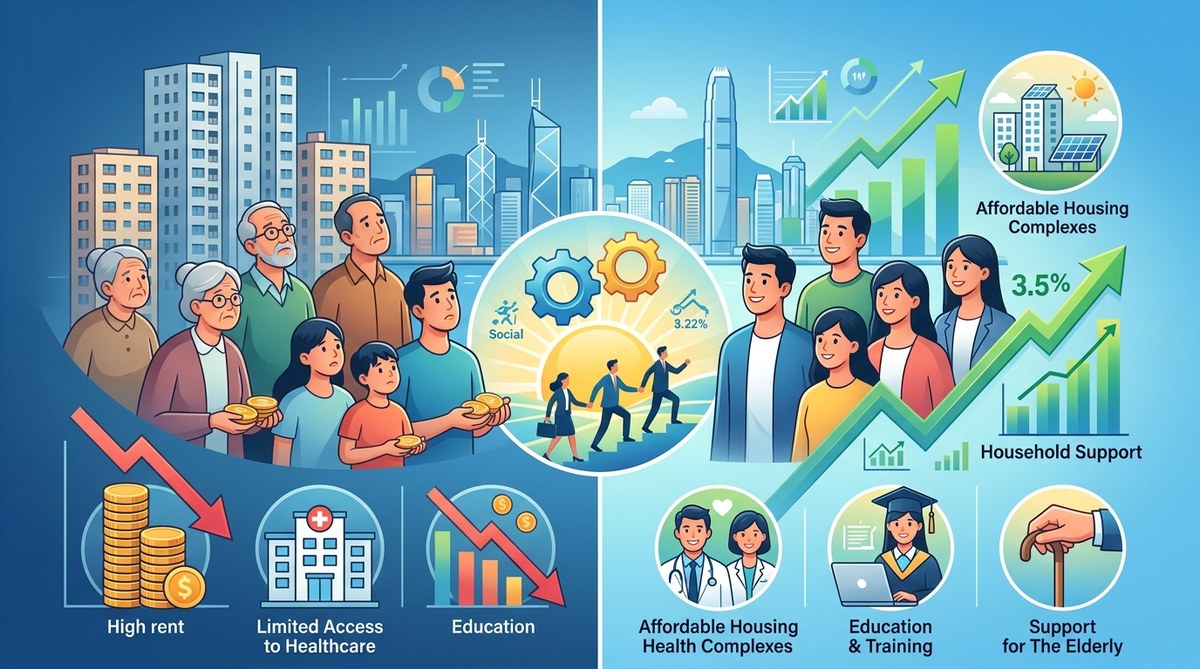
How Hong Kong’s Social Policies Are Shaping Poverty Reduction in 2026
Hong Kong’s journey toward reducing poverty has been both challenging and inspiring. In 2026, the city continues to refine its social policies, aiming for a more equitable future amid rising economic and demographic shifts. The commitment to addressing inequality through targeted programs, innovative initiatives, and data-driven policymaking is stronger than ever. For researchers, policymakers, and social workers, understanding these developments offers valuable insights into how strategic social policies are shaping a more inclusive Hong Kong.
Social indicators of Hong Kong in 2026
Hong Kong’s social landscape is monitored through a variety of indicators that reveal the effectiveness of current policies. The Social Development Index, for example, tracks multiple factors including income levels, employment quality, housing stability, and access to social services. In 2026, the index shows a modest improvement in overall social well-being, but disparities remain significant across districts and demographic groups.
The latest data indicates that districts like Sham Shui Po and Kwun Tong continue to experience higher levels of poverty compared to more affluent areas such as Hong Kong Island. These regional disparities highlight the importance of tailored policies that address specific local needs. Meanwhile, the social mobility rate has shown signs of progress, driven by increased access to education and job training programs.
How Hong Kong’s social policies are shaping poverty reduction in 2026
Hong Kong’s social policies this year focus on multiple fronts. The government has intensified efforts to enhance social safety nets, promote inclusive growth, and foster community resilience. Key policy measures include expanding social welfare programs and improving the accessibility of public services.
One notable development is the strengthening of the Comprehensive Social Security Assistance (CSSA) scheme, which now offers more substantial support to low-income families. Additionally, the city has launched initiatives to improve digital financial inclusion, making it easier for marginalized populations to access banking and social benefits. These efforts are supported by data collection and analysis from the Social Development Index, guiding policymakers to refine their strategies continuously.
Practical processes for effective poverty reduction
For policymakers and social workers seeking to deepen their impact, implementing effective poverty alleviation strategies involves clear, actionable steps. Here are three practical processes:
- Assess local needs with detailed data: Use tools like the Social Development Index to identify high-poverty districts and vulnerable groups. Tailoring programs to regional specifics increases their effectiveness.
- Enhance program accessibility: Simplify application processes for social assistance and ensure services are reachable through mobile and digital platforms.
- Foster multi-sector collaborations: Coordinate efforts among government agencies, NGOs, and private sectors to pool resources and expertise. This collaborative approach maximizes reach and sustainability.
Common pitfalls in social policy implementation
Despite good intentions, certain pitfalls can hinder progress. These include over-reliance on income-based measures of poverty, neglect of regional disparities, and insufficient community engagement. To avoid these, consider the following:
| Technique | Common Mistake |
|---|---|
| Using holistic data | Relying solely on income statistics |
| Conducting localized assessments | Ignoring district-specific needs |
| Engaging communities early | Overlooking local voices in policy design |
“Effective social policies in 2026 are those that listen to community voices, utilize comprehensive data, and adapt quickly to changing circumstances,” notes Dr. Emily Chan, a social policy expert.
The role of digital inclusion in poverty reduction
Digital financial inclusion has become a cornerstone of Hong Kong’s strategy in 2026. With many low-income residents lacking access to banking services, initiatives aim to bridge this gap. For example, mobile banking apps and online social benefit platforms have expanded reach, especially among elderly and migrant populations.
By integrating digital solutions, the city reduces barriers to accessing social assistance and employment opportunities. However, this approach requires careful implementation to avoid leaving behind those who are less tech-savvy or without internet access. Training programs and simplified interfaces are crucial components in ensuring inclusivity.
Addressing structural challenges and regional disparities
Despite progress, structural issues persist. High housing costs, income inequality, and regional disparities challenge the sustainability of poverty reduction efforts. To tackle these, policymakers are investing in affordable housing projects and revising zoning laws to promote more equitable urban development.
Monitoring progress with tools like the Social Development Index helps identify areas where disparities widen or narrow. Regular data updates and community feedback are vital for adapting strategies that serve diverse populations effectively.
Monitoring progress and adjusting social policies
Continuous monitoring is essential in 2026. Regular evaluation of policy outcomes helps prevent stagnation and ensures resources are directed where they are most needed. For example, tracking the impact of employment programs on youth unemployment reveals whether interventions are effective or require adjustment.
Policymakers should also be cautious of common mistakes such as misinterpreting data or neglecting long-term social trends. Using a mix of qualitative and quantitative data provides a fuller picture of progress.
Building a more inclusive society in 2026
Inclusivity remains a central goal. Efforts to integrate ethnic minorities, elderly residents, and vulnerable groups into social programs are ongoing. Educational initiatives, language support, and community engagement foster a sense of belonging and shared responsibility.
To support this, the government has launched campaigns promoting social cohesion and civic participation. These initiatives strengthen social fabric and help reduce stigma associated with poverty.
Final thoughts on shaping a resilient Hong Kong
With a comprehensive approach that combines targeted policies, community involvement, and data analytics, Hong Kong is making strides toward reducing poverty in 2026. The key lies in maintaining flexibility, listening to local voices, and continuously refining strategies based on real-world outcomes.
For researchers and practitioners, staying informed about the latest developments and data insights is critical. Applying these lessons can help create a society where everyone has the opportunity to thrive.
A practical path forward for inclusive growth
Achieving lasting change requires persistence and adaptability. By focusing on holistic assessments, community participation, and innovative digital solutions, stakeholders can build a more resilient and equitable Hong Kong. Keep engaging with current data and remain open to new ideas. Small steps, when combined, can lead to profound social transformation.




Post Comment