How Hong Kong’s Rental Market Is Pushing Low-Income Families Deeper Into Poverty in 2026
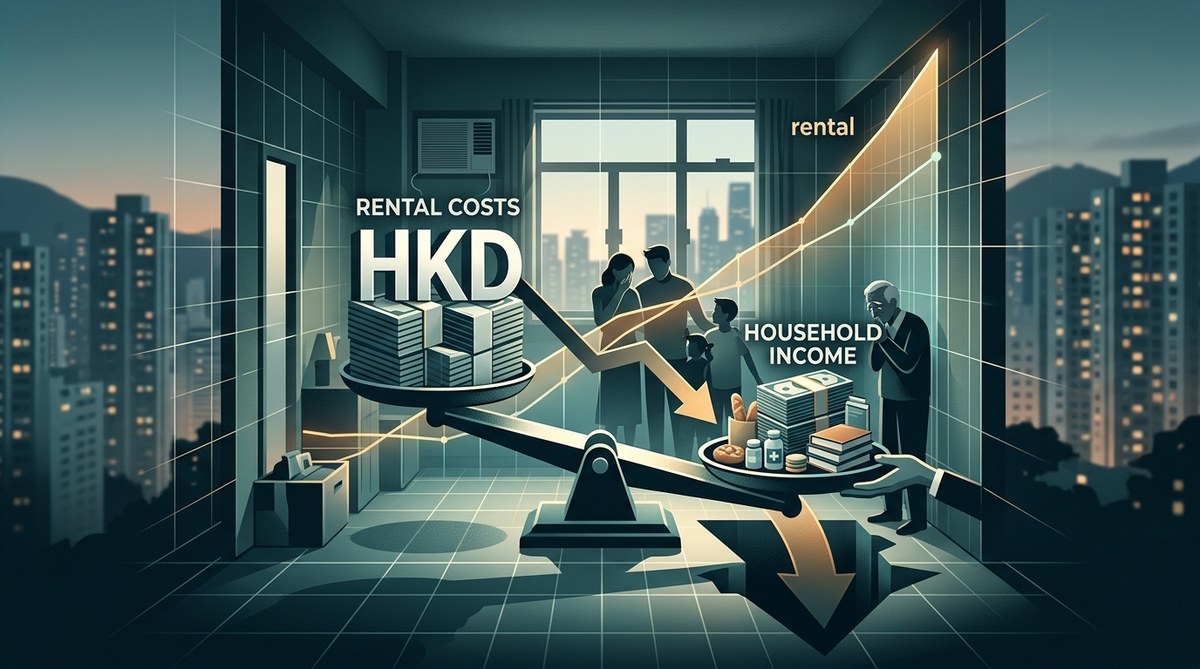
Hong Kong’s rental market has reached a tipping point. In 2026, low-income families are spending more than half of their monthly earnings just to keep a roof over their heads. The gap between wages and rent has never been wider. For researchers, policy analysts, and advocates tracking the city’s social development indicators, this is not just a housing problem. It is a poverty engine. And it is getting worse.
In 2026, the median rent for a subdivided flat in Hong Kong now consumes 58% of a low-income household’s income. Over 200,000 families live in such units. At the same time, public housing wait times have stretched past 5.5 years. The rental market is not just expensive; it is structurally locking families out of economic stability. Without urgent policy intervention, rental poverty will continue to deepen, pulling more households below the poverty line.
The Rental Squeeze in 2026: A Closer Look at the Numbers
Let’s start with the figures that matter most. Hong Kong’s private rental market has been tightening for years, but 2026 marks a new peak. According to the latest data from the Census and Statistics Department, the average rent for a 30-square-meter flat in urban areas now exceeds HKD 14,000 per month. For a low-income family earning HKD 20,000 (the median for the bottom quartile), that leaves only HKD 6,000 for food, utilities, transport, healthcare, and everything else.
That is not a budget. That is a survival calculation.
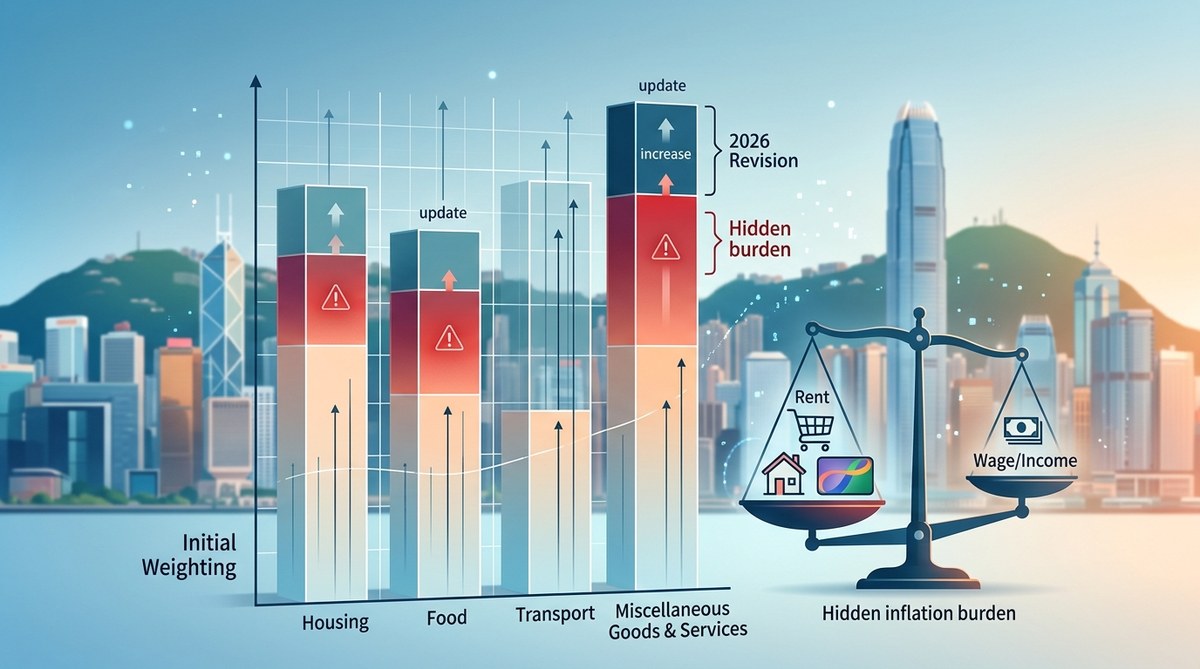
Compare that to 2016, when the same family would have paid about HKD 9,000 for a similar unit. Rent has climbed over 55% in a decade, while wages for the lowest earners have risen by less than 25%. The imbalance is stark. This is the core of Hong Kong’s rental poverty crisis in 2026.
A key indicator to watch is the rent-to-income ratio. For households in the lowest income decile, that ratio now averages 62% across all private rental types. For subdivided flats, it goes even higher. The Social Development Index, which tracks wellbeing across multiple dimensions, shows a corresponding drop in housing satisfaction and an increase in financial stress. These numbers are not abstract. They represent real families making impossible trade-offs every month.
How Rental Costs Push Families Past the Poverty Line
The mechanics are straightforward, but the consequences ripple across every aspect of life. Here are the three main ways that rental costs drive poverty deeper:
-
Direct income depletion. When more than half of your paycheck goes to rent, there is simply less for everything else. Food budgets shrink. Savings disappear. Health expenses get postponed. The Hong Kong Council of Social Service reports that families spending over 50% of income on rent are three times more likely to fall below the poverty line after housing costs are accounted for.
-
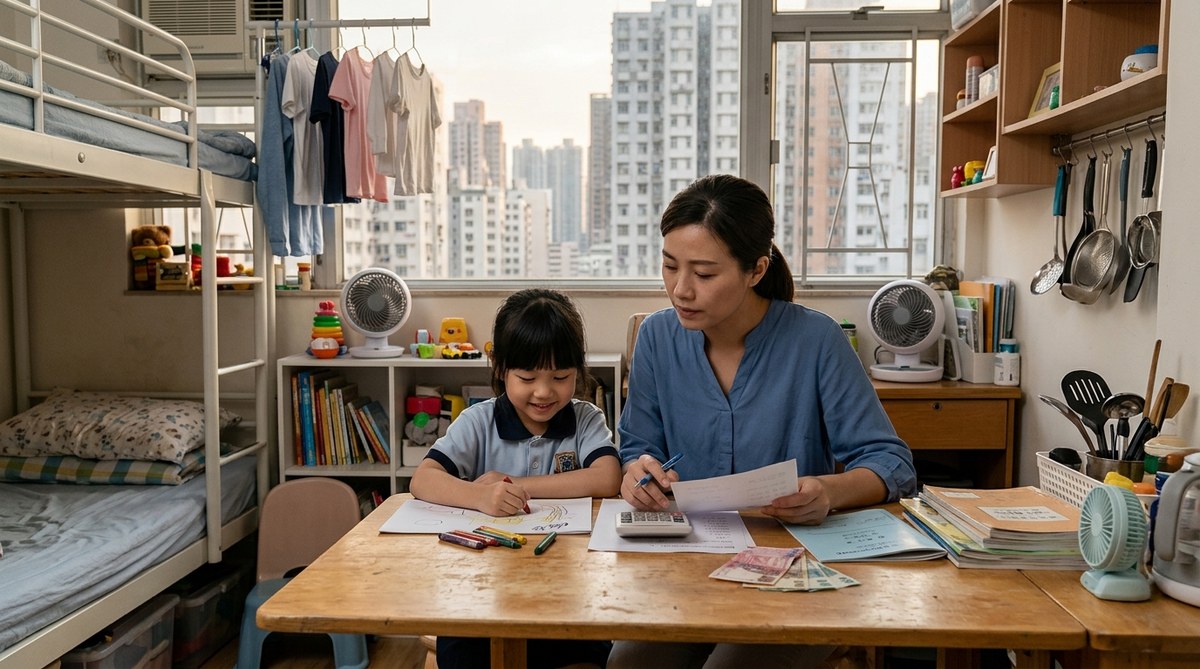
Increased housing instability. High rents force families into precarious living arrangements. Subdivided flats, rooftop structures, even cage homes become the only option. But these units are not just small. They are often illegal, unsafe, and subject to sudden eviction. The constant threat of displacement makes it impossible to hold a stable job or keep children in the same school. Instability becomes a poverty trap.
-
Reduced access to social safety nets. Paradoxically, high rent can disqualify families from some forms of assistance because eligibility is based on total income before housing costs. A family earning HKD 22,000 and paying HKD 13,000 in rent may appear too “high income” for certain subsidies, even though their disposable income is barely HKD 9,000. This policy gap leaves many families in a gray zone where they are officially employed but functionally impoverished.
These three mechanisms work together. They explain why Hong Kong’s poverty rate after housing costs is significantly higher than the pre-rent poverty rate. The rental market does not just reflect inequality. It actively amplifies it.
The Domino Effect on Low-Income Families
Rental poverty does not happen in isolation. It triggers a chain reaction that affects health, education, and social mobility. Consider these consequences:
- Nutritional compromise. Families cut back on fresh food and protein. Parents skip meals so children can eat. A 2025 study by the Hong Kong Food Bank found that over 40% of low-income families experienced food insecurity, with rent being the primary reason.
- Chronic stress and mental health decline. Constant worry about eviction or rising rent takes a toll. The number of low-income individuals seeking mental health support at public clinics has doubled since 2020. Children in these households show higher rates of anxiety and lower academic performance.
- Crowded and unhealthy living environments. Subdivided flats often have poor ventilation, mold, and shared toilets. Respiratory infections and skin conditions are common. The link between housing quality and health outcomes is well documented, as shown in our analysis of the hidden connection between housing density and public health outcomes.
- Intergenerational impact. Children grow up in cramped spaces with no room to study. They change schools frequently when families move to cheaper flats. Educational attainment suffers, and the cycle of poverty continues.
These are not isolated anecdotes. They are patterns confirmed by longitudinal data from the Social Development Index and the Hong Kong Poverty Situation Report.
Comparing Housing Types and Rental Burdens
The burden is not the same for everyone. It varies greatly by housing type. The table below shows typical rent-to-income ratios for low-income families in 2026.
| Housing Type | Median Rent (HKD) | Median Household Income (Lowest Quartile) | Rent-to-Income Ratio | Notes |
|---|---|---|---|---|
| Subdivided flat | 11,500 | 19,800 | 58% | Most common type for low-income families |
| Private whole unit (under 30 sq m) | 14,200 | 19,800 | 72% | Only affordable in older buildings |
| Public housing (new applicant) | 2,500 (subsidized) | 19,800 | 13% | Wait time 5.5 years average |
| Transitional housing | 5,000–7,000 | 19,800 | 25–35% | Temporary, limited supply |
| Cage home / bedspace | 3,500–5,000 | 12,000 (single) | 30–42% | Extreme poverty and health risks |
The numbers tell a clear story. Private rental options are out of reach. Public housing is the only affordable choice, but the wait is punishing. Transitional housing helps but is not scaling fast enough. Meanwhile, subdivided flats and cage homes remain the default for hundreds of thousands of families, trapping them in substandard conditions. A deeper district-by-district breakdown is available in our article on mapping housing inequality district by district.
Expert Voices on Policy Gaps
“The rental market in Hong Kong has become a poverty multiplier. We are seeing working families who earn a steady income but still cannot afford a decent home. The government must rethink its approach, not just by building more public housing, but by regulating the private rental sector to prevent exploitation and extreme rent increases.”
— Dr. Leung Kwok-fai, Senior Researcher, Hong Kong Institute of Social Policy
Dr. Leung’s observation points to a critical gap. Current policies focus on supply, and supply is important. But supply alone cannot fix the market when speculation, vacancy, and rent gouging are rampant. Policy advocates have called for rent control, stronger tenant protections, and a more progressive housing allowance system. Yet in 2026, none of these have been implemented at scale.
Another expert, Anna Wong from the Society for Community Organization, highlights the human cost: “We meet mothers who sleep on the floor so their children can use the only bed. We meet elderly men who choose between paying rent and buying medicine. This is not a failure of the poor. It is a failure of policy.”
What Needs to Change: Evidence-Based Policy Recommendations
To address Hong Kong rental poverty in 2026, advocates are pushing for a bundle of reforms. The evidence from other global cities shows that no single intervention works alone. Here are the most promising strategies:
- Expand public housing supply aggressively. The current target of 10,000 additional units per year is too slow. The wait time needs to come down to under three years.
- Introduce rent stabilization measures. Caps on annual rent increases for existing tenancies can prevent sudden displacement. Hong Kong is one of the few developed cities without any form of rent regulation.
- Reform the housing allowance system. Make subsidies available based on post-rent income, not pre-rent income. This would cover more low-income families who currently fall through the cracks.
- Improve inspection and enforcement for subdivided flats. Many are illegal but tolerated. Legalizing safe units while closing dangerous ones could improve living standards without reducing supply.
- Invest in transitional housing with wraparound social services. A temporary flat is not enough if families cannot stabilize their jobs or health.
For a broader look at how housing interacts with overall poverty, see our analysis of 7 critical indicators that define poverty in Hong Kong beyond income levels. And for the long-term trends, our article on tracking Hong Kong’s middle class decline through 15 years of household income data shows how rental costs are hollowing out the middle.
From Data to Action: A Call for Better Monitoring
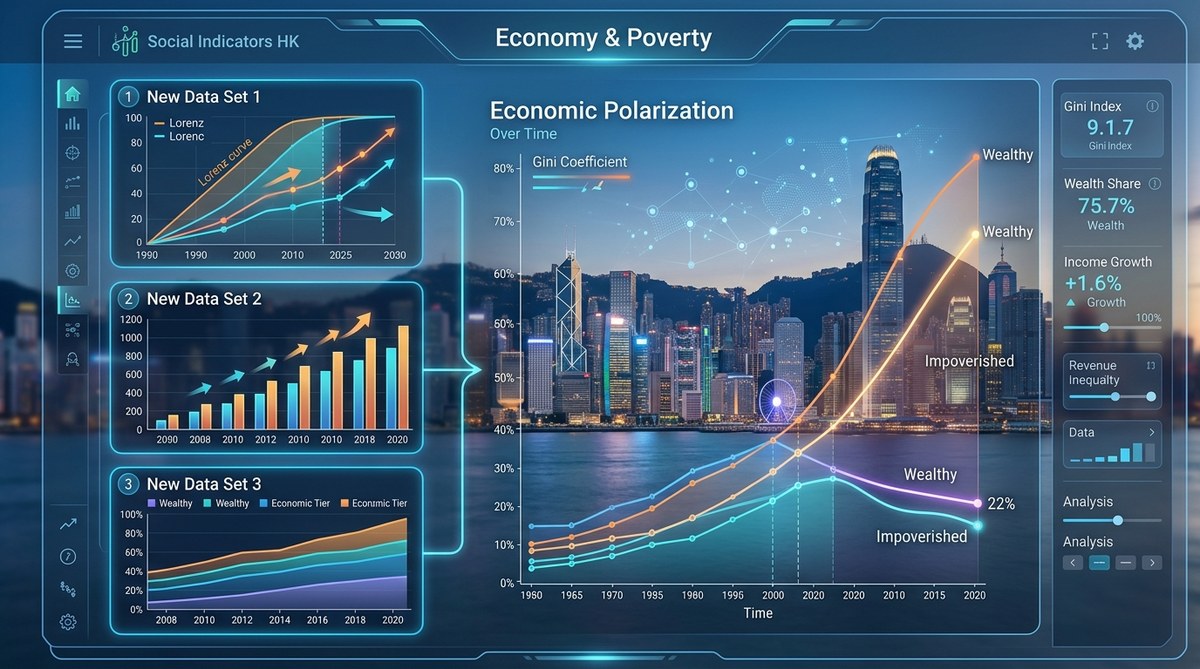
The numbers are clear. The stories are heartbreaking. But data alone does not change policy. What changes policy is when advocates, researchers, and informed citizens use that data to demand accountability. The Social Development Index is one of the best tools for tracking progress. By monitoring indicators like rent-to-income ratios, public housing wait times, and rates of housing-related poverty, we can hold the government to account.
We also need more granular data. District-level breakdowns, ethnicity and age cross-tabulations, and longitudinal tracking of families who move out of poverty (or fall back in) would give policymakers the insights they need. Our platform at Social Indicators of Hong Kong is committed to providing that data. Check out our page on how Hong Kong’s social development index reveals hidden inequality patterns for more on the measurement framework.
And if you are a researcher or advocate working on this issue, we want to hear from you. Share your findings. Collaborate on surveys. Help us build a comprehensive picture of Hong Kong’s rental poverty crisis in 2026. The stakes are too high for silence.
Together, we can turn data into demands. And demands into change.

Post Comment