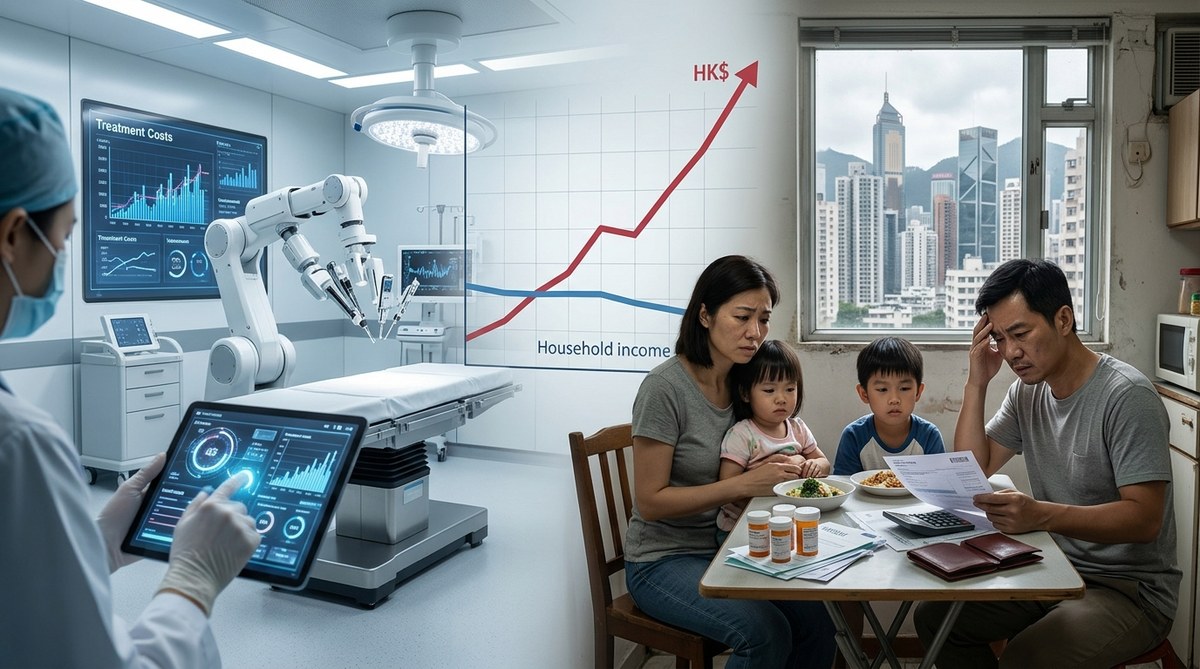
How Hong Kong’s Rising Medical Costs Are Pushing More Families Into Poverty in 2026
You open your mail and see a bill from a private hospital. A routine procedure. A few nights in a semi-private room. The total is more than three months of your rent. For many middle-class families in Hong Kong, this is no longer a rare shock. It is becoming a regular part of life.
Medical inflation in Hong Kong has been climbing at a pace that household incomes cannot match. In 2026, the gap between what people earn and what they must spend to stay healthy is pushing thousands of families into financial hardship. This article uses the latest data from the Social Development Index and other trusted sources to show exactly what is happening, why it matters, and what you can do to protect your finances.
Hong Kong’s medical costs rose 8.7% in 2025, far outpacing wage growth. This gap is pushing middle-class families into poverty at record rates. Without action, one in four households could face medical debt by 2028. The data shows that private hospital fees, specialist consultations, and insurance premiums are the main drivers. Practical steps like switching to hybrid insurance plans and using public outpatient services can help families stay afloat.
How Much Have Medical Costs Actually Risen?
Let us look at the numbers. According to the latest health expenditure data, Hong Kong’s private healthcare costs increased by 8.7% in 2025. That is more than double the general inflation rate of 3.2%. In 2026, early projections suggest another increase of around 9% to 10%.
Here is a breakdown of where the money is going:
| Expense Category | Average Cost in 2023 (HKD) | Average Cost in 2026 (HKD) | Percentage Increase |
|---|---|---|---|
| Private hospital semi-private room (per night) | 4,800 | 6,500 | 35% |
| Specialist consultation (first visit) | 1,200 | 1,700 | 42% |
| MRI scan (one region) | 7,500 | 10,200 | 36% |
| Annual family health insurance premium | 48,000 | 68,000 | 42% |
These are not luxury expenses. They are the costs of basic diagnostic care and treatment. For a family earning a median household income of around HKD 420,000 per year, a single hospital stay can wipe out 15% of their annual earnings.
“The middle class in Hong Kong is being squeezed from both sides. Wages are stagnant, but healthcare costs are rising at nearly three times the rate of income growth. This is a structural problem, not a temporary blip.” – Dr. Emily Wong, Health Economist at the University of Hong Kong
Why Are Medical Costs Rising So Fast in Hong Kong?
Several factors are driving this trend. Understanding them helps explain why the problem is not going away.
Aging population. Hong Kong has one of the fastest aging populations in the world. By 2026, over 20% of residents are aged 65 or older. Older people need more medical care. This puts pressure on both public and private systems.
Private hospital pricing power. Private hospitals in Hong Kong operate with little price regulation. They can set fees for rooms, procedures, and medications at whatever the market will bear. And the market is bearing it.
Insurance premium hikes. As private hospitals raise prices, insurers pass those costs to customers. In 2025, some major insurers raised premiums by 15% to 20%. For a family of four, that can mean an extra HKD 10,000 to HKD 15,000 per year.
Shortage of specialists. Hong Kong has a limited number of specialists, especially in fields like oncology, cardiology, and orthopedics. Long wait times in the public system push patients to the private sector, where demand allows specialists to charge higher fees.
How This Is Pushing Families Into Poverty
The link between rising medical costs and poverty is direct. When a family faces a large medical bill, they have three options: pay from savings, borrow, or skip care.
Here is what the 2026 data shows:
- Medical debt is rising. A survey by the Hong Kong Institute of Social Policy found that 18% of middle-income households reported carrying medical debt in 2025, up from 11% in 2020.
- Savings are being drained. Among families who experienced a major medical event, 42% said they used up more than half of their emergency savings.
- Some skip care entirely. About 14% of respondents said they delayed or skipped a recommended medical procedure in the past year because of cost.
These numbers matter because they show a pattern. A single health crisis can turn a stable middle-class household into one that struggles to pay for rent, food, and utilities.
Let us look at a real example. The Chan family lives in Kwun Tong. Mr. Chan works as a sales manager earning HKD 35,000 per month. Mrs. Chan works part-time as a tutor. They have one child in secondary school. In early 2025, Mr. Chan needed gallbladder surgery. The private hospital bill, including surgeon fees and a four-night stay, came to HKD 180,000. Their insurance covered only 60% because of a sub-limit on surgical fees. They had to pay HKD 72,000 out of pocket. That wiped out their emergency fund. Six months later, they were still paying off a personal loan they took to cover the gap.
Practical Steps to Protect Your Finances
You do not have to wait for a crisis to hit. There are steps you can take right now to reduce your risk.
1. Review your insurance policy for gaps
Most people buy a health insurance plan and never look at it again. That is a mistake. Policies change. Coverage limits shift. What worked five years ago may leave you exposed today.
Here is a checklist to go through:
- Check sub-limits for surgery, hospital room, and diagnostic tests.
- Look for annual caps on specific treatments like cancer therapy.
- See if your policy covers outpatient specialist visits.
- Find out if there is a deductible and how much it is.
If your policy has low sub-limits, you may be better off switching to a plan with a higher premium but better coverage. The extra cost now could save you tens of thousands later.
2. Use public outpatient services for routine care
The public hospital system in Hong Kong is heavily subsidized. Specialist outpatient clinics charge only HKD 135 per visit. General outpatient clinics charge HKD 50. If you have a chronic condition like high blood pressure or diabetes, using public clinics for regular checkups can save you thousands per year.
The tradeoff is time. Wait times for public specialist appointments can be long. But for non-urgent care, it is worth the wait.
3. Build a dedicated medical emergency fund
Most families have an emergency fund for general purposes. But medical emergencies are different. They can cost more than a job loss or a home repair.
Aim to set aside at least HKD 100,000 specifically for medical expenses. Keep it in a separate savings account so you are not tempted to use it for other things.
4. Negotiate with hospitals
Many people do not know that private hospital bills are sometimes negotiable. If you are facing a large bill, ask for an itemized statement. Check for charges that seem inflated. You can ask for a discount if you pay in full within a certain period. Some hospitals offer 10% to 15% off for upfront payment.
What Policymakers Can Do
Individual actions help, but the scale of the problem requires systemic change. Here are three policy ideas backed by data from the Social Development Index:
Regulate private hospital fees. Hong Kong is one of the few developed economies where private hospitals can set prices without oversight. Introducing a fee schedule for common procedures would reduce price variation and make costs more predictable.
Expand public hospital capacity. The public system is overstretched. Wait times for elective surgeries can exceed two years. Investing in more public hospital beds and hiring more specialists would reduce the pressure that drives patients to the expensive private sector.
Subsidize insurance for middle-income families. Currently, government healthcare subsidies focus on low-income households. But middle-class families are the ones most at risk of falling into poverty due to medical costs. A targeted subsidy for health insurance premiums could help stabilize their finances.
How the Social Development Index Tracks This Crisis
The Social Development Index (SDI) is one of the best tools for understanding how rising medical costs affect overall wellbeing. It tracks indicators like healthcare affordability, household debt levels, and self-reported health status.
In 2026, the SDI shows a worrying trend. The healthcare affordability sub-index has dropped for the third consecutive year. At the same time, the household debt sub-index has risen. These two trends are connected. As medical costs rise, families borrow more to pay for care.
For a deeper look at how these indicators work together, read our article on how Hong Kong’s Social Development Index reveals hidden inequality patterns.
You can also explore related data on why Hong Kong’s healthcare expenditure doesn’t match its population aging rate and 5 critical health inequality trends every policymaker should know.
A Final Word on Staying Ahead of the Curve
The rising cost of medical care in Hong Kong is not going to reverse on its own. But you do not have to be a victim of it. By understanding the data, reviewing your insurance, using public services wisely, and building a medical safety net, you can protect your family from the worst of it.
The key is to act now, not after the bill arrives. Check your policy this weekend. Call your insurer and ask about coverage gaps. Open a separate savings account for medical emergencies. These small steps can make the difference between a temporary setback and a slide into poverty.
For more data-driven analysis on Hong Kong’s social challenges, including tracking Hong Kong’s middle class decline through 15 years of household income data and what the 2026 poverty line revision reveals about Hong Kong’s cost of living crisis, explore the full library of reports at Social Indicators of Hong Kong.



Post Comment