Top 5 Economic Factors Driving Poverty Trends in Hong Kong This Year
Hong Kong’s streets tell a story of stark contrasts. While towering skyscrapers symbolize wealth and prosperity, a significant portion of the population faces persistent economic hardship. The rise in poverty levels this year can be traced back to a complex web of economic factors that continue to challenge policymakers and social advocates alike. Understanding these drivers is essential for crafting effective strategies that address root causes and foster social resilience.
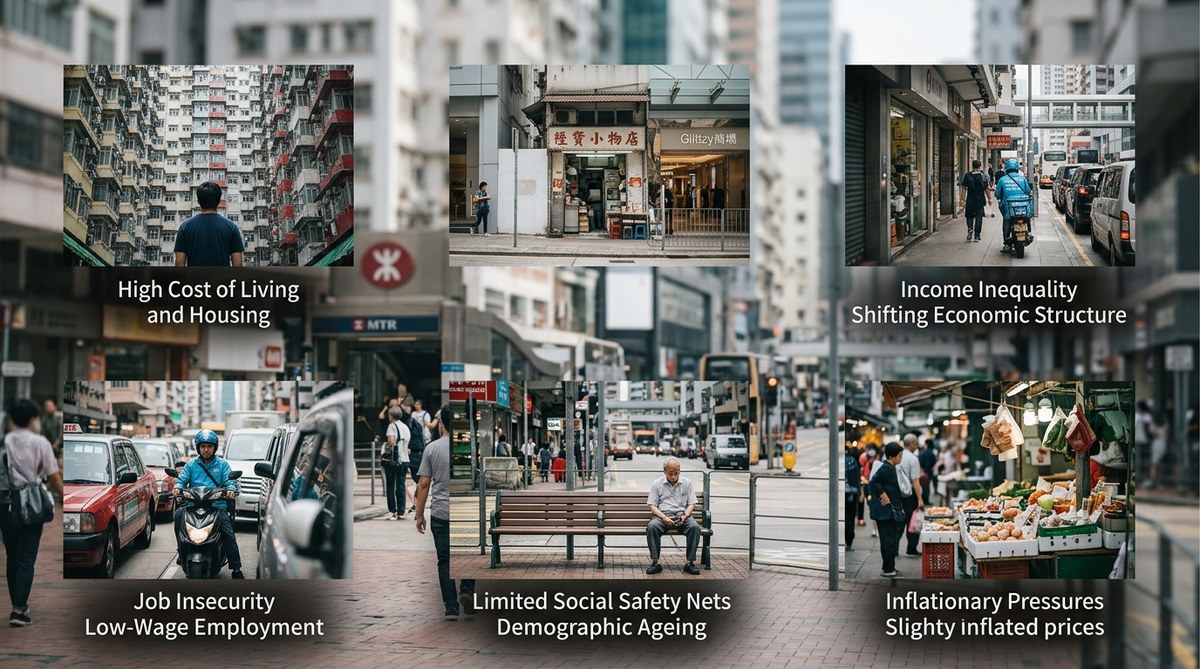
Poverty in Hong Kong in 2023 is driven by rising housing costs, income inequality, employment instability, limited social mobility, and the aging population, requiring targeted policy responses and comprehensive social programs.
Major economic factors influencing poverty in Hong Kong this year
The economic landscape of Hong Kong has become more challenging for many residents. Factors such as skyrocketing housing prices, wage stagnation, and job insecurity have deepened social divides. Researchers and policymakers monitoring the Social Development Index observe these trends closely to inform interventions that can mitigate ongoing hardship.
Housing affordability and living conditions
Housing costs remain the most visible and pressing issue. Hong Kong consistently ranks among the most expensive housing markets globally. In 2026, the property price-to-income ratio continues to soar, making homeownership out of reach for many. The average household spends over 50 percent of its income on rent or mortgage payments, leaving little room for savings or other essentials.
This housing affordability crisis leads to the proliferation of subdivided flats, cage homes, and nano flats—tiny, often overcrowded spaces that exacerbate health and social issues. The impact on elderly residents is particularly acute, as many live in substandard conditions with limited support.
Income inequality and wage disparities
Income inequality in Hong Kong is a persistent driver of poverty. The wealth gap has widened over the last decade, with the richest 10 percent controlling a disproportionate share of resources. The Social Development Index shows that while overall GDP has increased, benefits have not trickled down evenly.
Wage growth for low-income workers has lagged behind inflation and living expenses. Full-time employees in sectors such as retail, hospitality, and cleaning services often face unstable hours and low wages, making it difficult to escape poverty cycles. Youth unemployment and underemployment further complicate efforts for social mobility.
Employment instability and job quality
The nature of employment in Hong Kong has shifted towards gig work, part-time roles, and contract jobs. These positions often lack benefits such as health insurance, paid leave, and job security. As a result, many workers experience financial stress and limited access to social safety nets.
The Social Indicators report highlights that employment quality directly correlates with poverty levels. Workers with insecure jobs are less likely to afford stable housing, quality healthcare, or education for their children—all factors that perpetuate poverty across generations.
Aging population and social support challenges
Hong Kong’s aging population presents a unique set of economic challenges. The proportion of residents over 65 continues to grow, increasing demand for healthcare, social services, and pension support. Many elderly individuals live in poverty due to insufficient retirement savings and limited access to affordable long-term care.
The financial strain on social welfare programs intensifies as more seniors require assistance. Without targeted reforms, this demographic shift risks deepening economic disparities and placing additional pressure on the social safety net.
Limited social mobility and educational opportunities
Educational attainment remains a key factor in economic mobility. However, disparities in access to quality education perpetuate poverty. Families with limited resources struggle to afford supplementary tutoring, extracurricular activities, or higher education.
The digital divide also plays a role. Students from low-income households often lack access to reliable internet and devices, hindering their learning experiences. These educational gaps affect future employment prospects, reinforcing the cycle of poverty.
Practical steps to analyze and address economic drivers of poverty
For researchers and policymakers, understanding these factors involves a systematic approach. Here are five steps to effectively analyze and respond to economic drivers:
- Collect comprehensive data on housing, employment, income, health, and education, utilizing sources like the Social Development Index.
- Identify vulnerable groups by demographic and geographic characteristics to tailor interventions.
- Monitor economic trends such as wage growth, property prices, and unemployment rates over time to spot emerging issues.
- Implement targeted policies that address specific barriers, like affordable housing schemes or minimum wage adjustments.
- Evaluate policy impacts regularly using reliable indicators to refine and improve social programs.
Techniques and common mistakes in analyzing poverty data
| Technique | Description | Common Mistake |
|---|---|---|
| Cross-sectional analysis | Comparing different groups at a single point in time | Overlooking long-term trends |
| Longitudinal studies | Tracking changes over multiple years | Ignoring demographic shifts |
| Geographic mapping | Visualizing data by district | Missing contextual socioeconomic factors |
| Statistical modeling | Identifying correlations | Confusing correlation with causation |
“A nuanced understanding of economic drivers requires integrating quantitative data with on-the-ground insights. Without this, policies risk missing the mark,” advises Dr. Lisa Cheng, a social economist specializing in urban poverty.
Overcoming analytical pitfalls
- Relying solely on income levels can obscure other critical factors like housing quality or social participation.
- Ignoring demographic changes may lead to outdated policies.
- Misinterpreting correlation as causation can result in ineffective solutions.
Monitoring poverty through the Social Development Index
The Social Development Index (SDI) offers a comprehensive view of societal well-being beyond income metrics. It considers housing conditions, health access, educational opportunities, and social inclusion. In 2026, the SDI reveals that despite economic growth, social disparities remain pronounced.
Using the SDI allows policymakers to prioritize areas needing urgent attention, such as elderly care or affordable housing. It also helps social advocates argue for more inclusive policies that target the root causes of poverty.
Policy pathways and social support innovations
Reducing poverty in Hong Kong demands a multi-faceted approach. Policymakers can learn from successful programs elsewhere and adapt them to local contexts. For example:
- Expanding public housing to reduce overcrowding.
- Implementing living wages aligned with rising costs.
- Enhancing social services targeted at the elderly and children.
- Promoting digital inclusion programs to bridge educational gaps.
- Encouraging job training initiatives to improve employment quality.
Techniques to improve social safety nets
- Use data-driven assessments to identify priority groups.
- Foster community involvement in policy design.
- Regularly review program outcomes against clear benchmarks.
Mistakes to avoid
- Relying on short-term fixes rather than systemic reforms.
- Overlooking the importance of social participation.
- Failing to address the interconnected nature of housing, employment, and health.
Building a fairer social landscape in Hong Kong
Addressing the economic factors driving poverty requires a clear understanding and strategic action. Combining targeted policies with continuous monitoring can help lift vulnerable populations out of hardship. As Hong Kong navigates these challenges, fostering social resilience and inclusivity remains vital.
Final thoughts on tackling poverty’s root causes
By focusing on the interconnected economic drivers—housing affordability, income inequality, employment quality, social mobility, and demographic shifts—researchers and policymakers can craft more effective solutions. Regularly assessing data and engaging communities will ensure policies stay responsive and impactful. For anyone committed to social progress, understanding these factors is the first step toward meaningful change.

Post Comment