How Rising Utility Costs Fuel a Hidden Poverty Crisis in Hong Kong
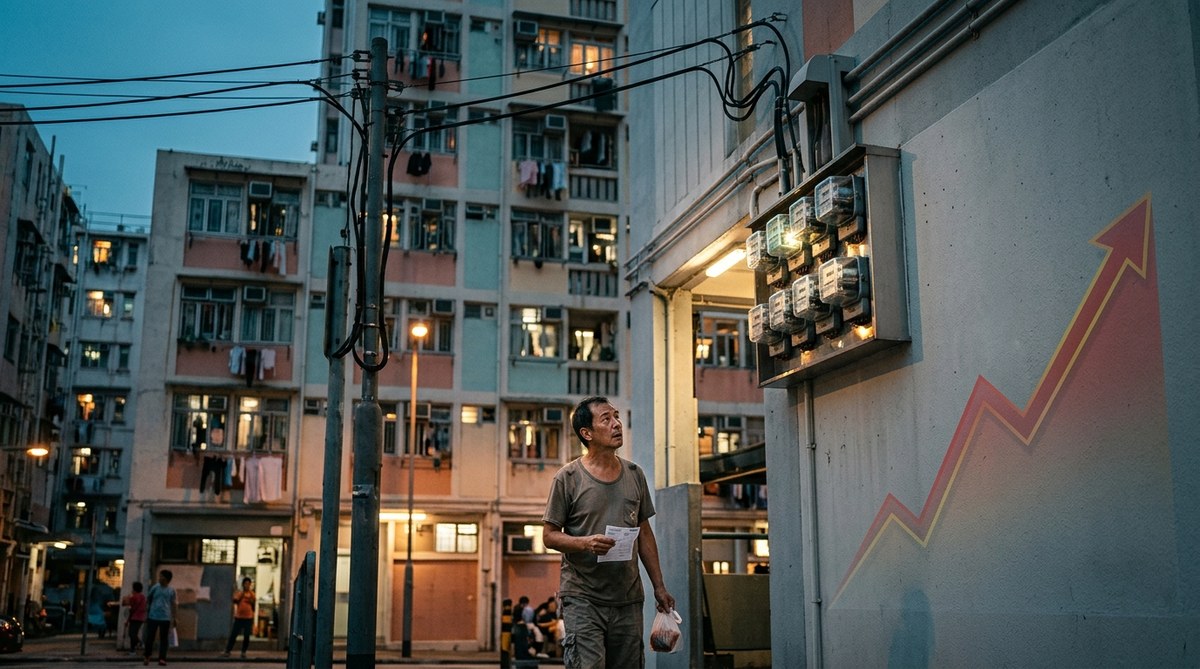
Most people in Hong Kong think of poverty in terms of low wages or unaffordable housing. But there is a quieter crisis taking root inside thousands of homes. It is the struggle to keep the lights on, the fan running, or the rice cooker working. Across the city, rising utility costs are forcing low income families to make impossible choices between paying the electricity bill and buying enough food. This is the reality of Hong Kong energy poverty, and in 2026, it is becoming harder to ignore.
Hong Kong energy poverty is not a niche issue. It affects one in five households, according to recent Social Development Index data. Rising utility tariffs, combined with stagnant wages and the city's high housing density, trap families in a cycle of debt and deprivation. Utility costs now consume more than 10% of income for many low earner households, a threshold that signals severe vulnerability.
What Hong Kong Energy Poverty Looks Like in 2026
Energy poverty happens when a household cannot afford adequate energy services at home. In Hong Kong, this means not being able to run an air conditioner during a sweltering August, or having to cut back on cooking because the gas bill is too high. It is a hidden form of poverty because the symptoms show up behind closed doors.
The latest data from our Social Development Index shows that energy poverty rates have risen sharply since 2021. By the end of 2025, roughly 18% of Hong Kong households were spending more than 10% of their monthly income on utilities. That is a significant jump from 12% five years earlier. For a family living in a subdivided flat in Sham Shui Po, that extra expense can push them over the edge.
The Numbers Behind the Crisis
Let's look at the specific factors driving this trend:
- Rising electricity tariffs: CLP Power and HK Electric have raised rates multiple times since 2022, citing higher fuel costs and grid maintenance expenses.
- Stagnant wages: The median wage for low skill workers has barely budged, while utility costs have increased by 30% in the same period.
- Tiny living spaces: Subdivided flats and nano units often lack proper insulation, causing extreme heat or cold that forces heavy AC usage.
- Aging appliances: Many low income families use old air conditioners and refrigerators that consume far more electricity than modern models.
These numbers paint a clear picture: utility costs are growing faster than people's ability to pay them.
Why Are Utility Costs Rising So Fast?
There is no single villain here. It is a combination of global and local pressures.
- Fuel price volatility. Hong Kong imports nearly all its energy. When global oil and natural gas prices spike, local bills follow.
- Infrastructure upgrades. Both power companies are investing in new gas turbines and submarine cables to meet future demand. Those capital costs are passed on to consumers.
- Climate change compensation. Hotter summers mean longer cooling seasons. Families that used to run the AC for three months a year now need it for five or six.
- Regulatory lag. The Scheme of Control Agreements that govern electricity tariffs have not kept pace with affordability concerns. There is no specific subsidy for low income households in the current framework.
For a deeper look at how income inequality intersects with these costs, read our analysis on how income inequality in Hong Kong has evolved over three decades.
How to Spot Energy Poverty in Your Own Household
If you are a resident worried about your bills, here are three signs that you might be experiencing energy poverty:
- Your utility bill represents more than 10% of your total household income. This is the international benchmark for energy poverty.
- You regularly skip meals or reduce essential spending to pay for electricity or gas.
- You avoid using the air conditioner even during heat warnings, or you sleep with the lights off to save money.
These signs indicate that you are not just facing a temporary cash flow issue, but a structural problem that affects your quality of life.
Common Coping Strategies Among Low Income Families
Households that fall into energy poverty do not give up. They adapt, often in ways that hurt their health and wellbeing:
- Turning off the refrigerator at night to save power, risking food spoilage.
- Using electric fans instead of air conditioning during extreme heat.
- Taking cold showers because the water heater costs too much to run.
- Borrowing from relatives or using high interest loans to cover overdue bills.
- Cutting back on medical expenses or skipping doctor visits.
These are survival tactics, not solutions. And they carry real costs over the long term.
Energy Poverty Risk by District: Where the Burden Is Heaviest
To understand the geography of this crisis, we compared median household income, average utility costs, and the percentage of income spent on energy across five representative districts.
| District | Median Household Income (HKD) | Average Monthly Utility Bill (HKD) | % of Income Spent on Utilities |
|---|---|---|---|
| Sham Shui Po | 22,000 | 2,800 | 12.7% |
| Kwun Tong | 24,500 | 3,100 | 12.6% |
| Yau Tsim Mong | 28,000 | 3,200 | 11.4% |
| Eastern | 38,000 | 3,400 | 8.9% |
| Southern | 45,000 | 3,600 | 8.0% |
In Sham Shui Po and Kwun Tong, households spend more than 12% of their income just on utilities. That is nearly double the recommended affordability threshold. Meanwhile, wealthier districts like Southern stay below 9%. The gap is stark.
The Human Cost: Health and Wellbeing
Energy poverty is not just a financial problem. It has direct consequences for physical and mental health.
- Heat stress: Without cooling, elderly residents are at greater risk of hospitalization during summer heatwaves.
- Respiratory issues: Mold and dampness become more common when families cannot afford proper ventilation or dehumidifiers.
- Mental strain: The anxiety of an overdue bill can lead to sleep loss and depression, especially among single mothers and primary caregivers.
"We see patients whose chronic conditions get worse because they cannot afford to run their air conditioners during the summer. It is a hidden public health crisis that does not show up in standard poverty statistics."
— Dr. Chan Mei Ling, Community Health Researcher at the University of Hong Kong
The connection between utility hardship and poverty is often overlooked by traditional metrics. For a broader view of poverty beyond income, check out our guide to 7 critical indicators that define poverty in Hong Kong beyond income levels.
What Can Be Done? Policy Solutions That Work
Several practical measures could reduce the burden of energy poverty in Hong Kong.
- Targeted utility subsidies. The government could introduce a means tested rebate for low income households, similar to the existing electricity subsidy but larger and better funded.
- Mandatory energy efficiency standards for subdivided flats. Many substandard flats lack proper insulation and sealings. Enforcing minimum efficiency requirements would reduce waste.
- Public awareness and energy audits. Community organizations can help families identify simple changes, like switching to LED bulbs or cleaning AC filters, that lower bills.
- Tiered pricing for residential users. A sliding scale where the first block of usage is heavily subsidized and higher consumption is charged at a premium could protect low usage households while encouraging conservation.
We also need better data. Our own work on the Social Development Index shows that tracking energy poverty separately from general income poverty gives policymakers a more accurate picture of need.
How to Advocate for Change Using Social Development Data
If you are a policy analyst or a concerned resident, you can use the data from our site to support your advocacy.
- Visit our district level dashboards. Compare utility cost trends across neighborhoods.
- Download the latest CSV of energy poverty indicators. Our guide to clean CSV formatting will help you organize it.
- Share the findings with District Councillors, LegCo members, and the Environment Bureau.
When you present numbers that show Sham Shui Po residents spending 12.7% of their income on utilities, the message becomes impossible to ignore. Numbers move policy. And our mission is to make those numbers accessible to everyone.
A Future Where No Household Has to Choose Between Food and Electricity
Hong Kong is a wealthy city. We have the resources to ensure that every family can afford to stay warm in winter and cool in summer. The challenge is political will.
Energy poverty is not inevitable. It is the result of policy choices and market structures that we can change. By raising awareness, by using good data, and by demanding better support systems, we can turn the tide.
Start by learning more about the hidden costs that shape poverty in Hong Kong. Read our full report on the hidden connection between housing density and public health outcomes. Then join the conversation. Every voice matters.
Together, we can make sure that no one in Hong Kong has to sit in the dark because they cannot afford the light.

Post Comment