Why Hong Kong’s Single-Parent Households Face the Highest Poverty Risk in 2026
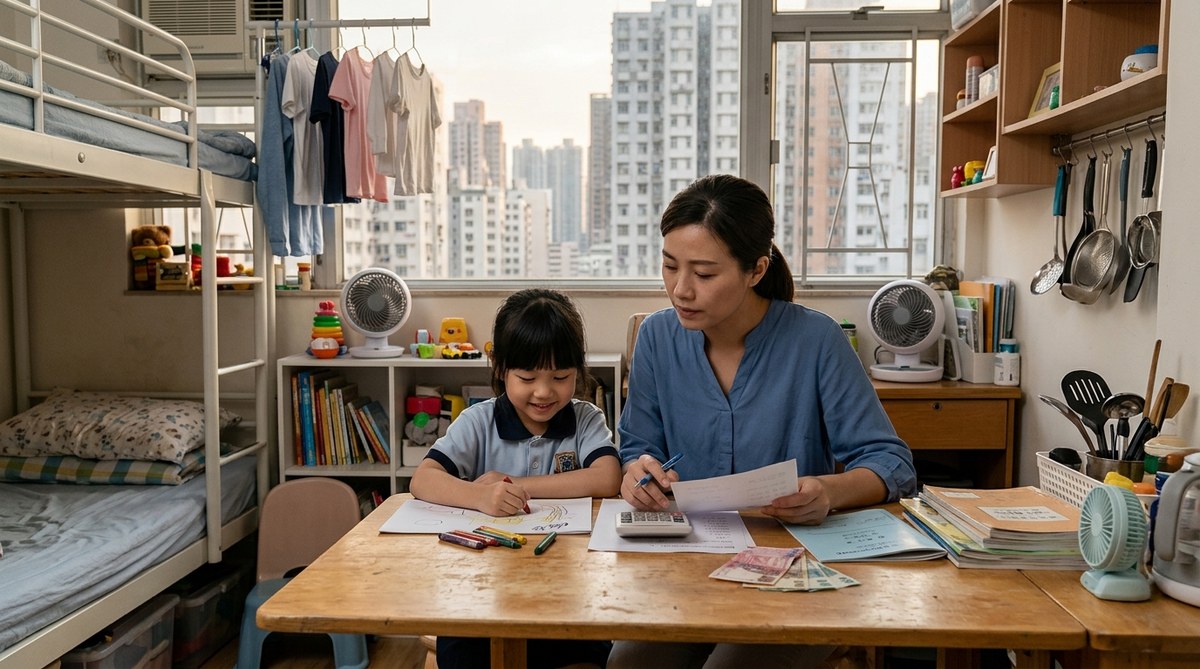
Picture a mother in Sham Shui Po who wakes at 5 a.m. to get her child ready for school, commutes an hour to a part time retail job, and still has to decide between buying vegetables or paying for after school tutoring. She is not alone. Across Hong Kong, single parent households are facing the highest poverty risk of any family type. New data from our Social Development Index shows that in 2026, nearly 4 in 10 single parent families live below the poverty line. That rate is more than double the average for all households. Understanding why this gap exists is not just an academic exercise. It is essential for designing policies that actually work.
Hong Kong single parent poverty risk 2026 remains stubbornly high because of a perfect storm: one income must cover housing, childcare, and living costs that have risen far faster than wages. The welfare system was designed for two parent families, leaving single parents with inadequate support. Without targeted reforms, these households will continue to bear the heaviest burden of inequality.
The Numbers That Demand Attention
Let us start with the raw statistics. According to the latest Hong Kong Poverty Situation Report, the overall poverty rate in 2026 sits at roughly 19 percent. For single parent households, that figure jumps to 38 percent. To put it plainly, a child raised by a single parent is twice as likely to grow up in poverty as a child in a two parent home.
This is not a new problem, but it is getting worse. Over the past five years, the poverty rate for single parent families has climbed by nearly 6 percentage points. Meanwhile, the rate for elderly singles has stayed flat, and the rate for two parent families has actually dropped slightly. Something specific is driving single parent households deeper into hardship.
Why One Income Is Not Enough
The most obvious factor is the lack of a second earner. In a city where the median monthly rent for a modest flat now exceeds 12,000 HKD, a single salary often cannot cover the basics. But the problem runs deeper than that.
Single parents in Hong Kong face a brutal trade off. If they work full time, they need childcare. Quality childcare for a preschooler costs between 8,000 and 15,000 HKD per month. That can eat up more than half of a median salary. If they work part time to save on childcare, their income drops below the poverty line anyway. Many single mothers in particular end up in low wage service jobs with no benefits, no paid leave, and no room for advancement.
The data from our understanding the working poor analysis shows that single parents are overrepresented in part time and gig economy roles. They take these jobs not because they want them, but because they offer flexibility. Unfortunately, flexibility comes at a cost. No sick days, no retirement contributions, and no stable income.
The Housing Trap
Housing is the single largest expense for any Hong Kong family. For single parent households, it is a crisis.
Private rental costs have risen by 35 percent since 2018, while median wages for service sector workers have grown by only 12 percent. Single parents who cannot afford private rent often turn to subdivided flats in older buildings. These units are small, poorly maintained, and often illegal. But they are cheap. The problem is that living in a subdivided flat makes it harder to work, harder to keep children healthy, and harder to escape poverty.
Public housing offers some relief, but wait times are long. The average wait for a public rental flat in 2026 is 8.7 years. For a single parent with a young child, that is almost the entire span of the child’s primary school years. During that wait, families are stuck in the expensive private market or in substandard housing that hurts their health and stability.
Our article on how subdivided flats are reshaping Hong Kong’s urban landscape documents how these living conditions create a cycle of poverty that is hard to break.
Childcare Costs That Crush Families
Let us break down the childcare math with a simple table.
| Scenario | Monthly Income | Childcare Cost | Rent | Left for Food and Other Needs |
|---|---|---|---|---|
| Single parent, full time retail | 18,000 HKD | 10,000 HKD | 9,000 HKD | 1,000 HKD deficit |
| Single parent, clerical job | 24,000 HKD | 12,000 HKD | 10,000 HKD | 2,000 HKD |
| Single parent, part time | 10,000 HKD | 5,000 HKD (subsidized) | 6,000 HKD | 1,000 HKD deficit |
In all three cases, the numbers do not work. Even with a clerical salary, after paying for childcare and rent, there is almost nothing left for food, transport, utilities, or emergencies. This is why so many single parents rely on informal childcare from grandparents or neighbors. But that support network is shrinking as Hong Kong’s population ages and families become more dispersed.
How the Welfare System Misses the Mark
Hong Kong’s social welfare system was built around a traditional family model. The Comprehensive Social Security Assistance (CSSA) scheme provides a basic safety net, but it is not designed for the realities of single parenthood.
Here are the key problems with the current system:
- The CSSA payment for a single parent with one child is about 15,000 HKD per month. That sounds reasonable until you realize it includes a housing allowance that is far below actual market rents.
- There is no dedicated childcare subsidy for single parents. The existing subsidies are means tested and capped, leaving many families in a gap where they earn too much to qualify but too little to afford care.
- The work incentive rules penalize single parents who try to increase their hours. If you earn more, you lose benefits at a rate that makes extra work financially pointless.
- The application process is complex and requires repeated in person visits to social welfare offices. For a parent who cannot take time off work or find childcare, that is a major barrier.
Our research on does social welfare spending reduce poverty shows that Hong Kong spends less on family support as a share of GDP than most comparable economies. The money that is spent often misses the people who need it most.
The Hidden Burden of Health and Mental Health
Single parents carry an invisible load that the statistics do not fully capture. They are more likely to report poor mental health, chronic stress, and physical exhaustion. The constant pressure of managing work, childcare, and household tasks alone takes a toll.
Mental health services in Hong Kong are stretched thin. The wait for a public counseling appointment can be months. Private therapy is too expensive for most single parent families. This creates a cycle where poor health makes it harder to work, and financial strain makes health worse.
Our analysis of how mental health services in Hong Kong have evolved over two decades shows that despite some improvements, access remains deeply unequal. Single parents in low income districts have the least access to care.
What Needs to Change: A Practical Policy Roadmap
If we want to reduce Hong Kong single parent poverty risk 2026 and beyond, we need targeted action. Here is a numbered list of policy changes that would make a real difference.
-
Create a universal childcare subsidy for single parent families. The subsidy should cover at least 80 percent of actual childcare costs, with no cap on hours. This would let parents work full time without losing money to care costs.
-
Reform the CSSA housing allowance to match actual median rents in each district. A single parent in Kowloon should not be expected to find a flat for 5,000 HKD when the market rate is double that.
-
Establish a single parent priority lane for public housing. Families with young children should not wait eight years for a stable home. A five year maximum wait time would be a meaningful improvement.
-
Expand the earned income disregard for CSSA recipients. Let single parents keep more of their earnings before benefits are reduced. This removes the penalty for working more hours.
-
Invest in school based after care programs. Every primary school should offer affordable after school care until 6 p.m. This allows parents to work standard hours without scrambling for pickup.
What Advocates and Researchers Can Do Right Now
If you are a policy analyst, researcher, or advocate, you do not have to wait for the government to act. There are steps you can take today.
- Use the Social Development Index to track single parent poverty rates in your district. The data is updated regularly and can be broken down by area. This helps you target your advocacy.
- Share the data with local media. Journalists are hungry for specific, local statistics. A story about single parent poverty in your constituency gets attention.
- Collaborate with organizations that already serve single parents. They have on the ground knowledge that can ground your research in real lived experience.
- Push for the government to release more granular data. Currently, poverty reports group single parents into a broad category. We need data by age of children, by district, and by employment type.
Our guide on the complete guide to interpreting social development data for policy advocacy walks through the exact steps to turn raw numbers into persuasive policy arguments.
A Closer Look at the Gender Dimension
Single parent households in Hong Kong are overwhelmingly headed by women. About 85 percent of single parent families are led by mothers. This means that the poverty risk of single parenthood is also a gender inequality issue.
Women in Hong Kong already face a gender pay gap of about 12 percent. When they become single mothers, they face the compounded disadvantages of lower wages, career interruptions from child rearing, and discrimination in hiring. Employers often assume that single mothers will be less available or less committed, even though the data shows they are just as productive.
Our piece on is there a gender dimension to Hong Kong’s poverty crisis examines this intersection in more depth. The short version is that any policy solution must address both poverty and gender discrimination together.
What Single Parents Themselves Say
We spoke with several single parents for this analysis. Their voices add context that numbers alone cannot convey.
“I work 40 hours a week, but after rent and childcare, I have less than 2,000 HKD for the month. I skip meals so my daughter can eat. I have not been to a doctor in two years because I cannot afford the time off. People tell me to work harder. I do not think they understand that I am already running on empty.”
This quote from a single mother in Tuen Mun captures the exhaustion that defines daily life for many. The data backs up her experience. Single parent households report food insecurity at rates three times higher than the general population.
The Role of the Social Development Index
The Social Development Index is our tool for tracking these trends over time. It combines economic indicators like income and employment with social indicators like health, housing, and education. When we look at the composite score for single parent wellbeing, it has declined every year since 2021.
This decline is not inevitable. Other places have shown that targeted policy can reverse it. In South Korea, a similar crisis in the early 2010s was addressed through a combination of childcare subsidies, housing vouchers, and employment support. Their single parent poverty rate dropped by 8 percentage points over five years.
Hong Kong can learn from these examples. But we need the political will and the public pressure to act.
Why This Matters for All of Us
Poverty in single parent households does not just affect those families. It affects the children who grow up with less opportunity. It affects the schools that must provide extra support. It affects the healthcare system when parents delay care until they are seriously ill. And it affects the economy when talented workers cannot contribute fully because of care responsibilities.
Reducing single parent poverty is one of the most effective ways to improve social mobility in Hong Kong. Children who escape poverty in early childhood are far more likely to succeed in school, earn higher incomes as adults, and raise their own children out of poverty. It is a long term investment that pays dividends for generations.
Our research on how social mobility has changed in Hong Kong over the last two decades shows that mobility has stagnated. Breaking the cycle of single parent poverty is one of the best ways to restart it.
The Path Forward
Hong Kong single parent poverty risk 2026 is a crisis, but it is a solvable one. The data is clear. The solutions are known. What is missing is the collective will to prioritize these families.
If you are a researcher, keep publishing the data. If you are a journalist, keep telling these stories. If you are a policymaker, look at the evidence and act. And if you are a concerned citizen, support organizations that work with single parents and vote for candidates who make family policy a priority.
The numbers tell us that single parents are struggling. The stories tell us why. Now it is up to all of us to change the outcome.


Post Comment